SILVER HARE BELL, VIKTOR AARNE FOR THE HOUSE OF FABERGÉ RUSSIA, SAINT PETERSBURG, TURN OF THE 19TH–20TH CENTURY
AntiqonART consultant will contact you within one business day after receiving your request.
Discover how the value of similar works has evolved over the past 10 years. Art is not only beauty — it's an investment.
Discover how the value of similar works has evolved over the past 10 years. Art is not only beauty — it's an investment.
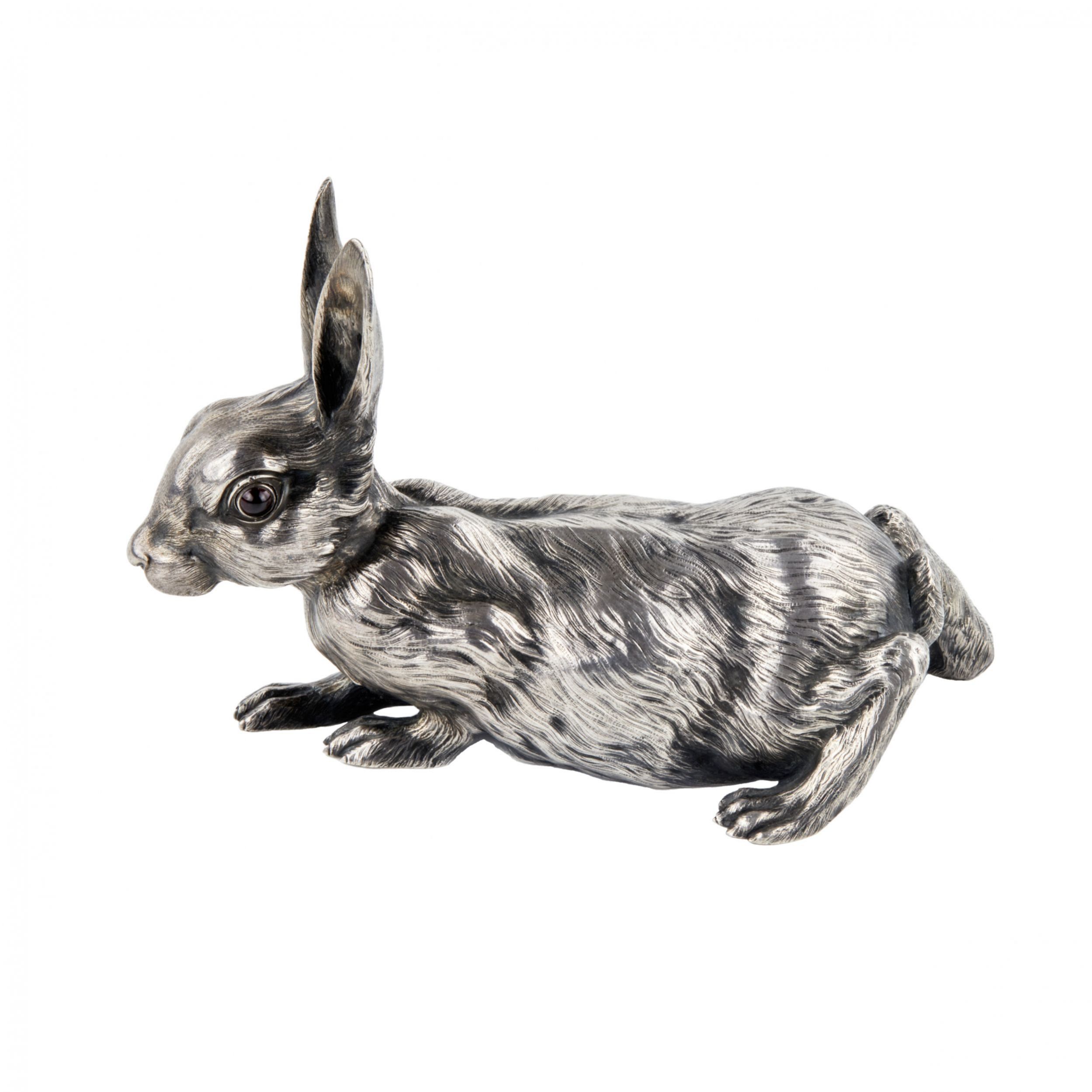
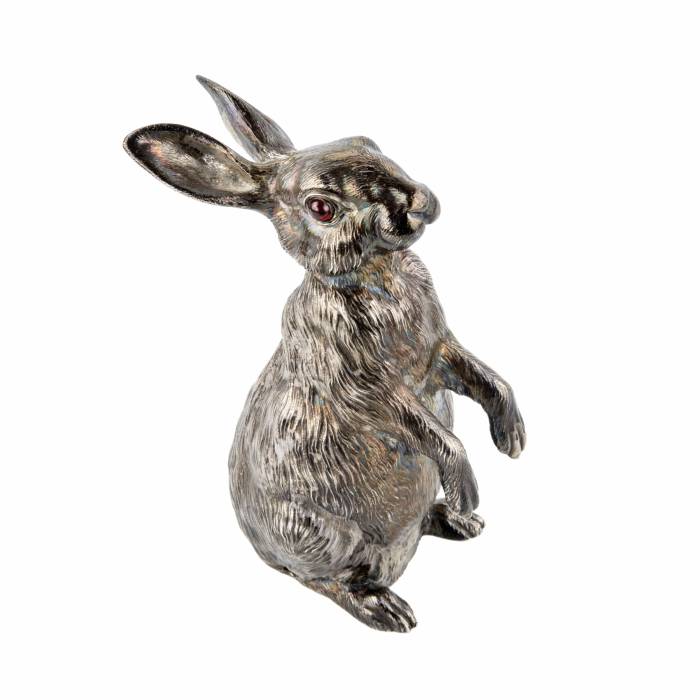
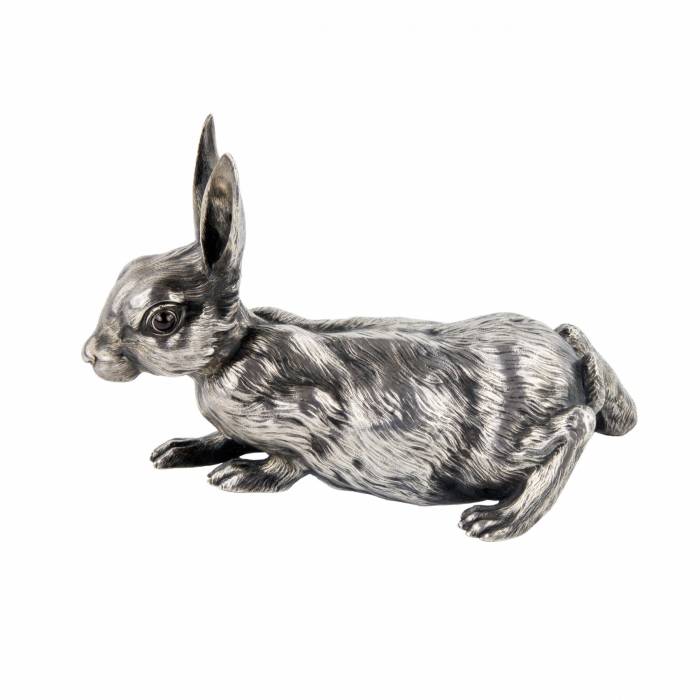
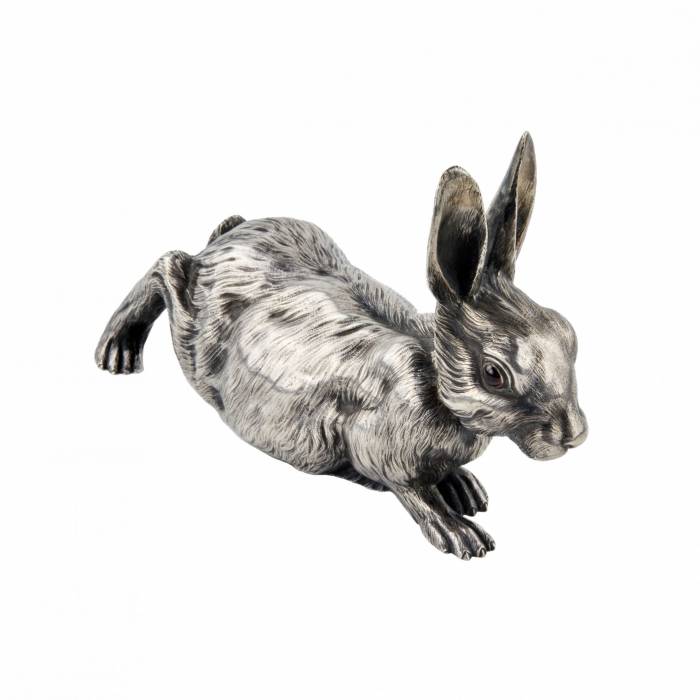
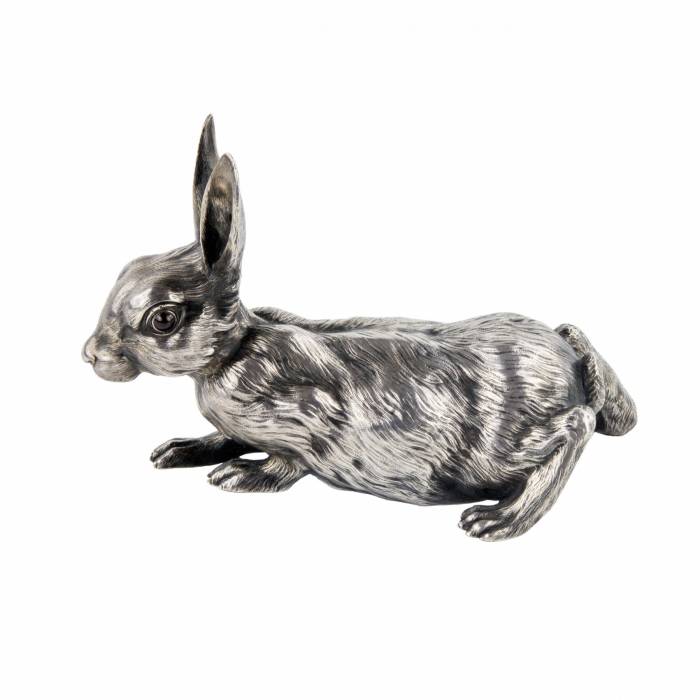
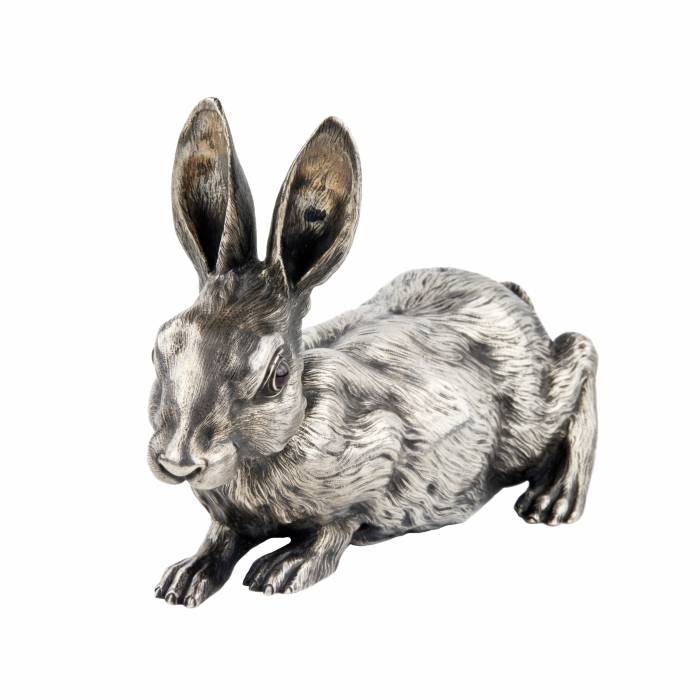
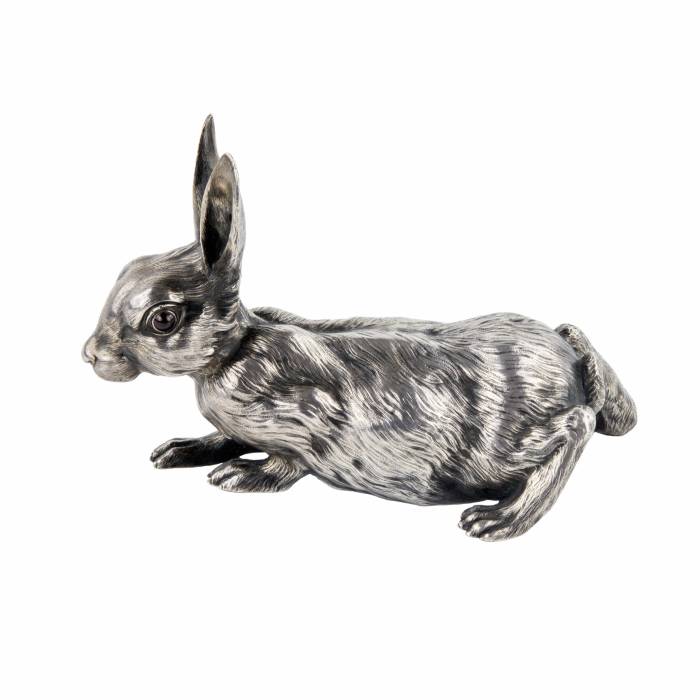
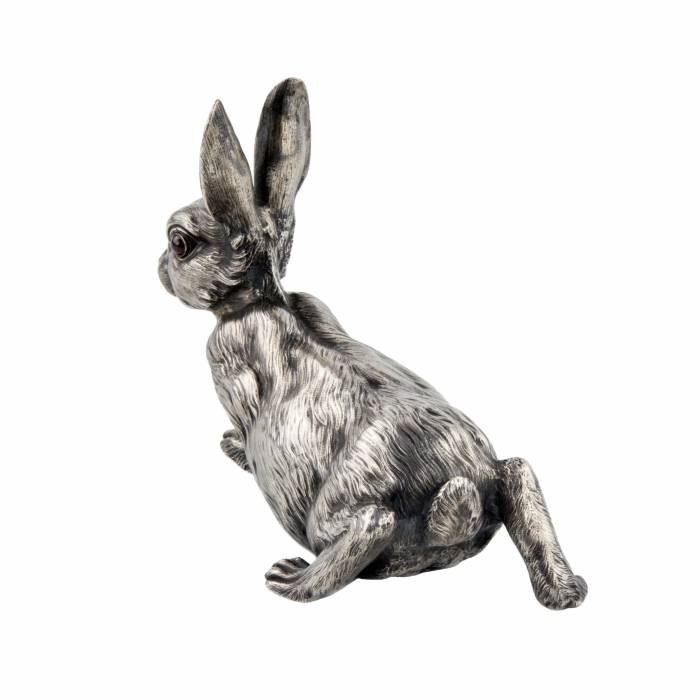
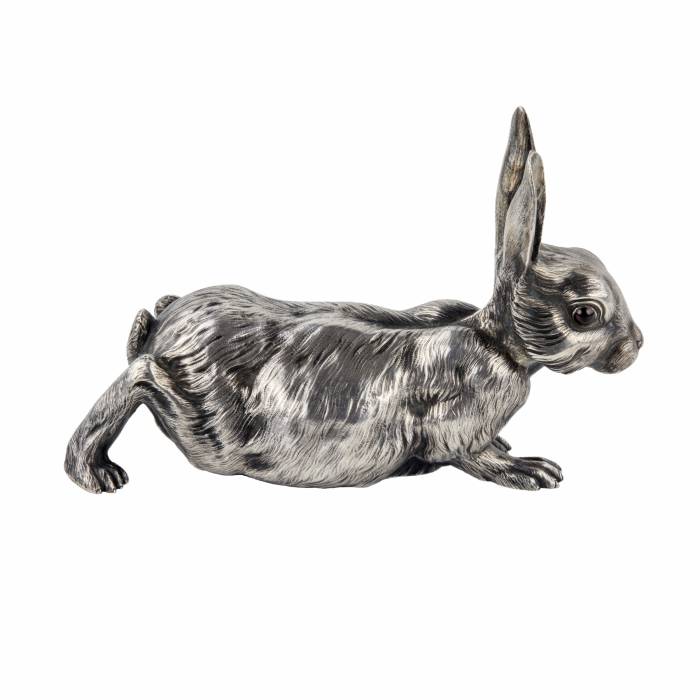
An elegant silver table bell in the form of a hare, crafted in 84 standard silver, representing a refined example of Fabergé animal sculpture at the turn of the 20th century. The composition depicts an alert hare pressed low to the ground, with an elongated body and raised ears, conveying a moment of tension and vigilance. The sculptural treatment demonstrates exceptional naturalism, with finely chased fur achieved through casting followed by detailed chasing.
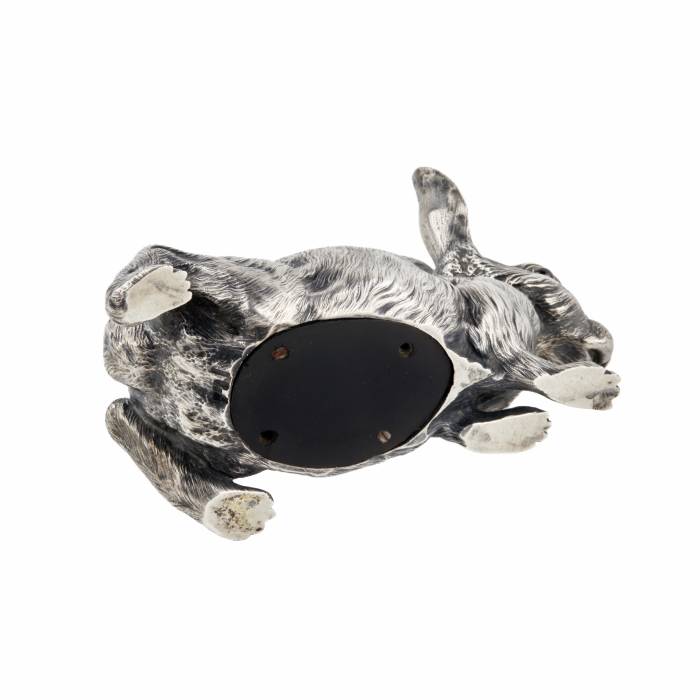
The hare’s eyes are set with garnets, ingeniously functioning as push-buttons for the bell mechanism, a feature that reflects Fabergé’s characteristic fusion of artistry and technical ingenuity. The underside is fitted with an ebonite panel concealing the electrical mechanism. The maker’s mark is struck beneath the tail. Conceived as a decorative yet functional table accessory, the object embodies sculptural virtuosity, refined craftsmanship, and innovative design.
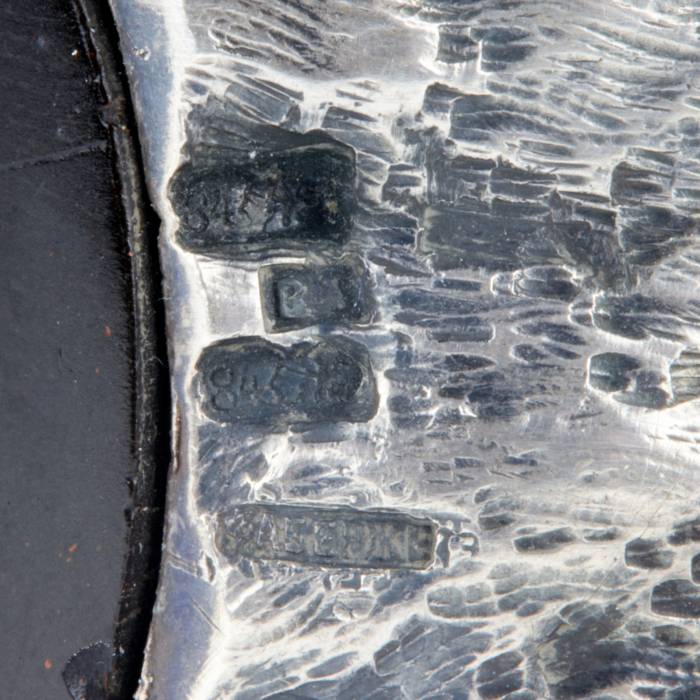
Hallmarks: Saint Petersburg assay mark “84”, dated 1899–1903; assay master Yakov Lyapunov; maker’s mark “VA” for Viktor Aarne; executed for Fabergé.
Dimensions: Length approximately 18 cm.
Weight: 391 g.
Condition: Good. Silver with even natural patina. Mechanism preserved. Minor signs of age and use consistent with the period. No deformations or restorations.
Provenance: Christie’s, Geneva, 1980, lot 22; Christie’s, 11 April 2003, lot 99.
Sculptural table accessories produced by the House of Fabergé at the end of the 19th and the beginning of the 20th century occupy a distinctive place in the history of decorative and applied arts of the Russian Empire. During this period, Fabergé’s workshops in Saint Petersburg actively developed the genre of small-scale sculpture, creating objects in which artistic expression, symbolism, and functionality were seamlessly combined. Animal figures executed in silver and hardstone were particularly popular among aristocratic and intellectual circles, where not only luxury, but also the wit and refinement of artistic conception were highly valued.
The hare, as a motif in Russian and European art, has traditionally been associated with sensitivity, speed, and acute natural alertness. In Viktor Aarne’s interpretation, this image acquires an almost zoological authenticity characteristic of the finest works created for Fabergé. Viktor Aarne, one of the leading sculptors of the firm, was renowned for his virtuosic command of form and his ability to convey movement and animal character within compact sculptural compositions. His works for Fabergé are distinguished by clarity of composition, subtle modelling, and an exceptionally high level of technical execution.
The use of garnets as eyes that simultaneously function as operating buttons for the bell mechanism reflects Fabergé craftsmen’s aspiration toward a synthesis of art and engineering. Such objects were not produced on a массов scale, but were made either to special order or in very limited series, which renders them particularly rare on today’s antique market. Electrical mechanisms incorporated into table accessories at the beginning of the 20th century represented a mark of technical innovation and corresponded fully to the spirit of Art Nouveau, with its fascination for progress and new technologies.
The provenance of the present example, including its sale at Christie’s in Geneva and its participation in a museum exhibition in New York, underscores its museum-level status and high collectible significance. Its display at the Loan Exhibition for the Benefit of the Cooper Hewitt Museum in 1983 and its publication in the exhibition catalogue confirm the object’s recognition within the international scholarly and museum community. Today, silver animal figures by Fabergé are regarded not merely as luxury objects, but as important artistic documents of their time, reflecting the synthesis of artisanal mastery, refined artistic taste, and technological innovation at the turn of the century.
Good condition. Silver with natural patina. Garnets intact. Bell mechanism preserved. Minor signs of age and careful use consistent with the period.
The condition report is provided for informational purposes only.
It is not comprehensive and may not reflect all defects, restorations, alterations, or adaptations, as Antiqon does not perform professional conservation-level assessments. The information is based on a qualified, yet subjective, evaluation by our specialists.Before purchasing, we recommend consultation with an independent expert.Please also consult our Terms and conditions and Glossary A-Z, which contain important information on lot characteristics and sale conditions.