
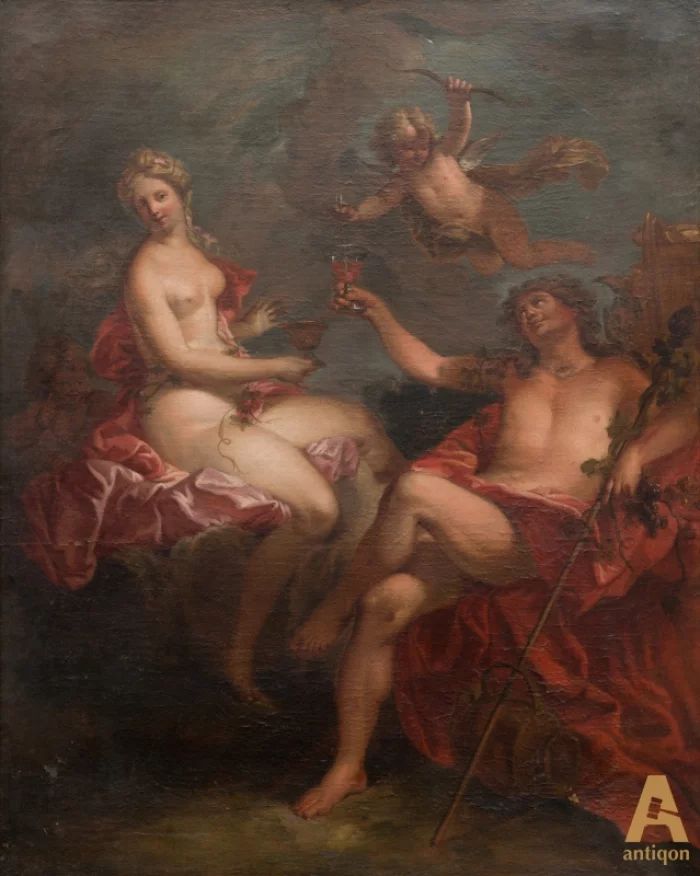
BACCHUS, CERÈS ET AMOUR ÉCOLE ITALIENNE, FIN DU XVIIe – DÉBUT DU XVIIIe SIÈCLE
AntiqonART consultant will contact you within one business day after receiving your request.

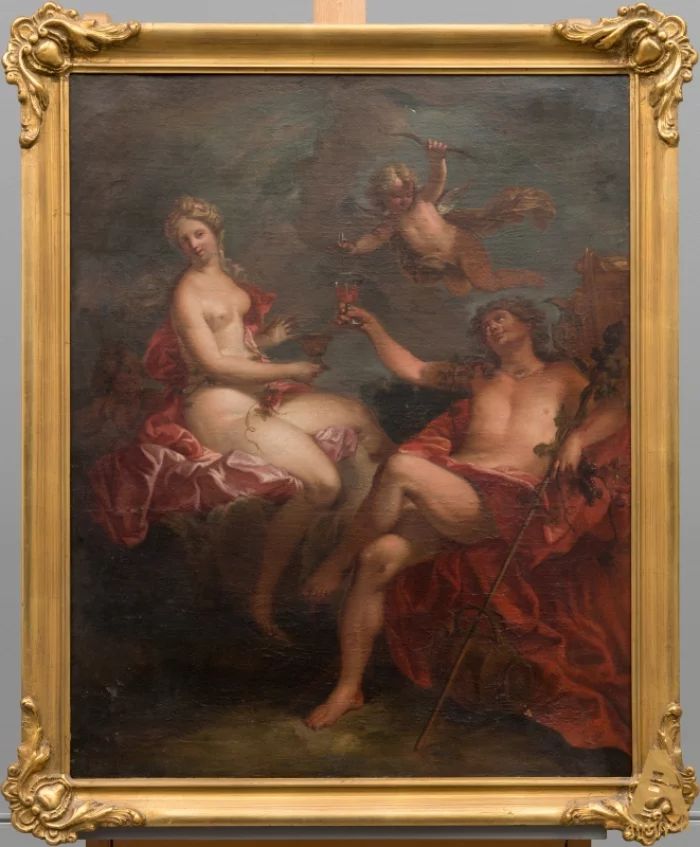
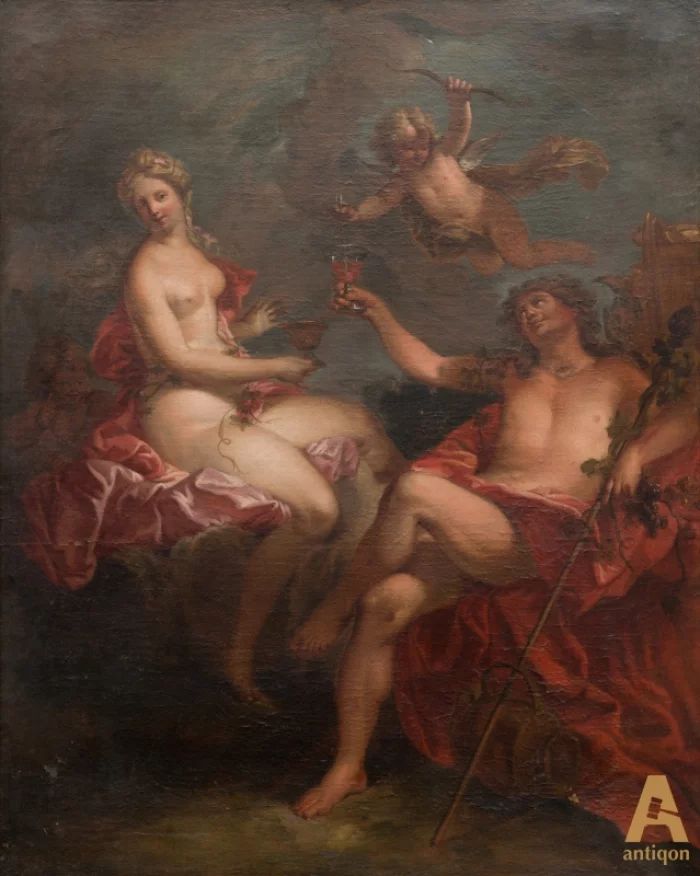
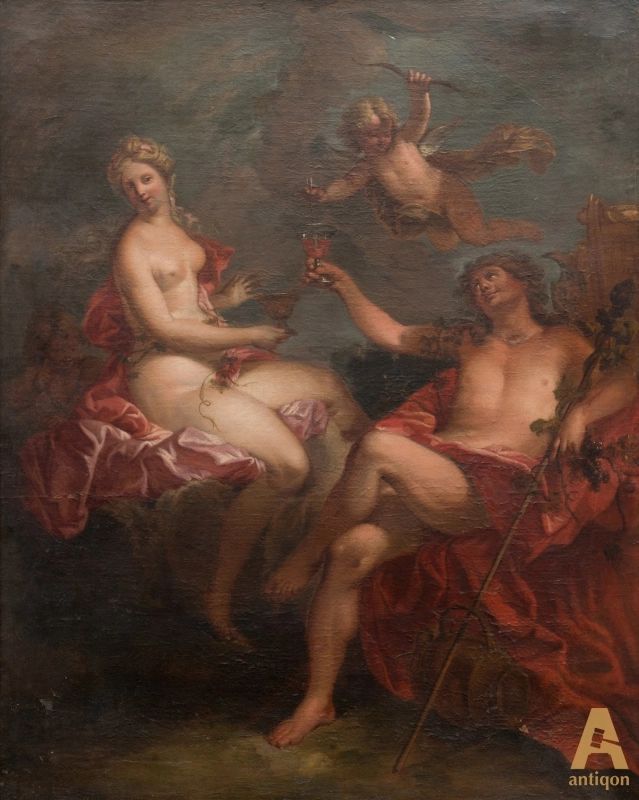
Composition mythologique dans l’esprit baroque italien représentant Bacchus (Dionysos), la déesse romaine de la fertilité Cérès et le Cupidon ailé. La scène est une allégorie de l’abondance, de la joie et de l’amour, symbolisant l’harmonie des forces de la vie. Bacchus est couronné de vigne, tenant un thyrse, son corps semi-nu enveloppé d’un drapé pourpre. Il tend une coupe à Cérès, représentée dans une lumière éclatante, presque nue, drapée d’un tissu rose. Au-dessus d’eux plane Amour, incarnant la force divine de l’amour et de l’union. La peinture se distingue par un modelé délicat des carnations, des couleurs riches et des drapés somptueux, caractéristiques du baroque tardif.
Dimensions: Hauteur 80 cm; Largeur 65 cm; Profondeur (avec cadre) 10 cm.
Matériau: Huile sur toile.
État: Toile sur un ancien châssis, avec patine du temps et légères usures de la couche picturale; cadre doré.
Provenance: Collection privée européenne.
La représentation de Bacchus, Cérès et Amour reflète l’essence de la peinture européenne des XVIIe–XVIIIe siècles, où la mythologie servait de langage universel de l’allégorie. Bacchus, dieu du vin et de l’extase, incarnait l’inspiration et la puissance indomptable de la nature. Son culte était lié aux fêtes des récoltes et aux mystères théâtraux. Cérès, déesse de la fertilité et de l’agriculture, symbolisait l’abondance terrestre et le cycle du renouveau. Amour personnifiait la force irrésistible de l’amour et du désir.
La combinaison de ces trois divinités crée une allégorie unissant fertilité, joie des vendanges et puissance de l’amour — fondements de la vie humaine. Ces compositions furent particulièrement prisées dans la peinture baroque italienne et flamande, servant à la fois de décors et de méditations philosophiques sur l’éternité de la nature et des passions humaines. Les artistes cherchaient à unir la mythologie antique aux canons baroques — compositions dynamiques, jeux de clair-obscur et richesse des drapés. Cette œuvre incarne théâtralité, sensualité et profondeur allégorique, éléments clés des idéaux culturels de son époque.
Bon état de collection: toile sur ancien châssis, avec patine du temps et légères usures de la couche picturale; cadre doré.
The condition report is provided for informational purposes only.
It is not comprehensive and may not reflect all defects, restorations, alterations, or adaptations, as Antiqon does not perform professional conservation-level assessments. The information is based on a qualified, yet subjective, evaluation by our specialists.Before purchasing, we recommend consultation with an independent expert.Please also consult our Terms and conditions and Glossary A-Z, which contain important information on lot characteristics and sale conditions.