Price:
2500 €
Add to cart
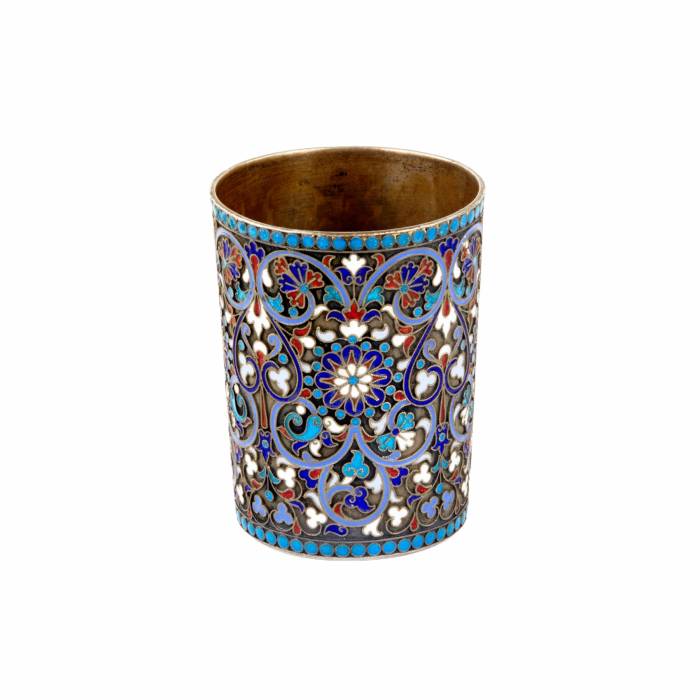
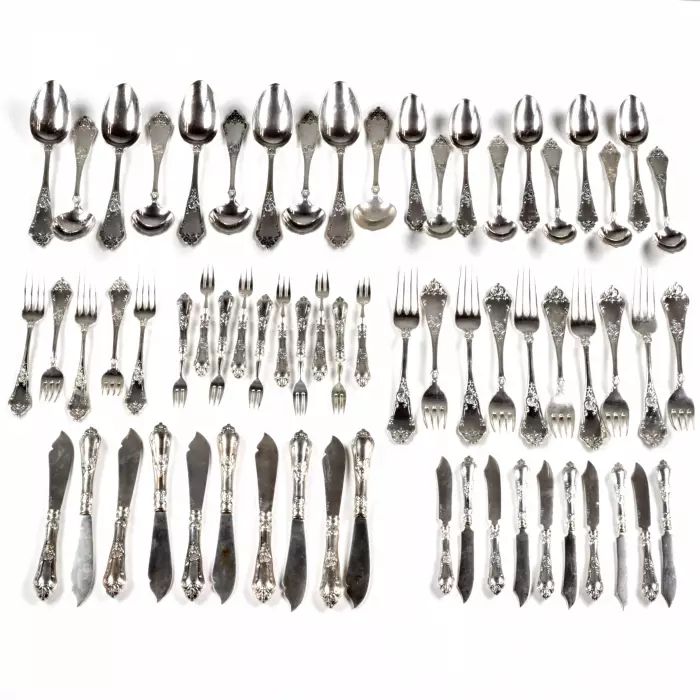
The Gustav Klingert Factory was a distinctive Moscow jewellery workshop active in the last third of the 19th and early 20th centuries, specialising in silver objects decorated with artistic enamels. Its production is characterised by a consistent stylistic identity, a vivid colour palette, and a strong affiliation with the Moscow tradition of decorative silver.
We will only share latest what our month on the GUSTAV KLINGERT FACTORY.
HISTORY AND DEVELOPMENT
The factory was founded in Moscow in 1865 by Gustav Gustavovich Klingert, a silversmith of German origin. Having integrated into the Moscow jewellery milieu, Klingert established a stable production focused on silver objects for domestic and gift purposes. The enterprise remained active until the early 20th century, maintaining continuity in forms and ornamental solutions. Its primary market was concentrated in Moscow and the central provinces of the Russian Empire.
TITLES, AWARDS AND COMMISSIONS
There is no documented evidence of the factory holding the status of Supplier to the Imperial Court. Klingert’s works were primarily intended for affluent merchants and urban clientele who valued decorative richness and expressive enamel work. The factory’s products circulated regularly through private commissions and Moscow jewellery trade networks.
ARTISTIC SPECIFICITY AND TECHNIQUES
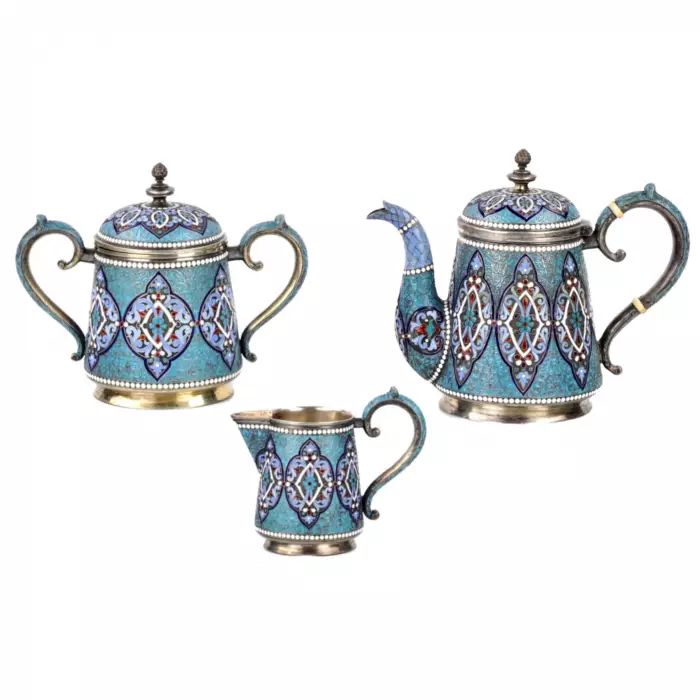
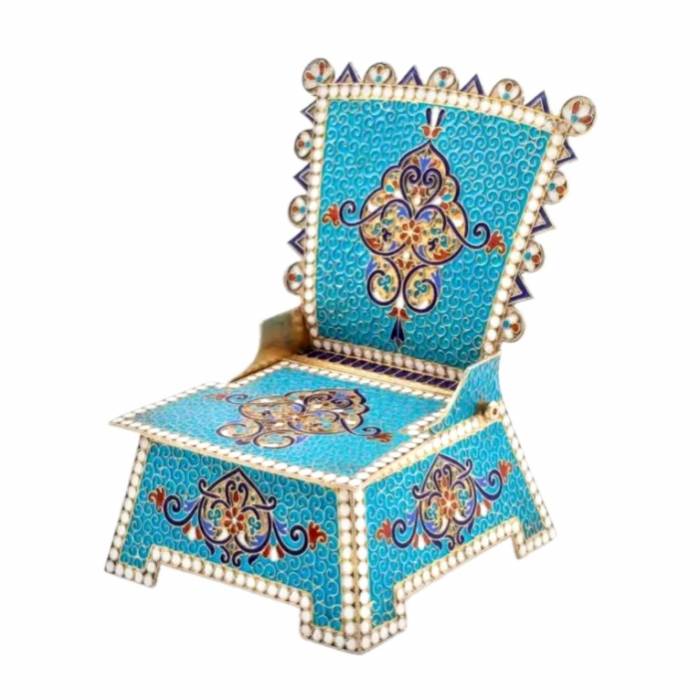
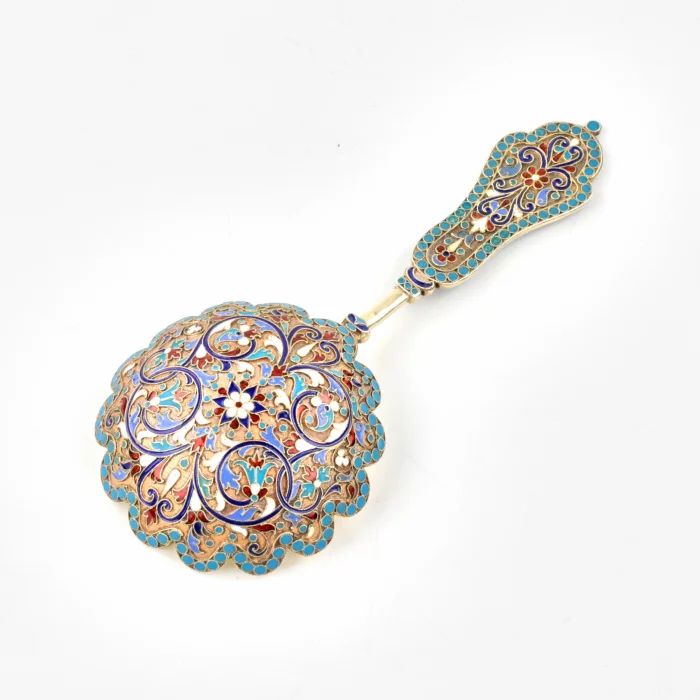
The factory specialised in silver objects with enamel decoration. A defining feature was the use of intense turquoise and blue enamels combined with green and deep blue tones. The ornamental system was based on repeating rapport motifs, enlivened through variations in colour and rhythm. Cloisonné and champlevé enamel techniques were employed, with an emphasis on dense colour and a strong contrast between the silver ground and the enamel surface. Forms were generally restrained and functional, with decoration concentrated on the surface.
LEGACY AND MASTERPIECES
Typical works of the factory include silver tea and table services, kovshes, sugar bowls and decorative vessels with polychrome enamel, dating from the 1870s to the 1890s. These objects are mainly preserved in private collections specialising in Russian silver. Museum holdings are rare and usually limited to regional or thematic collections of decorative arts.
MARKET ANALYSIS
Exceptional works: Large-scale enamelled objects of complex form and high artistic quality are scarce and belong to the upper market segment. Estimated price range: €80,000-150,000. Record results are achieved by unique ensembles with vivid enamel and excellent condition.
Rare works: The majority of characteristic Klingert pieces fall within this category. Enamelled tea and tableware show stable demand, with prices ranging from €15,000-60,000.
Series works: Smaller objects and standard forms from the factory’s production are valued between €3,000-15,000. Demand remains steady, largely due to the recognisable colour palette and Moscow attribution.
The Gustav Klingert Factory occupies a notable position in the history of Moscow silverwork as an example of a consistent artisanal enterprise with a distinctive enamel identity and enduring collector interest.