Price:
25000 €
Add to cart

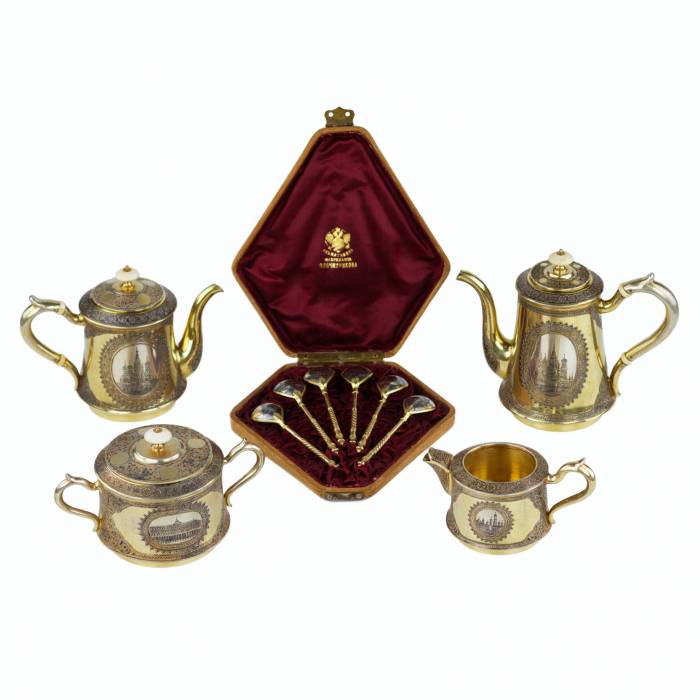
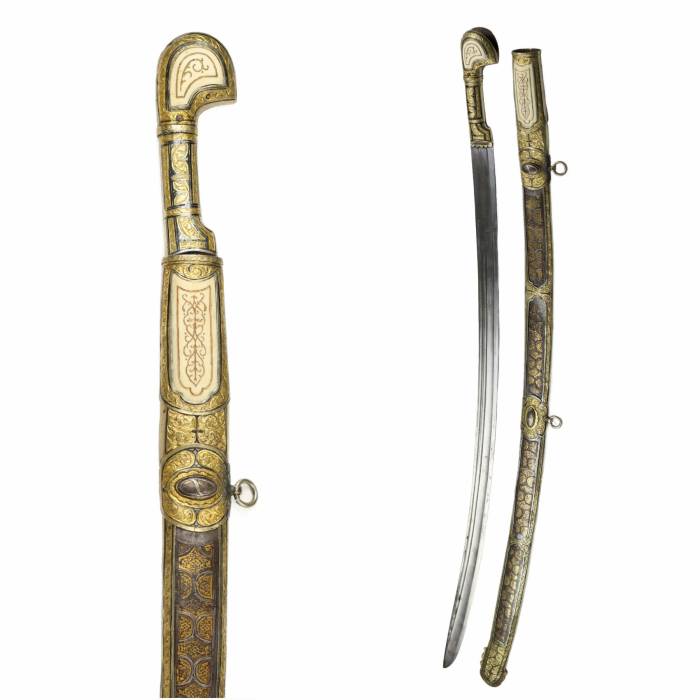
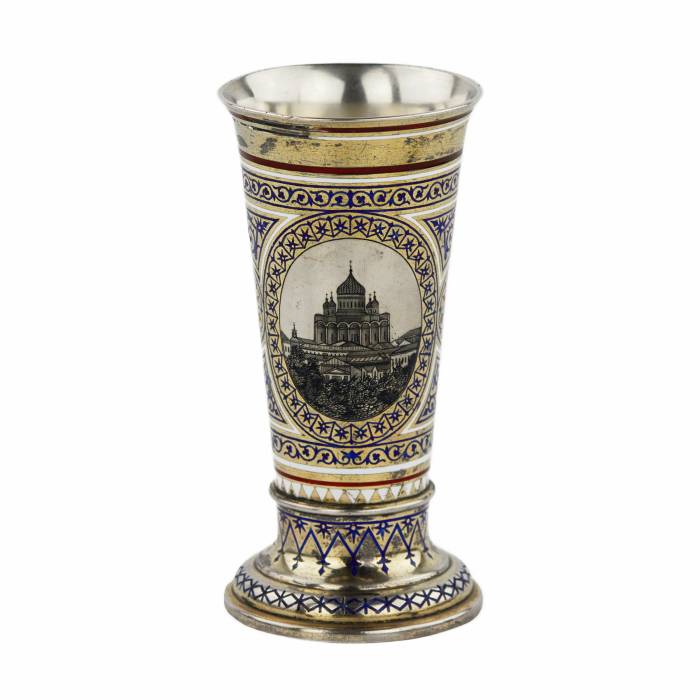
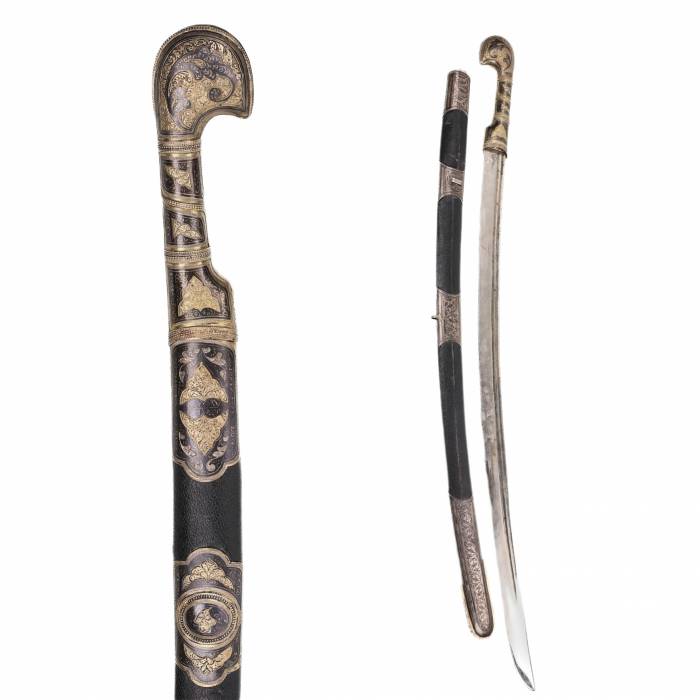
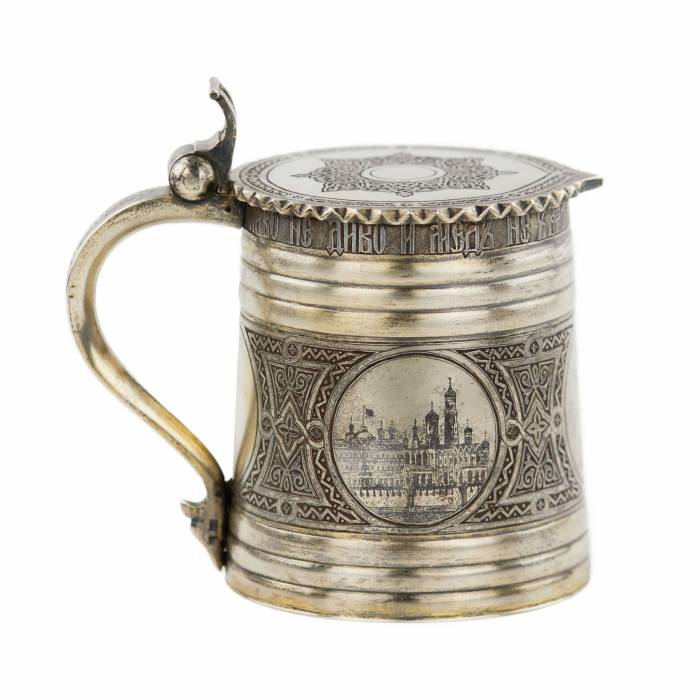
Engraving with niello and gilding is a complex decorative metalworking technique based on the contrast between engraved recesses filled with niello and selectively gilded surfaces. This method was widely used in Russian and European silverwork to enhance graphic clarity and emphasize the prestige and ceremonial character of objects.
We will only share latest what our month on the ENGRAVING WITH NIELLO AND GILDING.
HISTORY AND ORIGIN
The technique of engraved niello emerged in the Late Middle Ages and became widespread across Eastern Europe, the Balkans, and Russia. By the 16th–17th centuries, niello on silver had become one of the defining decorative techniques of Moscow silverwork. During the 18th and 19th centuries, it was increasingly combined with fire gilding, allowing for multi-layered decorative compositions. In the Russian Empire, the technique held particular significance in the production of ceremonial, presentation, and commemorative objects.
TECHNIQUE AND PROCESS
The process begins with hand engraving an ornamental or figurative design into the metal surface. The recessed lines are then filled with niello - an alloy based on silver, copper, lead, and sulfur. After firing, the niello is fixed and polished flush with the surface. Selected elements are subsequently treated with fire or amalgam gilding, creating a striking contrast between the dark engraved lines, gilded accents, and the silver ground. The technique demands exceptional precision, as errors made during engraving are irreversible.
ARTISTIC AND STYLISTIC CONTEXT
Engraving with niello and gilding is characterized by strong graphic definition, high legibility of ornament, and rich decorative expressiveness. The contrast of black, gold, and silver enhances relief and accentuates the architectural structure of the form. The technique was particularly suited to Baroque, Neoclassicism, the Russian Style, and Historicism, and by the late 19th century it was also incorporated into works of Russian Art Nouveau.
APPLICATION AND MASTERS
This technique was widely applied to the production of snuffboxes, cigarette cases, kovshi, icon covers, flatware, awards, and commemorative objects. It was employed by leading workshops and firms such as the House of Fabergé and the workshop of Pavel Ovchinnikov, as well as by Moscow and Yaroslavl silversmiths of the 19th century. Objects decorated using this method are represented in the collections of major Russian and European museums of decorative arts.
MARKET ANALYSIS
Exceptional examples: Ceremonial objects with dense engraving, deep niello, and complex gilding. Price range: €150,000–700,000. Auction record: Silver snuffbox with niello and gilding, Russia, late 19th century, sold in 2021 for €620,000.
Rare examples: Authorial and limited-production works with elaborate ornamentation. Price range: €40,000–150,000. Auction record: Cigarette case with niello and gilding, Moscow, 1900, sold in 2020 for €135,000.
Typical examples: Tableware and utilitarian objects with moderate decoration. Price range: €5,000–40,000. Auction record: Silver spoon with niello and gilding, 1895, sold in 2018 for €32,000.