×
Create account and receive
15% DISCOUNT
your first acquisition
or
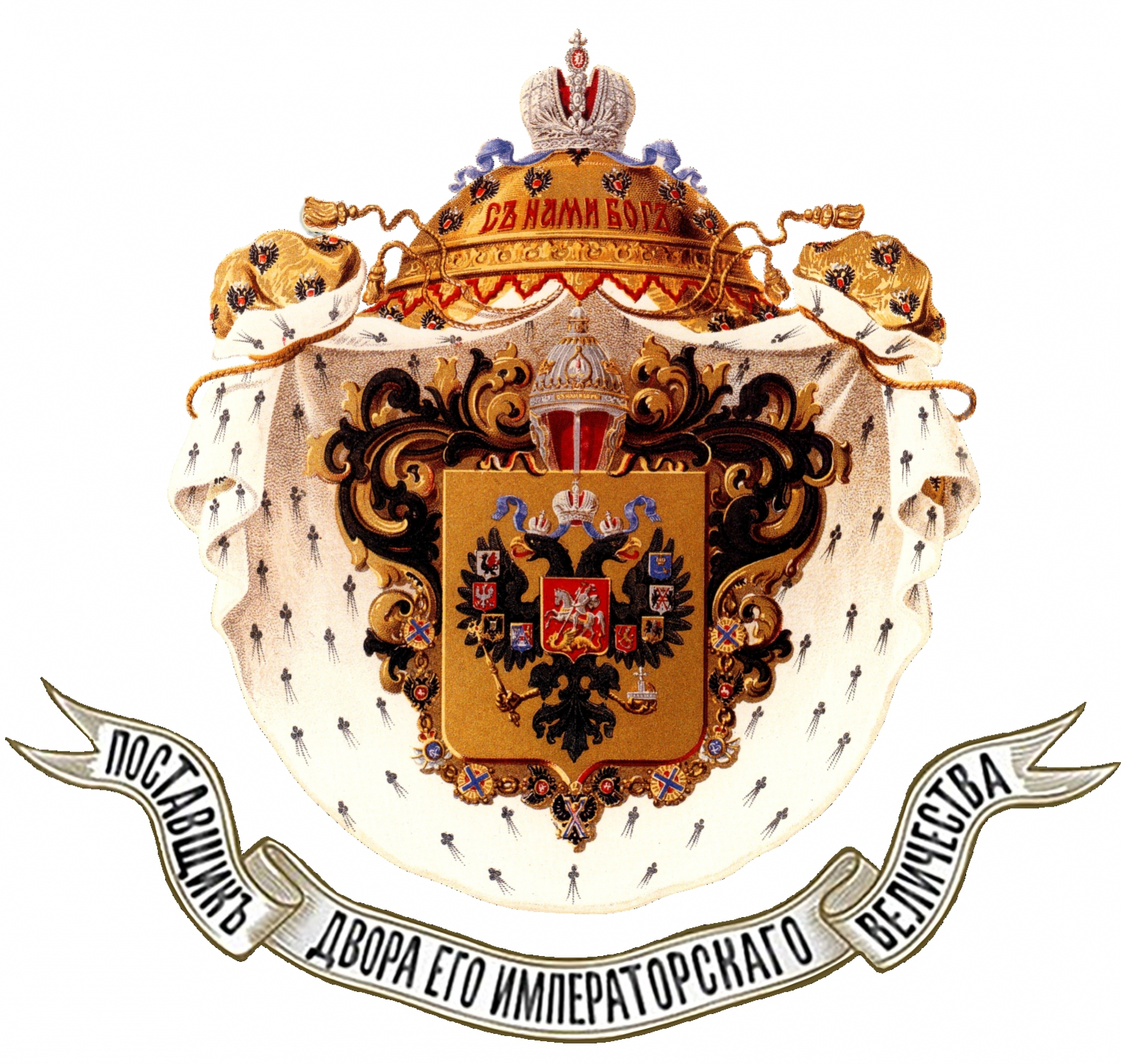
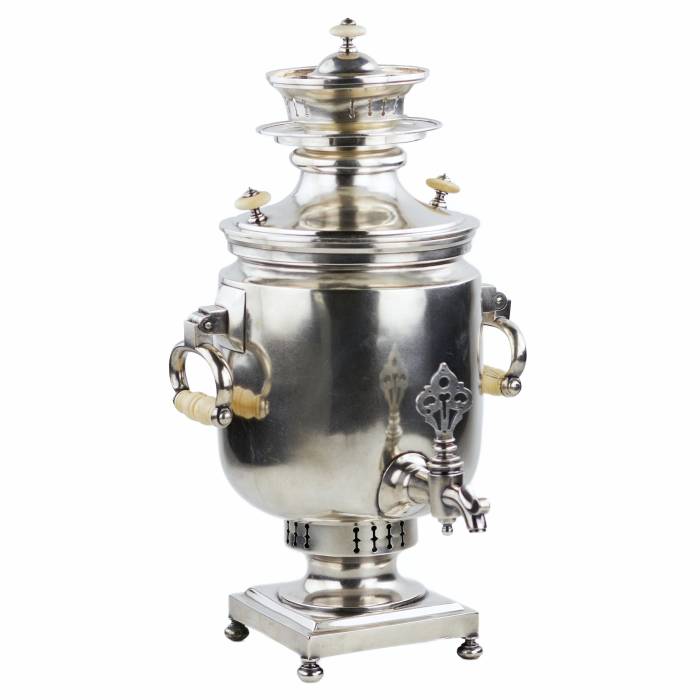
The Grachev Brothers Firm was one of the leading silver and jewellery workshops in Saint Petersburg during the second half of the nineteenth and early twentieth centuries. From the 1870s it held the title of Purveyor to the Imperial Court. The workshop gained renown for its virtuoso cloisonné enamel work, refined synthesis of Russian Style and Russian Modern, and the high artistic quality of its ceremonial silverware.
We will only share latest what our month on the GRACHEV BROTHERS FIRM.
HISTORY AND DEVELOPMENT
The Grachev Brothers jewellery firm was founded in Saint Petersburg in 1851 by craftsmen originating from the Yaroslavl province. By the late 1860s the enterprise had evolved into a structured family firm managed by several brothers, specialising in silverware and enamelled objects. Its location in the imperial capital ensured close ties with court circles, artistic institutions and major patrons. In the 1870s the firm was awarded the title of Purveyor to the Imperial Court and became an active participant in Russian and international exhibitions. The firm’s activity ceased after 1917.
TITLES, AWARDS AND COMMISSIONS
The Grachev Brothers Firm held the official title of Purveyor to His Imperial Majesty’s Court. Its works were awarded prizes at national and international exhibitions during the second half of the nineteenth century. Commissions included ceremonial table services, silver flatware, presentation sets, ecclesiastical objects and decorative works intended for the Imperial Court, the aristocracy and leading commercial houses of Saint Petersburg.
ARTISTIC SPECIFICITY AND TECHNIQUES
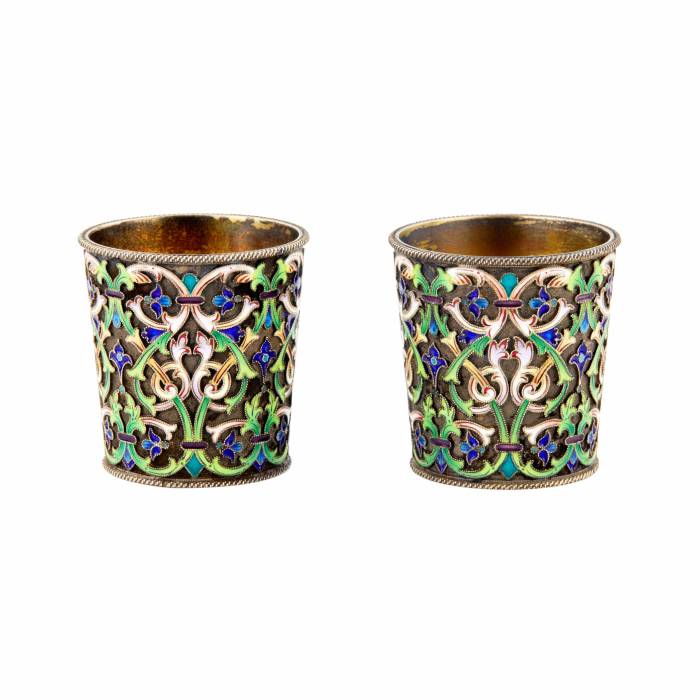
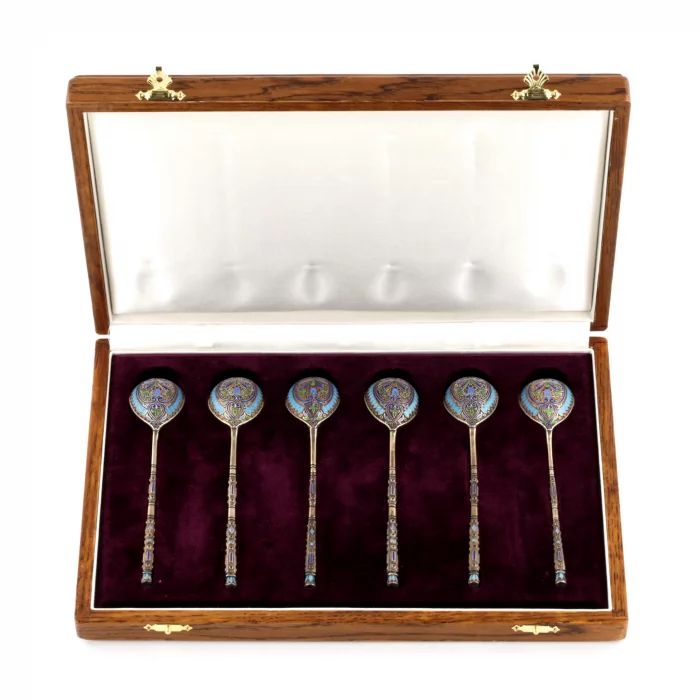
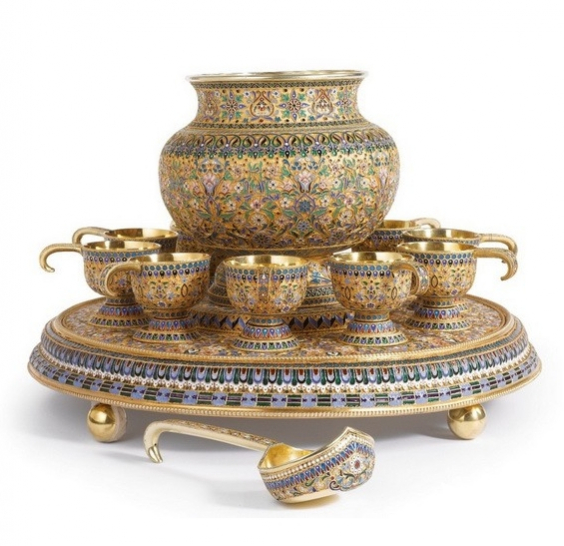
The defining artistic feature of the firm lies in its masterful use of polychrome cloisonné enamel on silver. Ornamental programmes gravitate towards Russian Style motifs enriched with elements of Russian Modern, incorporating stylised vegetal forms, geometric rhythms and national decorative patterns. Characteristic are complex handle profiles, including square-section handles, carefully modelled surfaces and an exceptionally high standard of finish. The enamels are distinguished by their saturated palette and lasting colour stability, forming a recognisable hallmark of the workshop.
LEGACY AND MASTERPIECES
Reference works by the firm include ceremonial silver flatware with polychrome cloisonné enamel from the 1880s–1890s, silver kovshi and cups in Russian Style, as well as presentation sets housed in original fitted cases. Works by the Grachev Brothers are preserved in major museum collections in Russia and Europe and in important private collections, where they are regarded as representative examples of late nineteenth-century Saint Petersburg silver.
MARKET ANALYSIS
Exceptional Works: Museum-level ceremonial objects created for the Imperial Court or major exhibitions occupy the top segment of the market. Estimated price range €200,000–800,000. Record example: Ceremonial silver kovsh with cloisonné enamel, late nineteenth century, approximately €750,000.
Rare Works: Complete services, enamelled flatware sets and rare forms of kovshi and cups. Price range €50,000–250,000. Record example: Enamelled silver flatware set, 1890s, approximately €220,000.
Series Works: Individual silver table objects and small decorative pieces. Price range €5,000–40,000. Record example: Enamelled silver teaspoon, late nineteenth century, approximately €38,000.