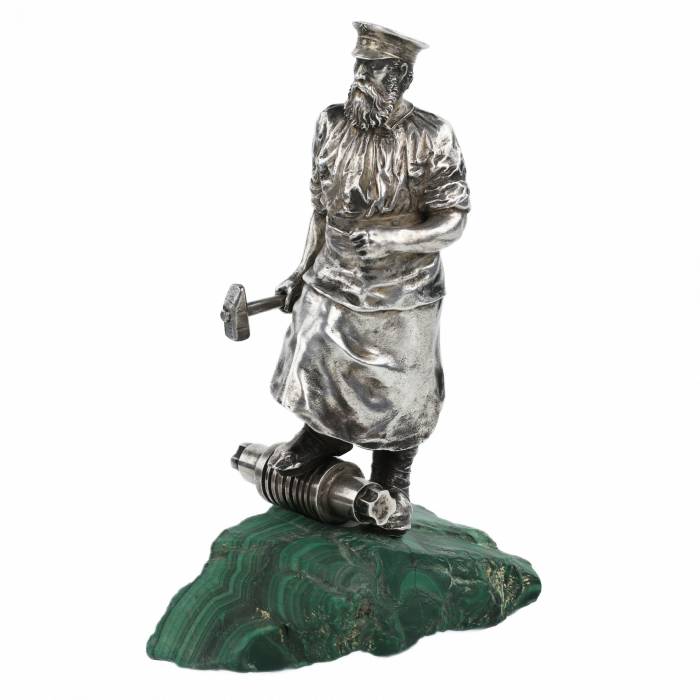
SILVER SCULPTURE “MINING ENGINEER”. 1ST MOSCOW ARTEL, 1908–1917

SILVER SCULPTURE “MINING ENGINEER”. 1ST MOSCOW ARTEL, 1908–1917

ID-ANTQ-12213
Live auction begins in: 219 days
Estimate
0 - 0 EUR
Biddings not started
Request more info
Use our cost calculator

Discover how the value of similar works has evolved over the past 10 years. Art is not only beauty — it's an investment.

Price History

Discover how the value of similar works has evolved over the past 10 years. Art is not only beauty — it's an investment.

Request a Shipping Quote
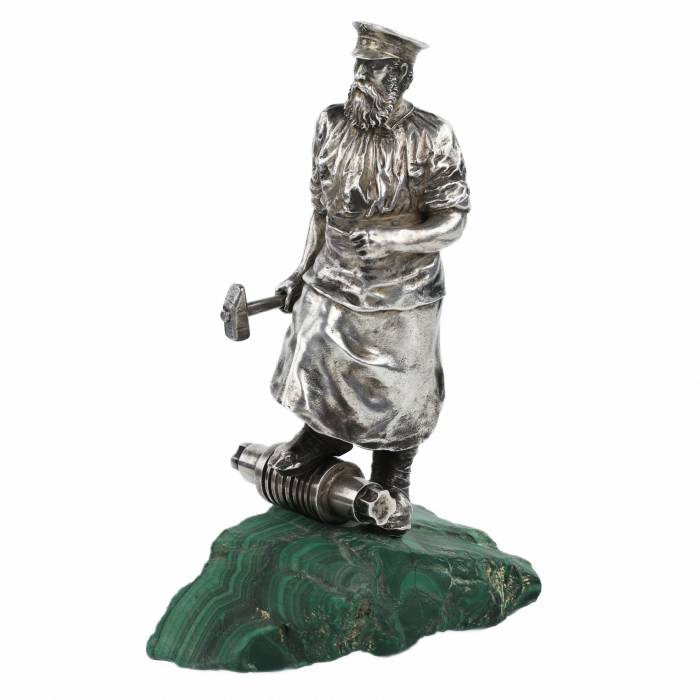
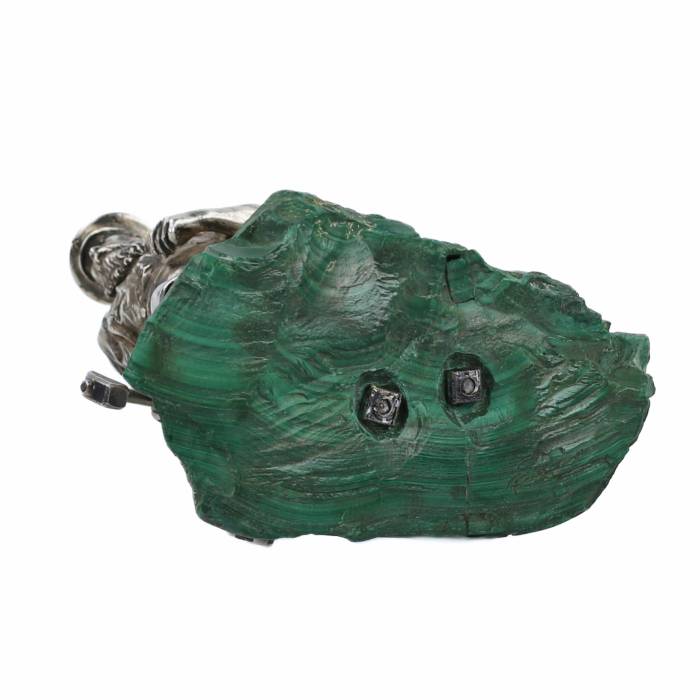
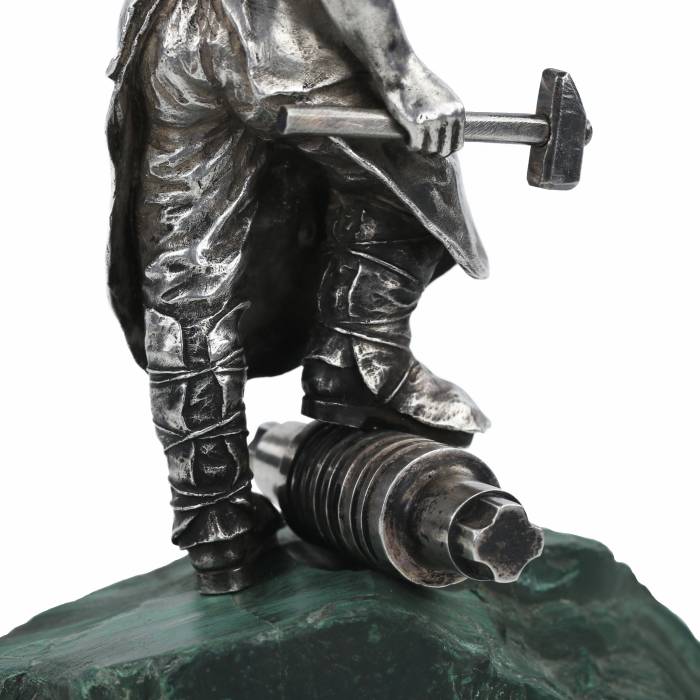
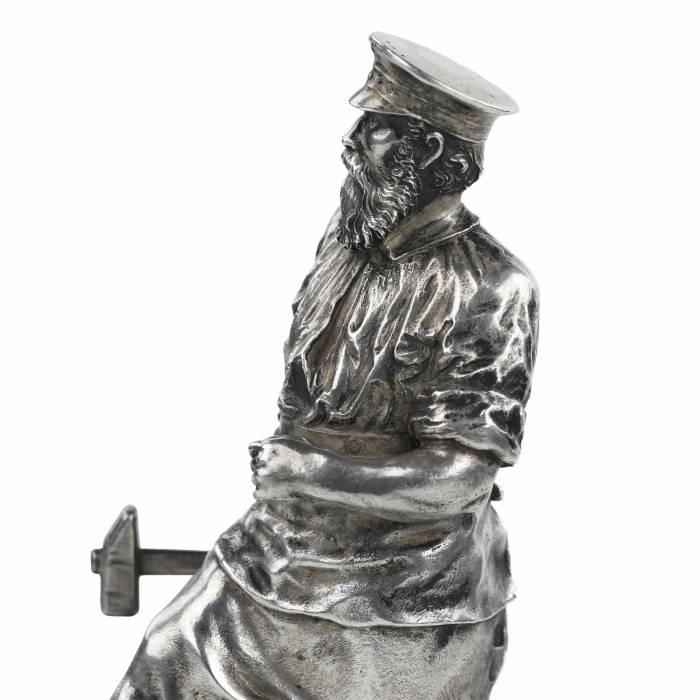
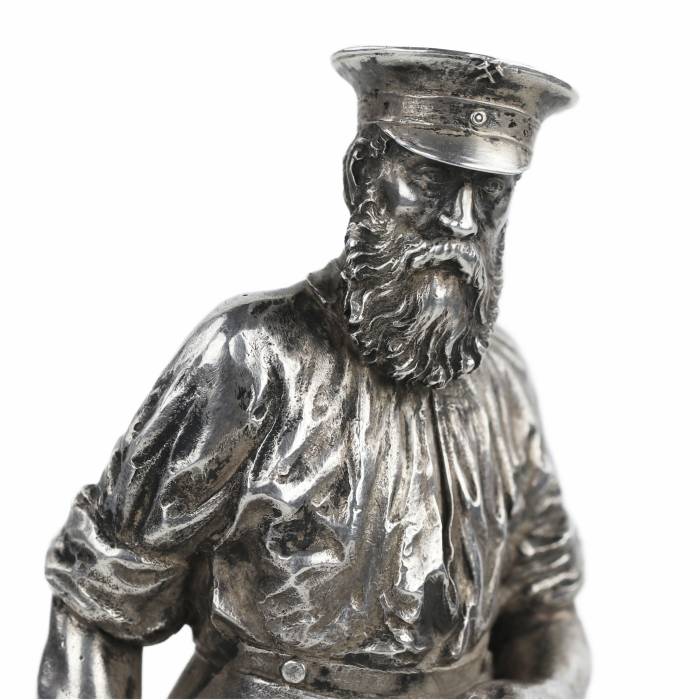
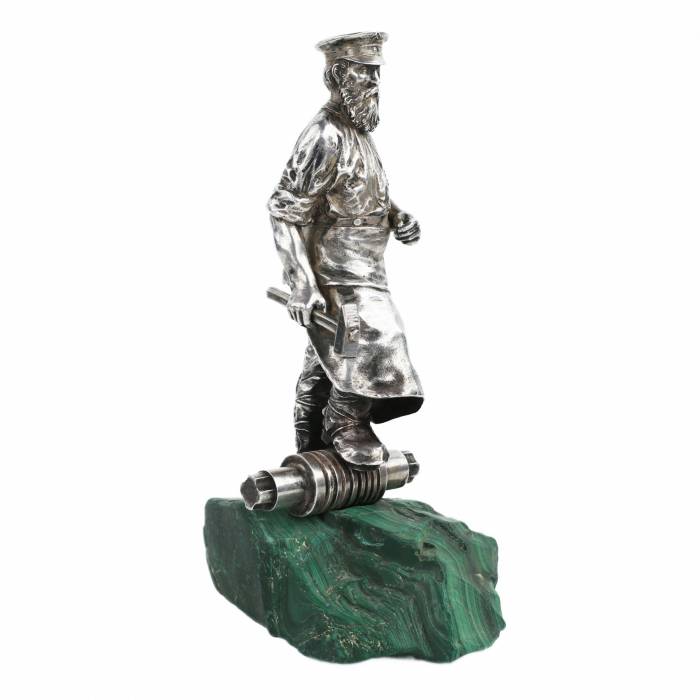
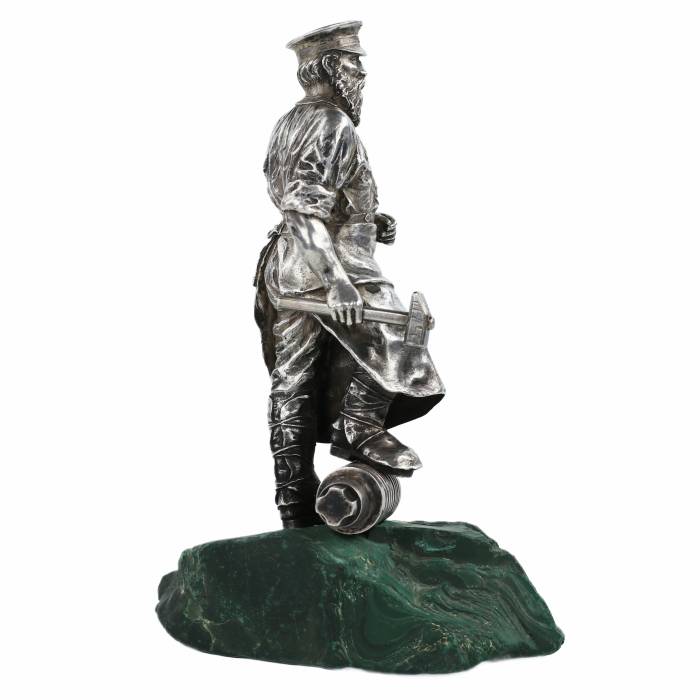
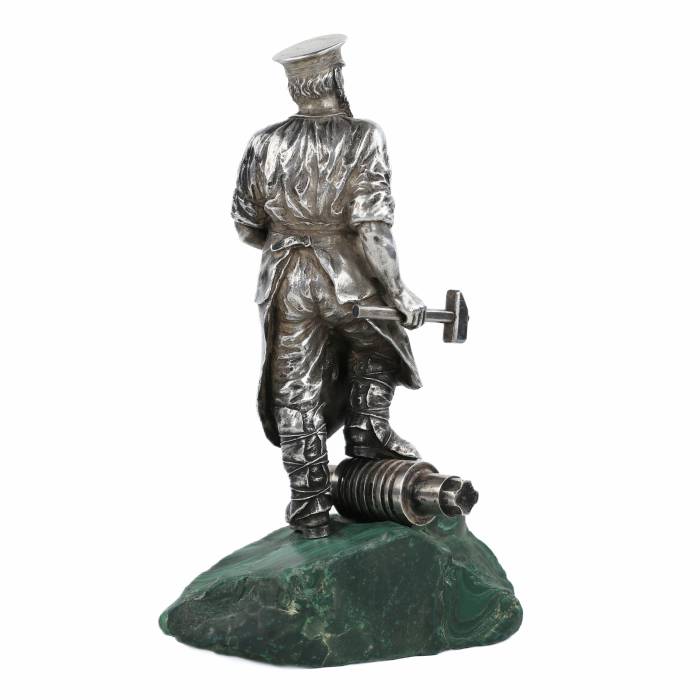
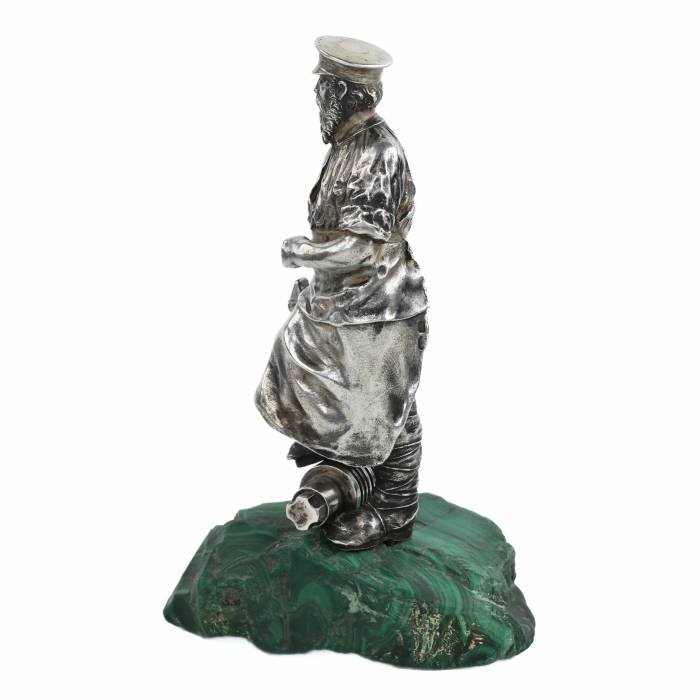
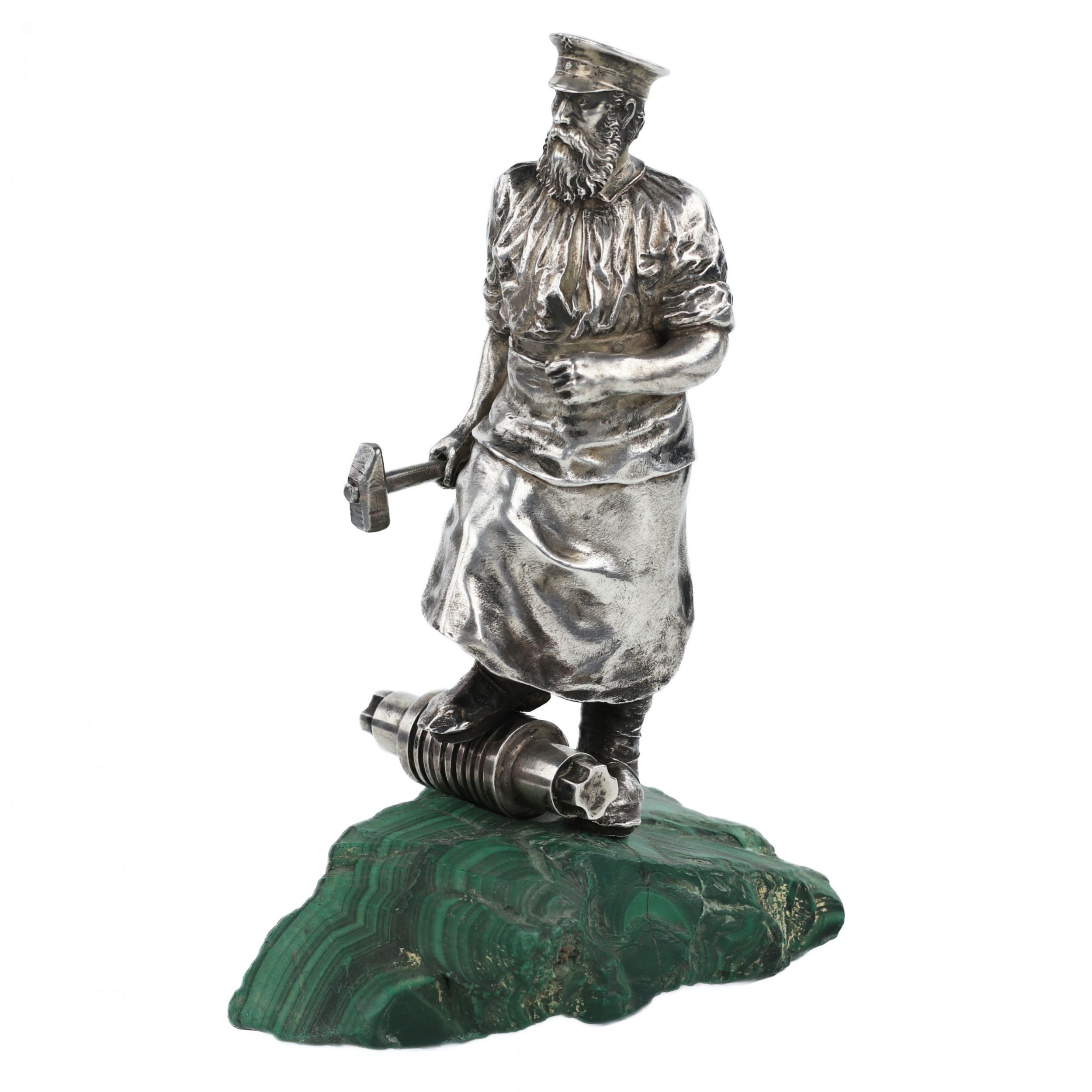
A rare early 20th-century silver sculpture, created by the 1st Moscow Artel, captures the image of a Russian mining engineer during the age of industrialization. Masterfully crafted, the figure is depicted in a work apron, holding a hammer and wearing a peaked cap adorned with the insignia of the Imperial Mining Department. He stands atop a massive steel shaft, symbolizing the industrial strength and progress of Russia. The stone base, imitating extracted ore, lends the sculpture striking symbolic depth. The piece stands out for its vivid expressiveness and exceptional detail—from the folds in the clothing to the beard, conveying the subject’s resolute character.Mining engineers played a key role in the development of metallurgy and the extractive industries of the Russian Empire, particularly in the years preceding the First World War. The uniform attributes and insignia precisely reflect the historical standards of the Ministry of Trade and Industry. Such presentation sculptures were typically gifted to major clients, government officials, or displayed at early 20th-century industrial exhibitions.

Condition: Excellent preservation. Original patina. Fully legible hallmarks.

Dimensions: Height 19 cm. Width 13 cm. Weight:1010 g.

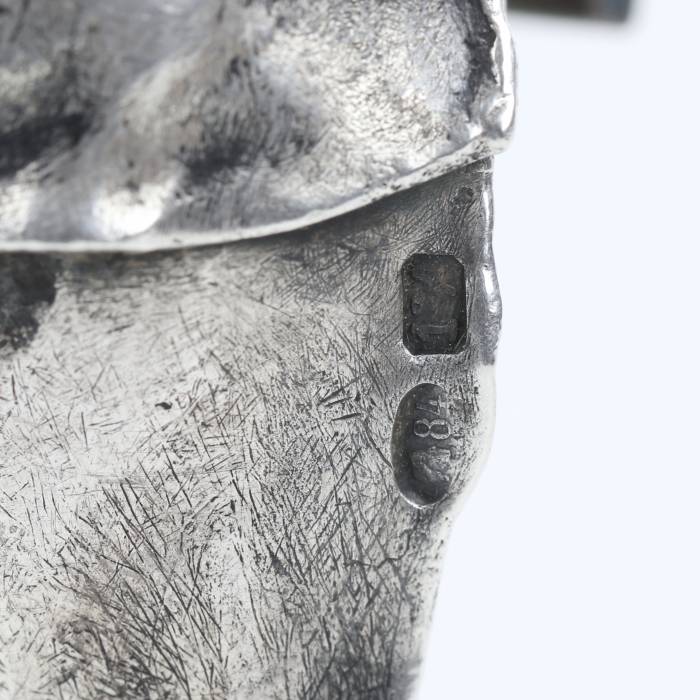
Hallmarks: Assay mark of the Moscow District Assay Office (1908–1917) — female head in kokoshnik facing right with the silver standard “84”; maker’s mark 1-яА in a rectangular cartouche with chamfered corners — 1st Moscow Artel of Jewellers.

Art:
russia
Height:
19 cm
Width:
13 cm
Depth:
8 cm
Period:
Early 20th century
Style:
Realism
Country:
Russia, Moscow
Material:
Silver 84, Malachite
Gifts:
Business gifts, Cabinet, Gifts for a gentleman
Condition:
Revive
Fair
Good
Very good
Like new
The 1st Moscow Jewellery Artel was one of the largest and most significant cooperative associations of jewellers in the Russian Empire, established after the 1905 revolution amid economic and social transformation. Based in Moscow and officially registered in the early 20th century, the artel operated until the revolutionary events of 1917. It united some of the capital’s finest craftsmen, many of whom had previously worked for renowned firms such as Fabergé, Ovchinnikov, and Khlebnikov.

The creation of the artel was a response to the growing need to protect the interests of artisans and to preserve a high level of artistic and technical execution in jewellery production. The artel functioned as a cooperative: each master contributed to shared production while retaining creative freedom.

Works produced by the 1st Moscow Artel were renowned for their high quality, strict hallmark compliance, attention to detail, and rich artistic design. The artel created a wide range of items—from table silver and ecclesiastical objects to decorative sculptures, snuffboxes, cigarette cases, and presentation pieces. Of particular distinction were silver presentation sculptures with stone or marble bases, demonstrating mastery in small-scale sculpture and the realism characteristic of the turn of the 20th century.

All pieces were marked with the appropriate assay hallmark (most commonly the kokoshnik profile facing right) and a maker’s mark in the form of “1-яА” within a rectangular shield with chamfered corners.

Until 1917, the artel actively participated in exhibitions, maintained a private clientele among high-ranking Imperial officials, and supplied goods to the domestic market. After the October Revolution and the nationalization of private industry, the artel ceased operations, and its craftsmen either joined state jewellery workshops or emigrated abroad.

The condition report is provided for informational purposes only.

It is not comprehensive and may not reflect all defects, restorations, alterations, or adaptations, as Antiqon does not perform professional conservation-level assessments. The information is based on a qualified, yet subjective, evaluation by our specialists.Before purchasing, we recommend consultation with an independent expert.Please also consult our Terms and conditions and Glossary A-Z, which contain important information on lot characteristics and sale conditions.
MOSCOW JEWELLERY ARTELS
Established in 1908, the Moscow jewellery artels represented a new form of collective artistic craftsmanship, bringing together professional jewellers trained within the traditions of major pre-revolutionary firms. They played a significant role in preserving the culture of silver craftsmanship during the artistic and social transformations of the early 20th century.
... Read More

Stay up to date with new arrivals
Save Russian silver and we let you know when new listings appears in this category
Save

Related items