


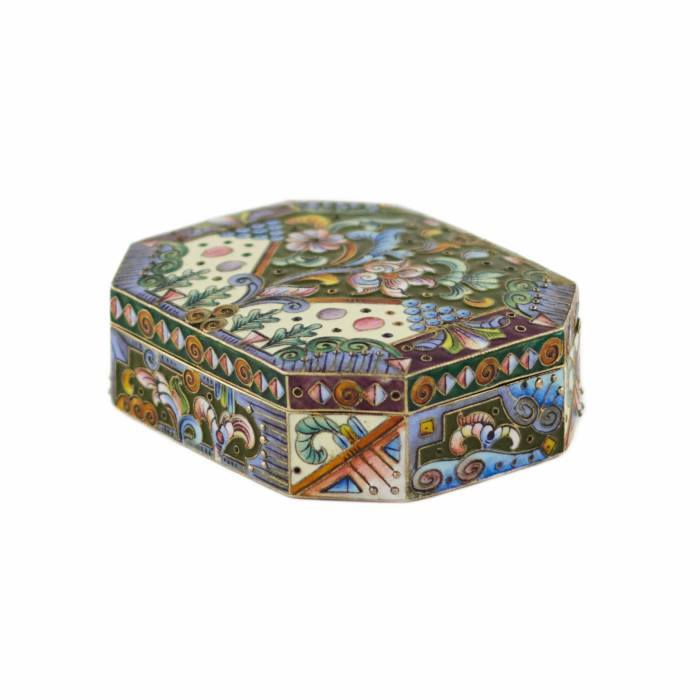
RUSSIAN ART NOUVEAU SILVER SNUFFBOX WITH CLOISONNÉ ENAMEL. 6TH MOSCOW JEWELLERS’ ARTEL RUSSIA, MOSCOW, 1908–1917
AntiqonART consultant will contact you within one business day after receiving your request.
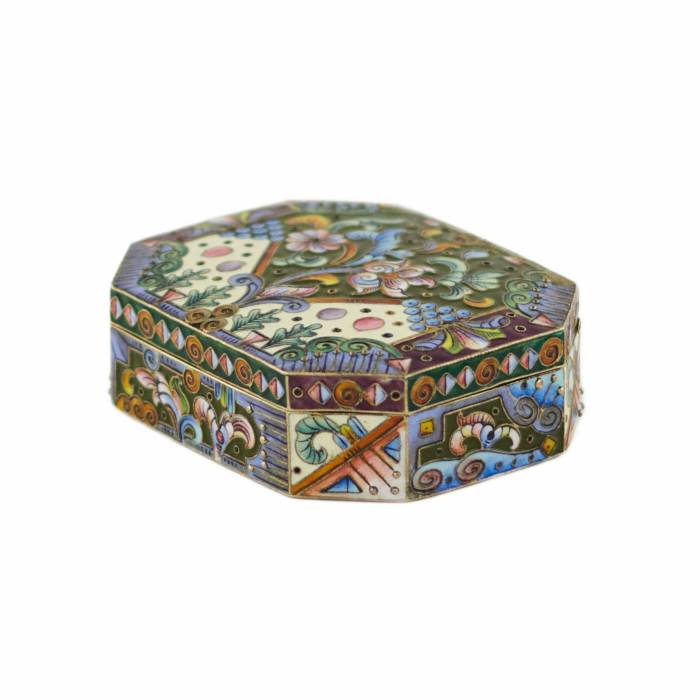
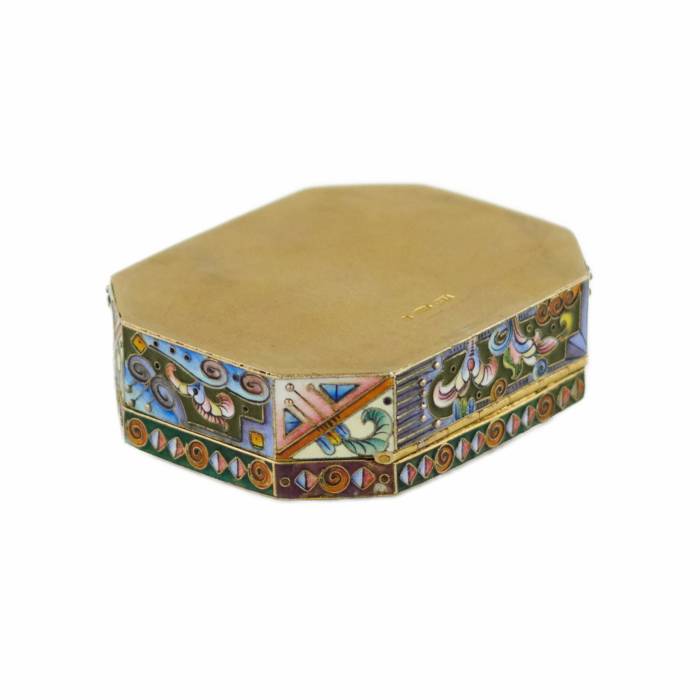
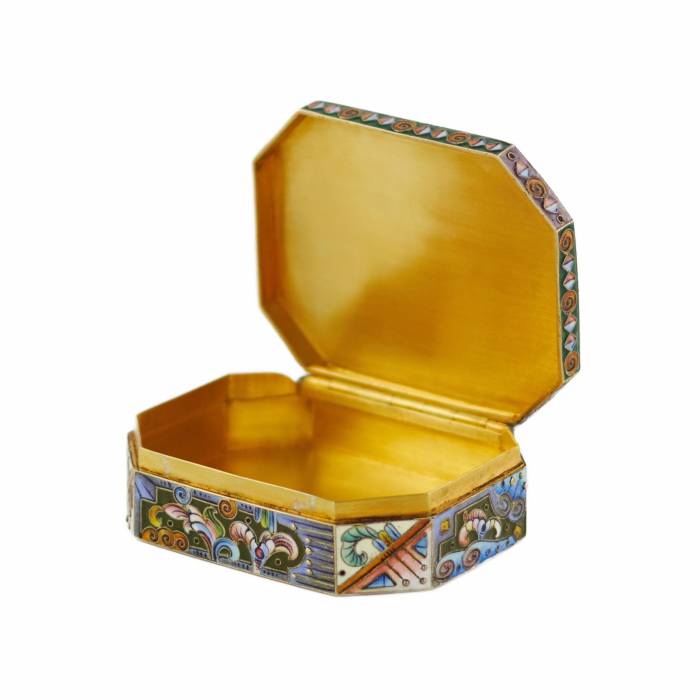
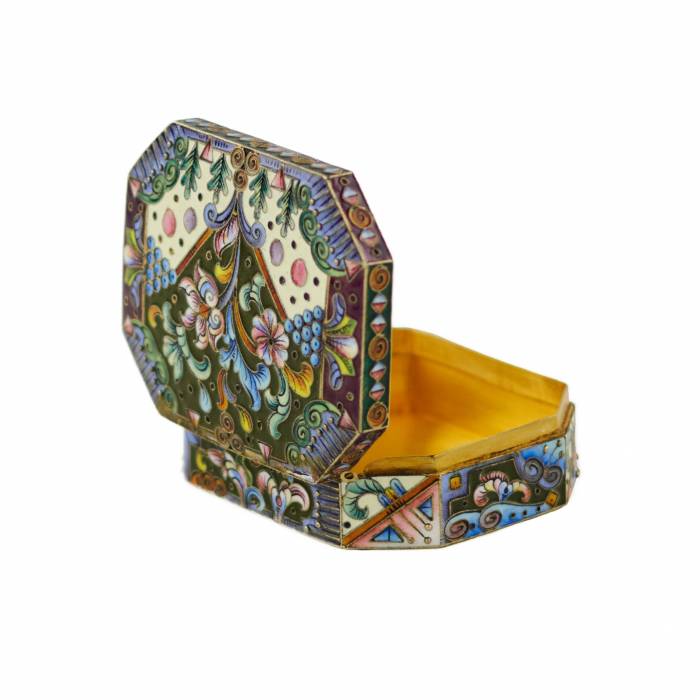
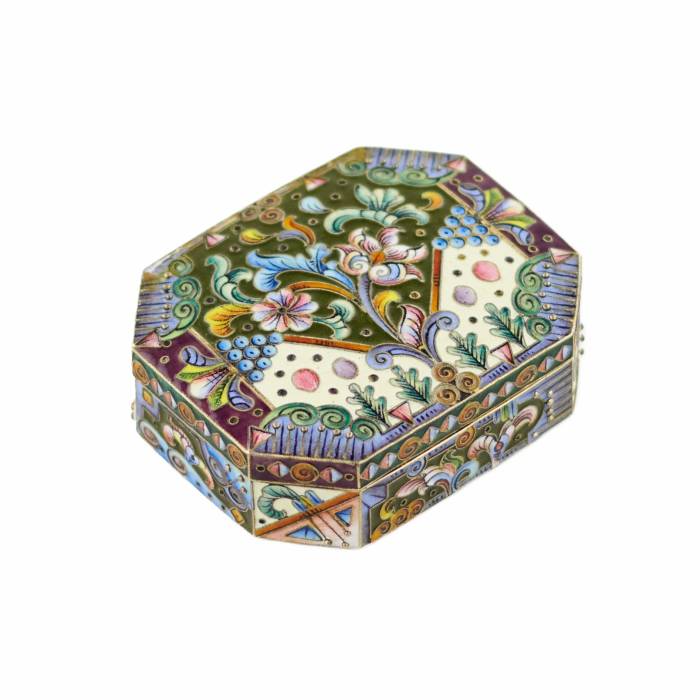
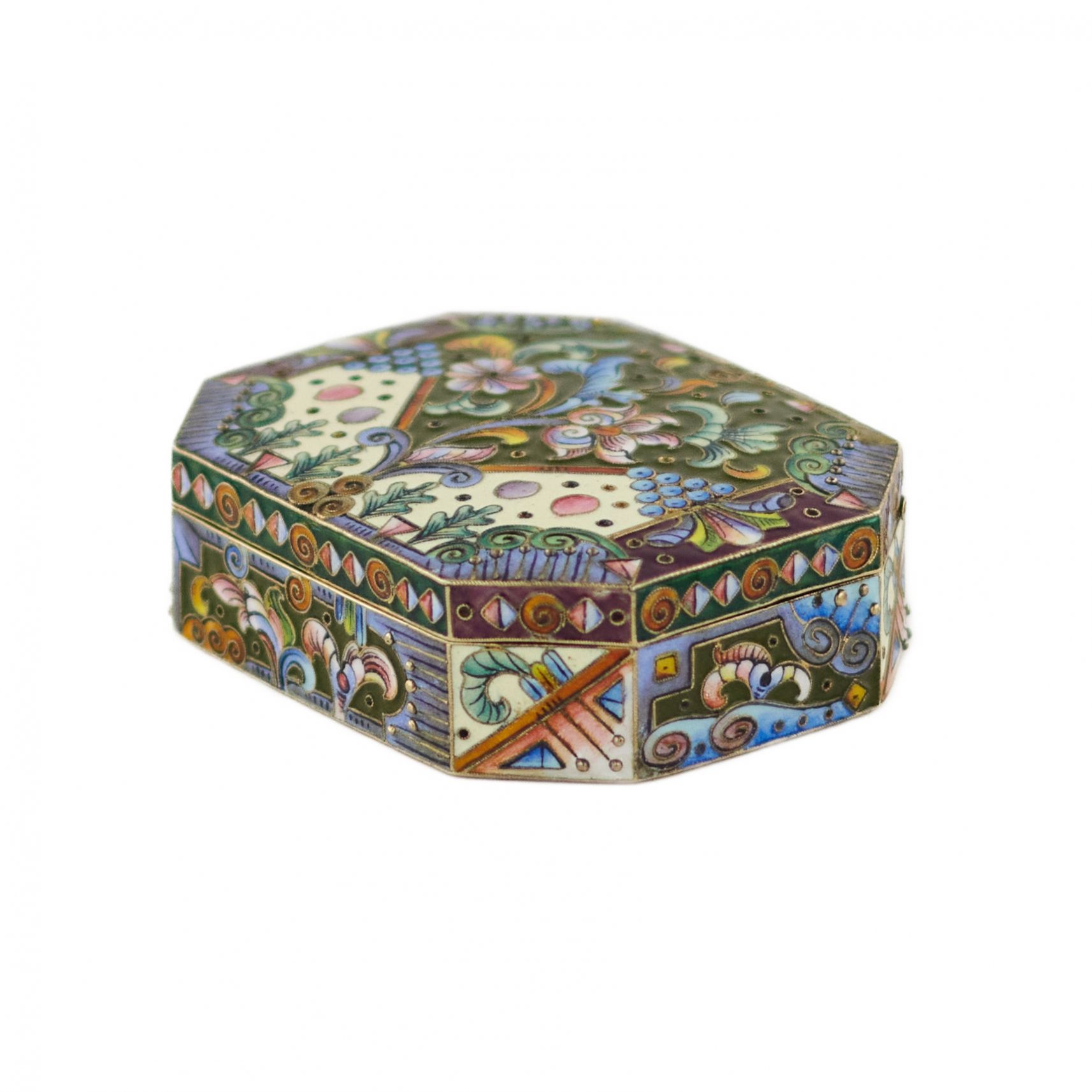
A vivid and artistically coherent example of late Russian Art Nouveau, this silver snuffbox was produced by the craftsmen of the 6th Moscow Jewellers’ Artel between 1908 and 1917. The octagonal form of the body emphasises the architectural clarity of the object and provides a structural framework for a complex, multi-layered decorative programme characteristic of Moscow enamel production in the early twentieth century.
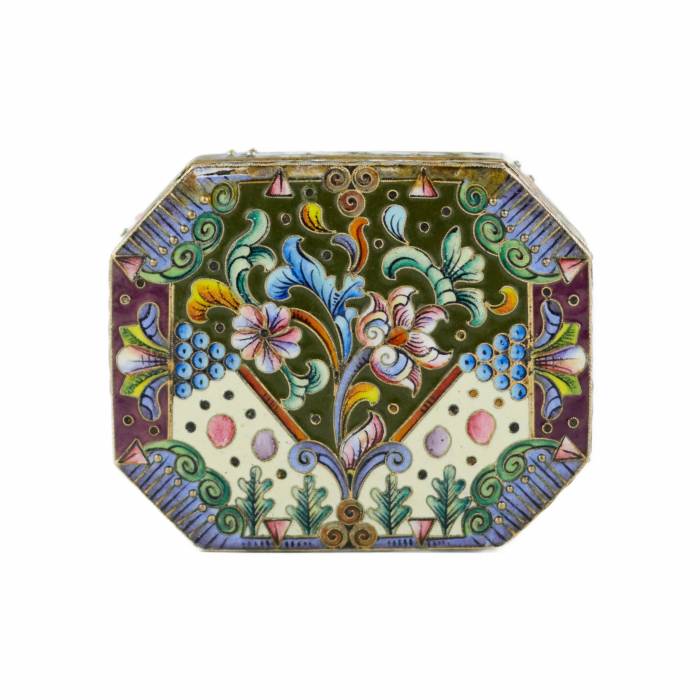
The body and hinged lid are adorned with high-quality cloisonné enamel on silver, executed with finely applied silver cloisons and a rich, carefully balanced colour palette. The decorative composition combines geometric bands, vegetal motifs and symbolic representations of natural elements. The central motif on the lid depicts a mythical flower-tree bearing fruits and berries, as if emerging from the edge of an epic forest. Its symmetrical growth establishes the vertical axis of the composition and alludes to themes of life cycles, growth and fertility.
In the corner zones and along the lateral registers, an ambivalent system of undulating and spiral motifs unfolds. In the upper areas these forms evoke the celestial sphere, clouds and rain-bearing skies, while in the lower registers they transform into images of meadow grasses, bodies of water and fertile earth. The side panels alternate scenes of vegetal flowering and aquatic symbolism, complemented by bands of diamonds, diagonals and spirals. The chamfered corners are articulated with dynamic diagonal compositions set against a light enamel ground, enhancing the sense of rhythm and movement.
The interior surface of the snuffbox is fully gilded.
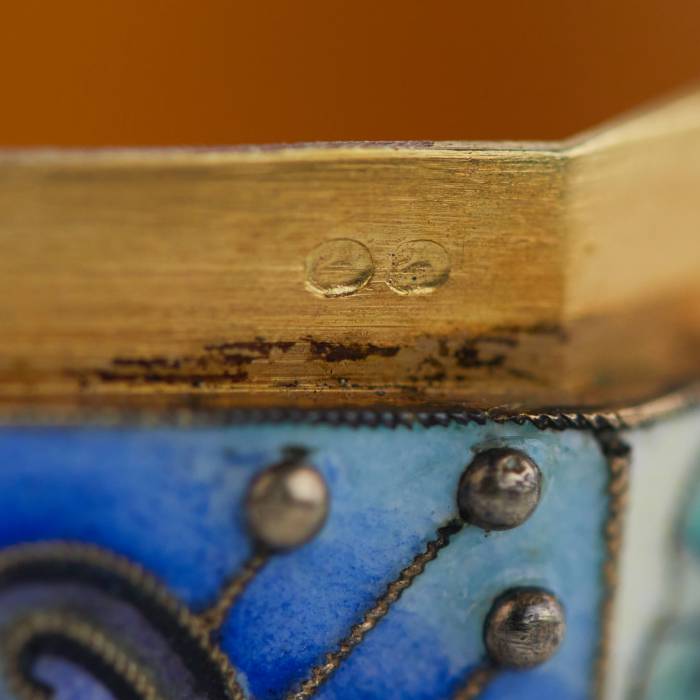
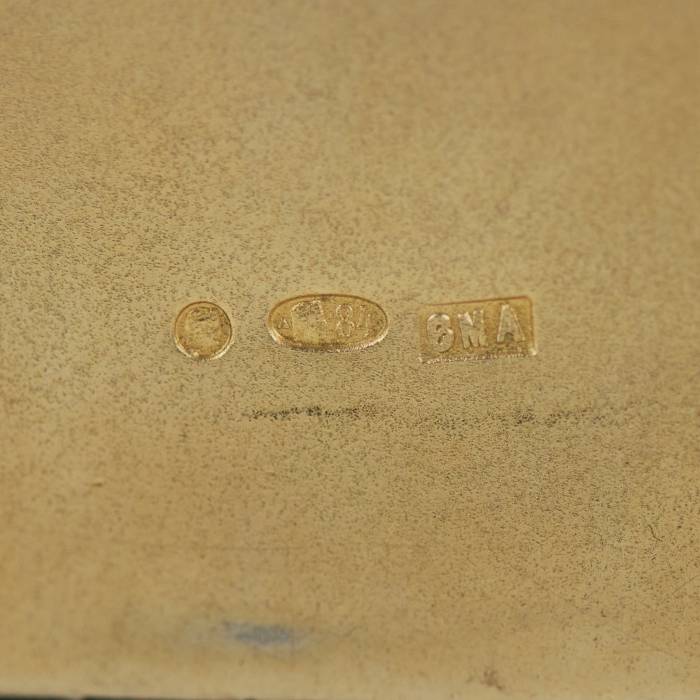
Hallmarks: Mark “6MA”, 6th Moscow Jewellers’ Artel; State assay mark indicating silver fineness “84”, corresponding to the period 1908–1917; additional technological mark. On the inner rim of the bezel: a pair of French import marks in the form of swans within ovals.
Dimensions: Height 2.5 cm; length 8 cm; width 6.6 cm.
Weight: 130.0 g.
Condition: Good.
Provenance: Private European collection.
Jewellers’ artels in Moscow in the early twentieth century represent a significant phenomenon in the history of Russian decorative and applied arts. After 1908, the artel system became increasingly widespread, allowing master craftsmen to maintain a high artistic standard under changing market conditions and the gradual decline of large manufacturing firms. Moscow artels brought together highly skilled artisans, many of whom had previously worked for leading workshops and factories, and who possessed advanced mastery of complex enamel techniques.
The 6th Moscow Jewellers’ Artel belongs among the collectives most consistently engaged in artistic enamel work during the years 1908–1917. Its production is distinguished by a search for an independent decorative language, interpreting the principles of Russian Art Nouveau through symbolism and national romantic imagery. During this period, cloisonné enamel was not merely ornamental but served as a primary means of artistic expression, enabling the creation of sophisticated chromatic and conceptual compositions.
Late Russian Art Nouveau is characterised by a deep engagement with organic forms, the concept of natural growth and the symbolism of the elements. In the decorative arts, this approach resulted in self-contained artistic worlds in which every component contributed to an overarching idea. Snuffboxes and personal accessories of the early twentieth century were often conceived as status objects and carriers of artistic meaning rather than purely utilitarian items. The motif of the flower-tree refers to archetypes of life, fertility and renewal deeply rooted in Russian folklore and Symbolist culture at the turn of the century. The presence of French import marks indicates the object’s export to Western Europe and underscores the international appreciation of Moscow artel workmanship during this period.
Condition is good. The cloisonné enamels are stable and evenly preserved. The silver shows no deformation. The gilding of the interior is intact. Minor signs of age and careful use are consistent with the period.
The condition report is provided for informational purposes only.
It is not comprehensive and may not reflect all defects, restorations, alterations, or adaptations, as Antiqon does not perform professional conservation-level assessments. The information is based on a qualified, yet subjective, evaluation by our specialists.Before purchasing, we recommend consultation with an independent expert.Please also consult our Terms and conditions and Glossary A-Z, which contain important information on lot characteristics and sale conditions.