


ICON OF THE MOTHER OF GOD OF UMILENIE RUSSIA, MOSCOW, 16TH–17TH CENTURY
AntiqonART consultant will contact you within one business day after receiving your request.
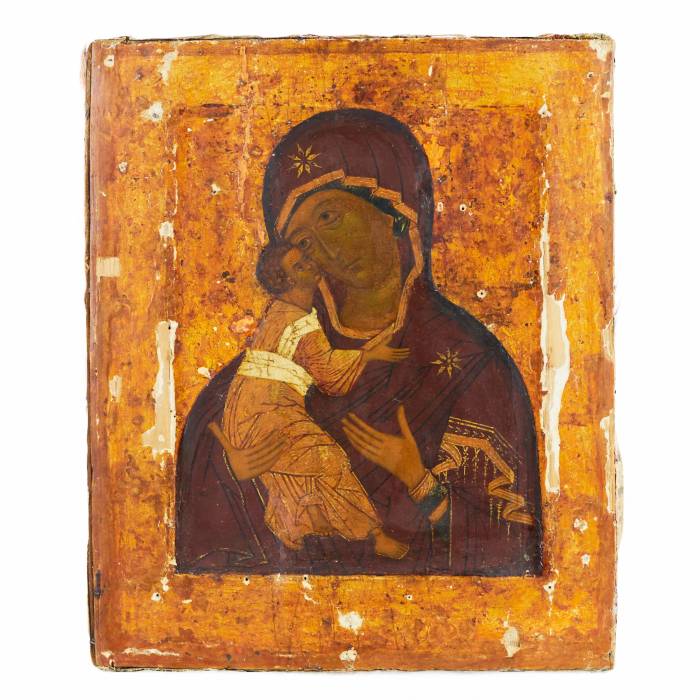
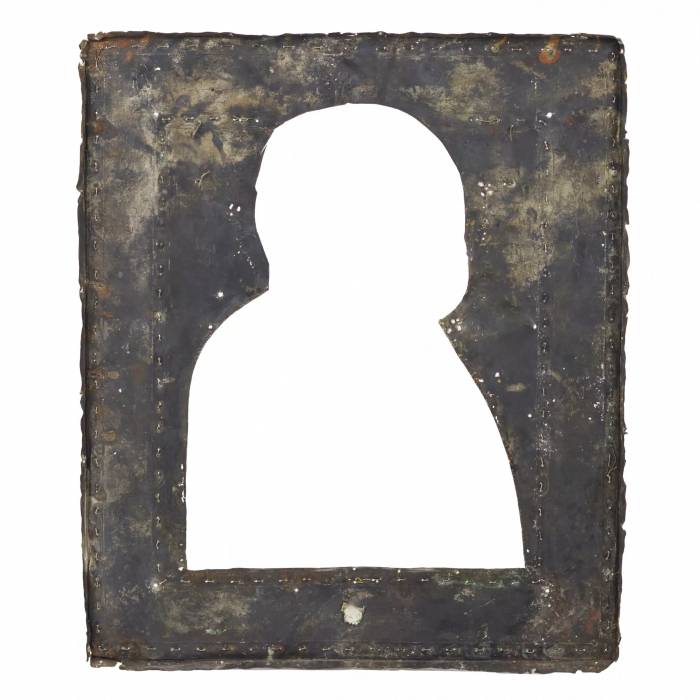
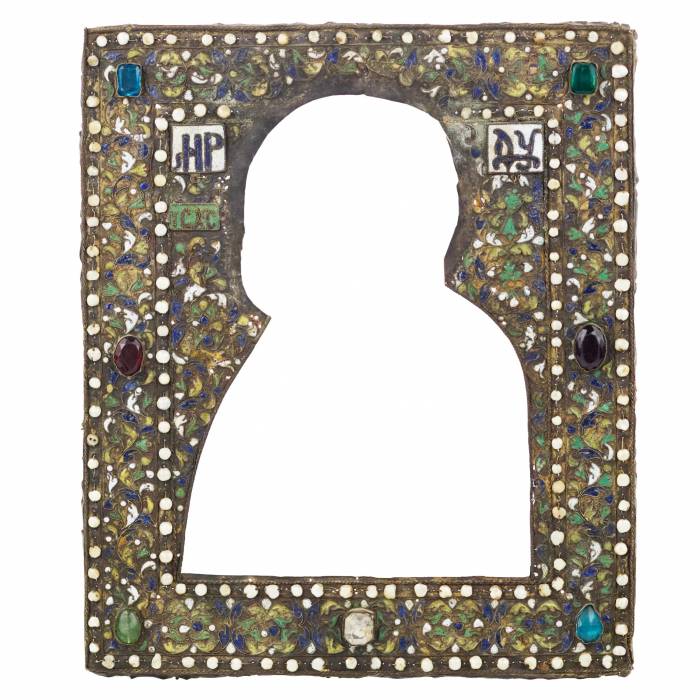
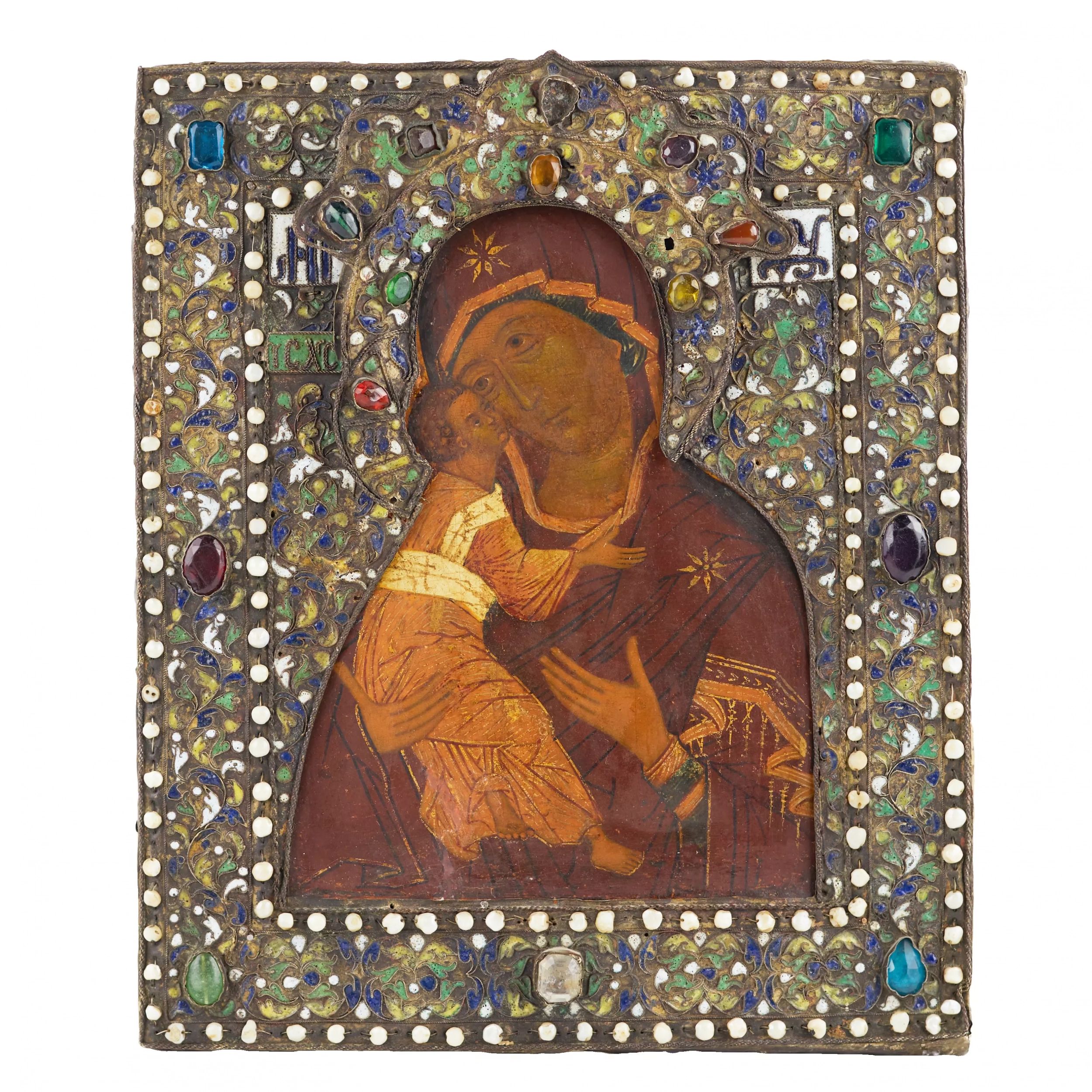
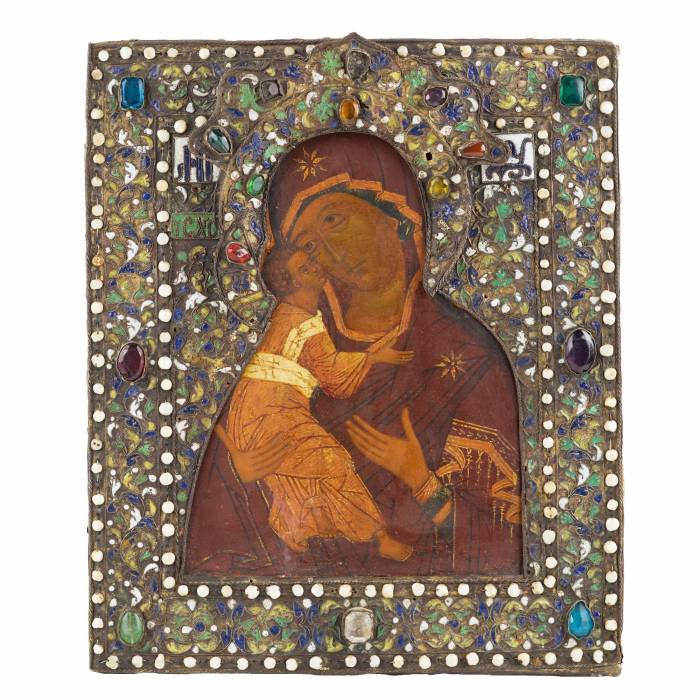
A rare icon of the Mother of God of Umilenie, created within the Moscow icon-painting tradition of the 16th–17th century. Executed in tempera on a wooden panel, the image displays refined modelling of the faces, a noble ochre palette and delicate linear highlights characteristic of the period. The composition follows the Byzantine Eleousa type, in which the tender touching of the cheeks of the Virgin and the Christ Child conveys profound spiritual compassion and intercession.
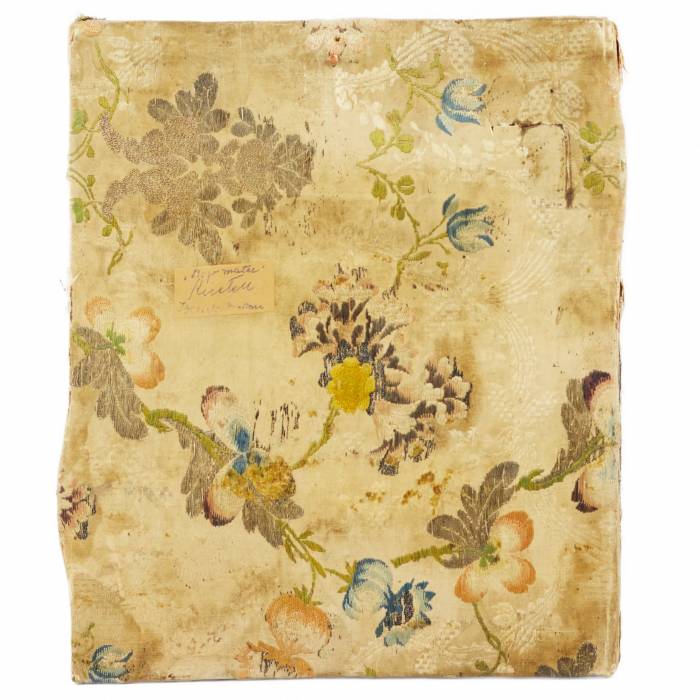
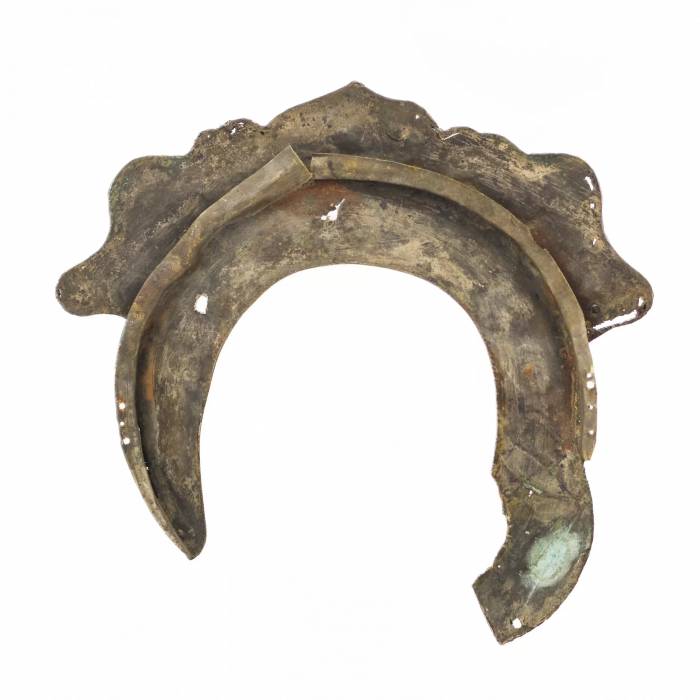
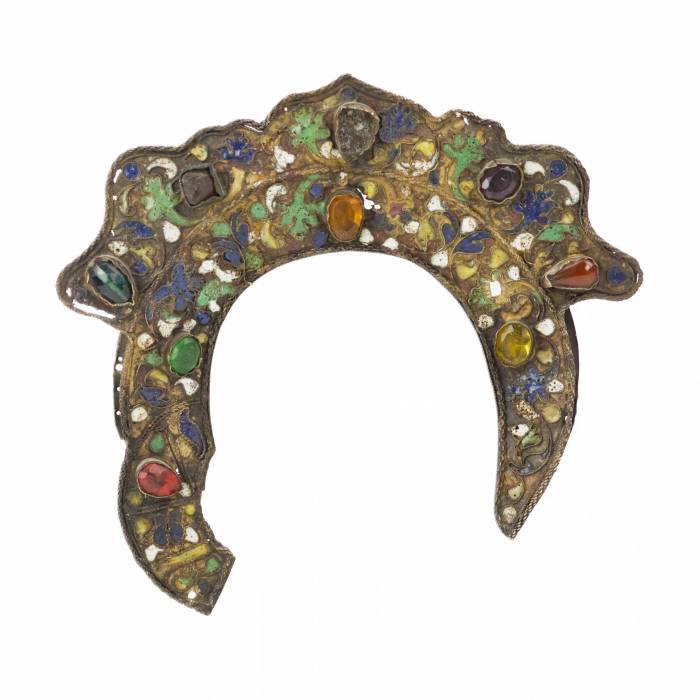
The icon is set in an authentic 17th-century Moscow oklad of exceptional craftsmanship. Produced in court and monastic workshops, it displays a sophisticated combination of cloisonné and champlevé enamels, mother-of-pearl inlays, coloured glass and applied relief elements. The rich vegetal ornament, executed with remarkable rhythm and precision, reflects the aesthetic principles of Moscow decorative art of the 17th century. The reverse retains an early silk cloth with a floral pattern, a testament to centuries of careful veneration.
Dimensions: 31 × 27 cm.
Condition: The icon is in good collector’s condition consistent with its age. The painted surface is well preserved with minor craquelure and slight pigment losses. The oklad shows natural age traces.
Provenance: Private collection of Alfred Schønebeck (1885–1931), representative of the Great Northern Telegraph Company in Russia. Acquired by Alfred and Gerda Schønebeck in Moscow in the 1920s. Exported to Denmark in 1929 and preserved in the family collection ever since.
The Eleousa type (“Umilenie”) stands among the most spiritually charged images of the Orthodox tradition. Originating in Byzantine art, it received profound development in 16th–17th century Russia, where the Moscow school formed its own interpretation, combining strict canonical structure with the emotional softness characteristic of Russian iconography.
In the 16th century, major icon-painting centres emerged in Moscow, closely associated with the workshops of the Armoury Chamber, where the finest works of the period were produced. The era brought increasing attention to expressive facial modelling, subtle light-and-shade transitions and a heightened spiritual focus. In the 17th century, this aesthetic evolved: ornamentation grew richer, jewellery techniques advanced and decorative elements became central - features clearly reflected in the surviving oklad.
Such settings were created in workshops serving the royal court, prominent monasteries and affluent Moscow households. Crafted as acts of devotion, they were intended for icons of particular reverence. The combination of a 16th–17th century painted layer and a 17th-century oklad forms a rare artistic ensemble illustrative of devotional practice in pre-Petrine Russia.
The icon’s provenance enhances its historical significance. The Schønebeck family, representatives of the Great Northern Telegraph Company, lived and worked across Russia and Siberia in the early 20th century. In the 1920s Alfred and Gerda Schønebeck actively acquired Russian works of art during visits to Moscow and St Petersburg markets at a time of large-scale dispersal of ecclesiastical property. Their collection, taken to Denmark in 1929 and preserved for nearly a century, makes this icon a rare witness to the fate of Russian sacred heritage in European private collections.
Good collector’s condition consistent with age. Natural age traces on the oklad and painted surface. The icon retains its expressive modelling and decorative integrity.
The condition report is provided for informational purposes only.
It is not comprehensive and may not reflect all defects, restorations, alterations, or adaptations, as Antiqon does not perform professional conservation-level assessments. The information is based on a qualified, yet subjective, evaluation by our specialists.Before purchasing, we recommend consultation with an independent expert.Please also consult our Terms and conditions and Glossary A-Z, which contain important information on lot characteristics and sale conditions.