LARGE RUSSIAN SILVER TEA SERVICE “BAST” GRACHEV BROTHERS, ST PETERSBURG, 1883–1884

LARGE RUSSIAN SILVER TEA SERVICE “BAST” GRACHEV BROTHERS, ST PETERSBURG, 1883–1884

ID-ANTQ-12212
Request price
Request more info
Guarantee of Authenticity

At Antiqon ART, we build trust and value your choice. Every purchase of art and antiques with us is an investment backed by our expertise, reputation, and a 100% authenticity guarantee.

Price History

Discover how the value of similar works has evolved over the past 10 years. Art is not only beauty — it's an investment.

Complimentary Shipping & Returns

Antiqon ART offers free packaging, insurance, and delivery for most items purchased through the company. Exceptions include large and oversized items that require specialized packing and shipping.

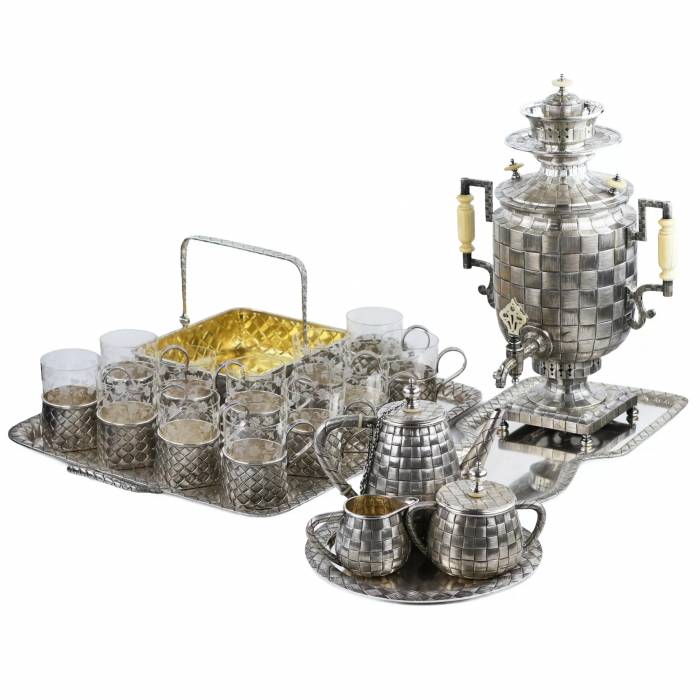
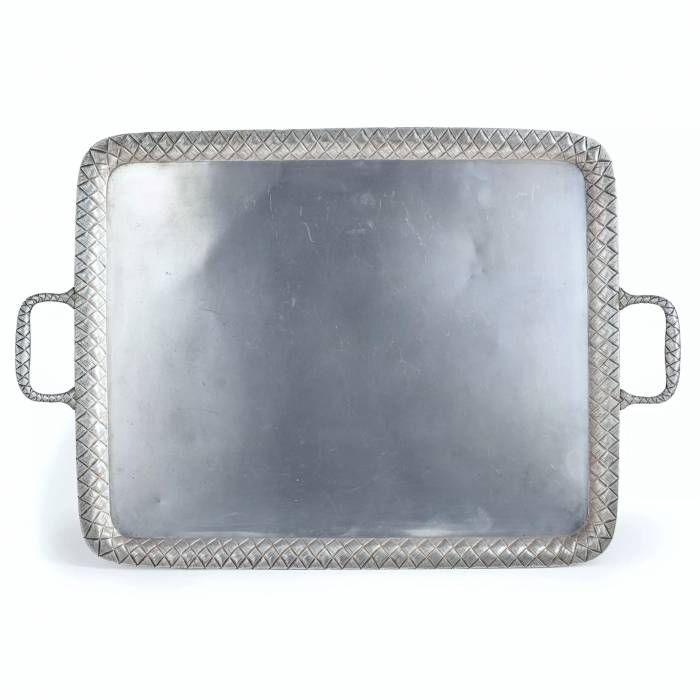
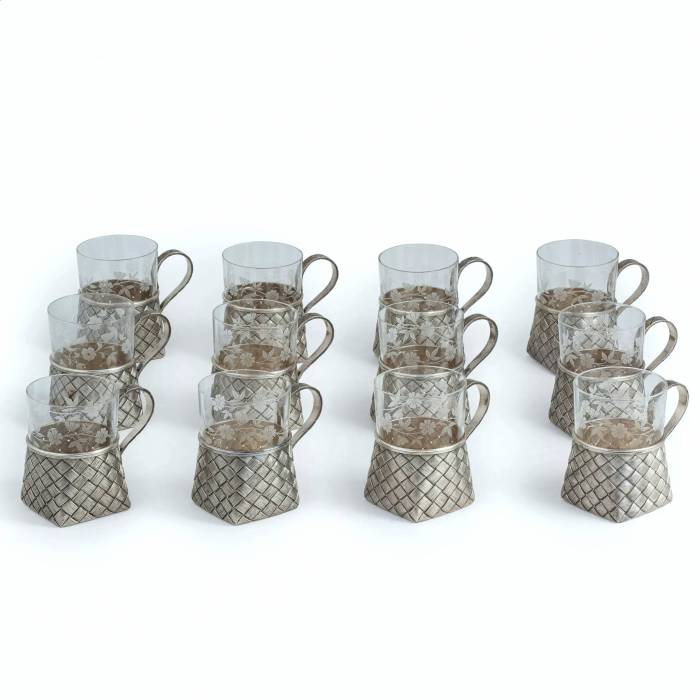
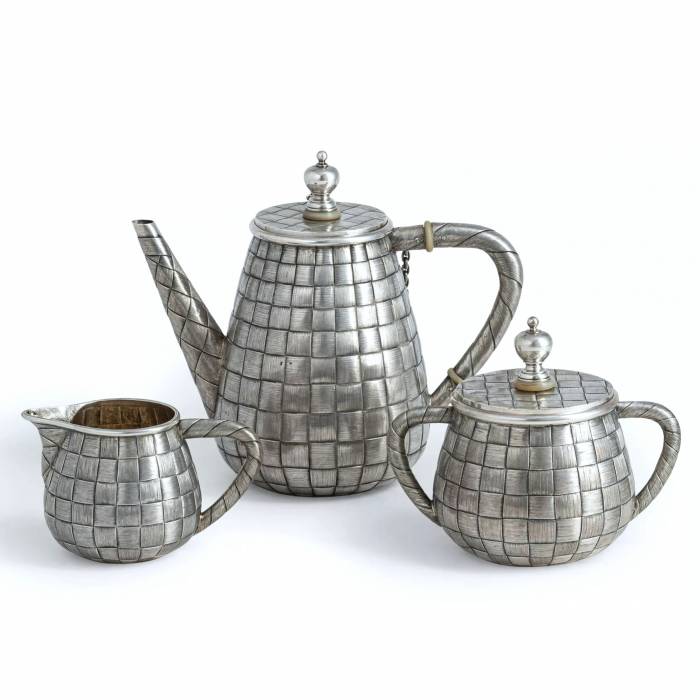
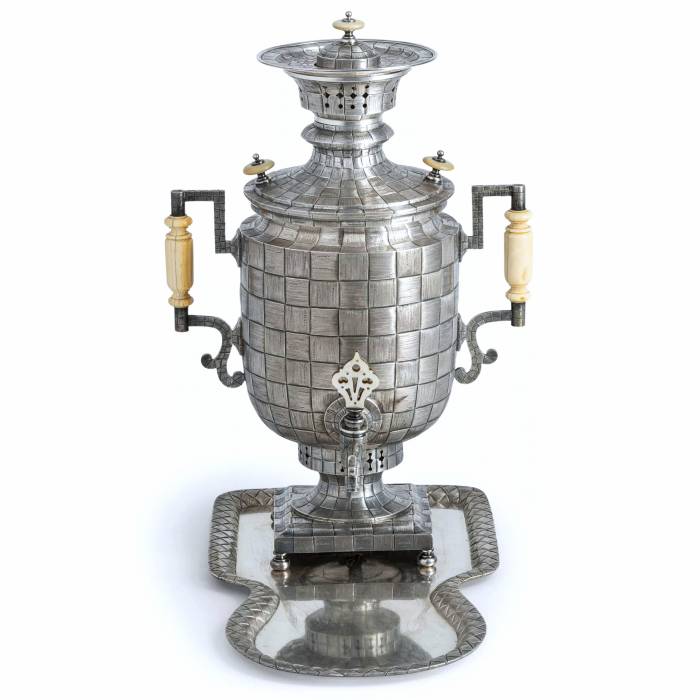
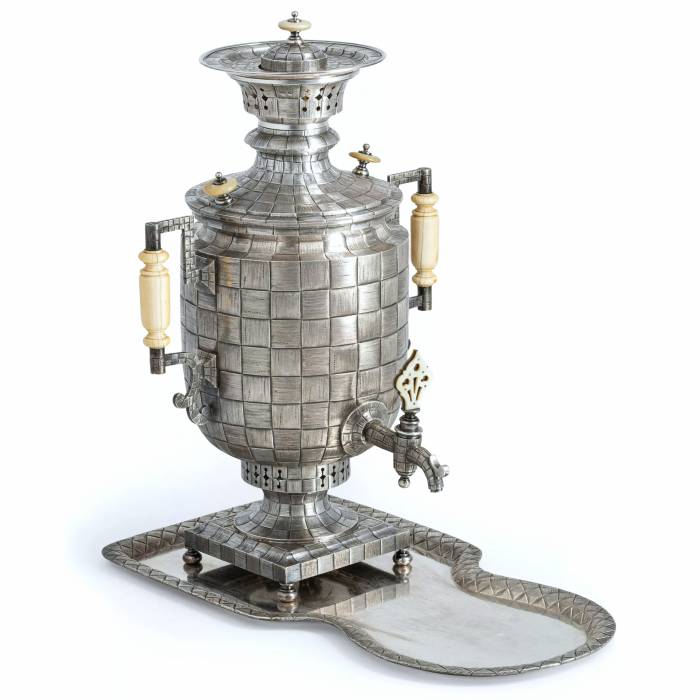
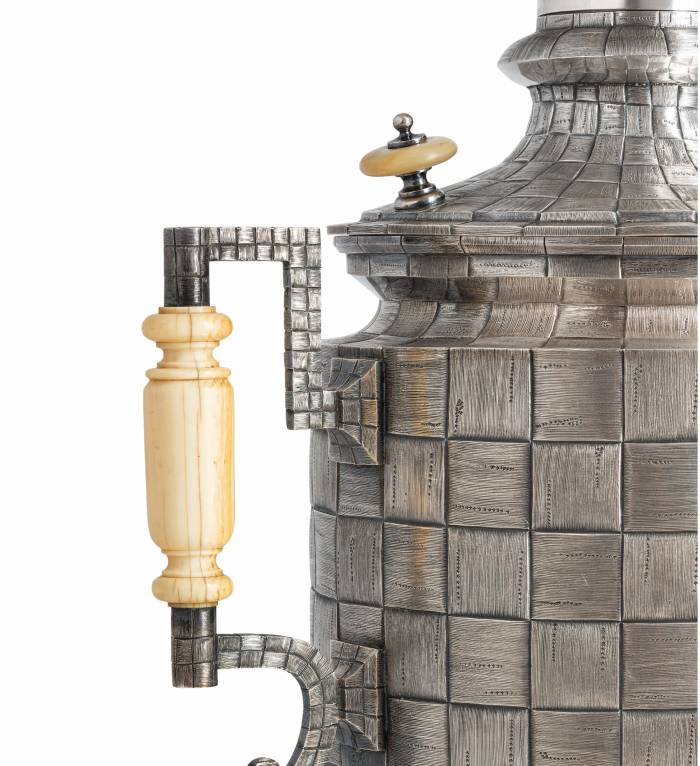
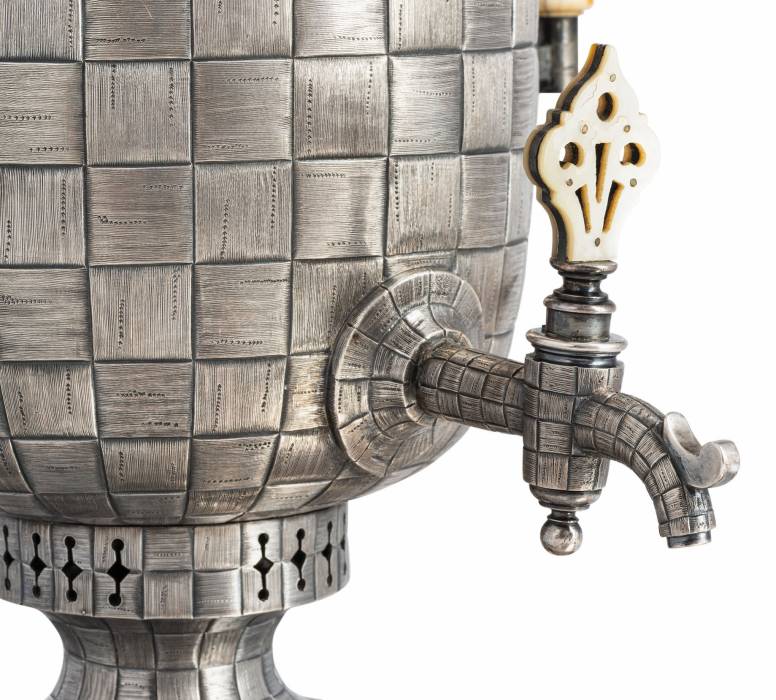
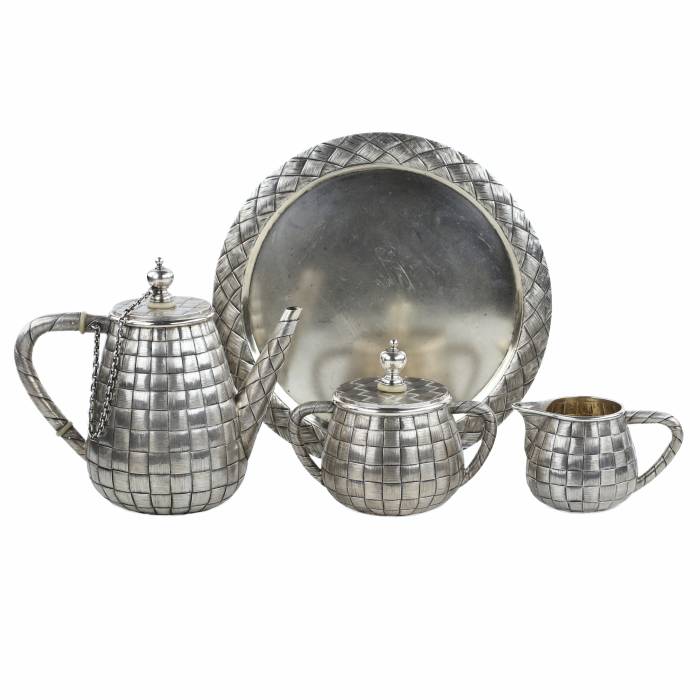
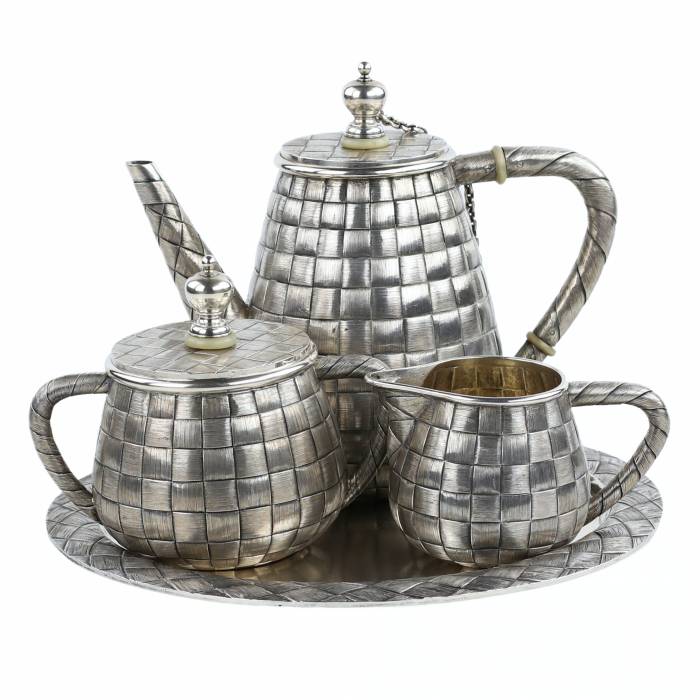
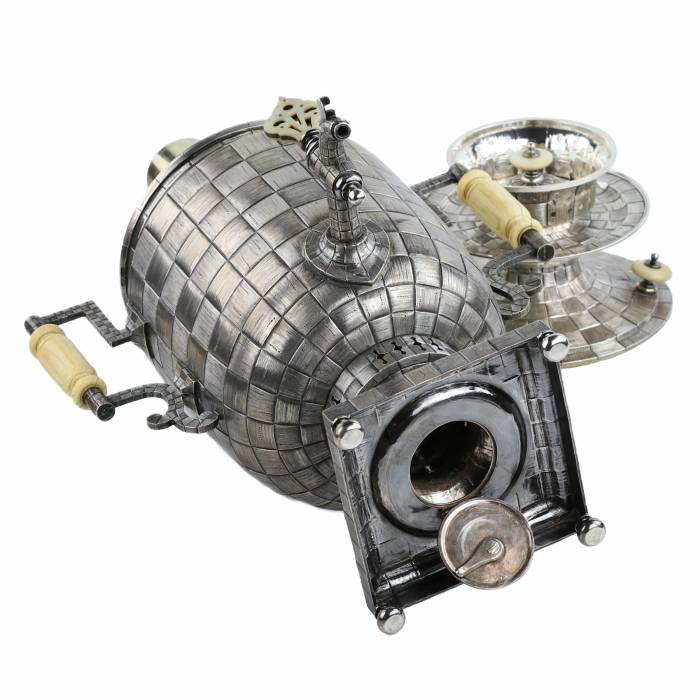
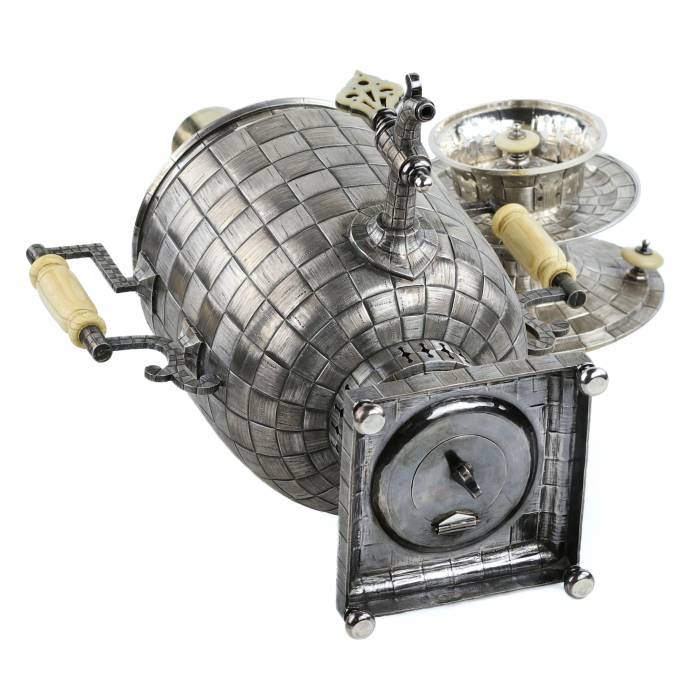
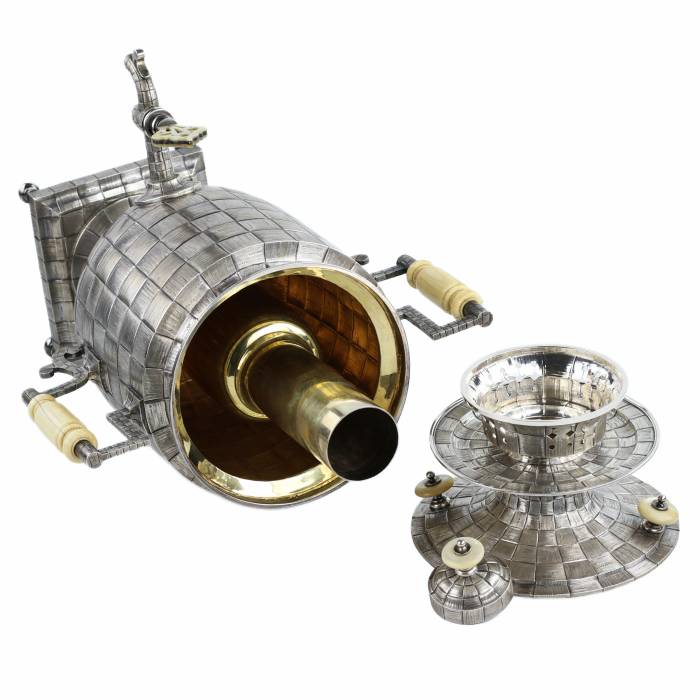
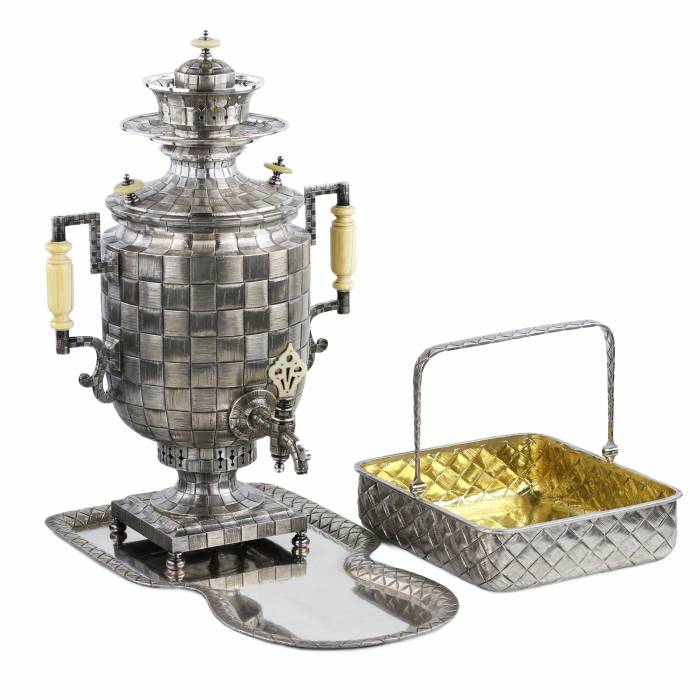
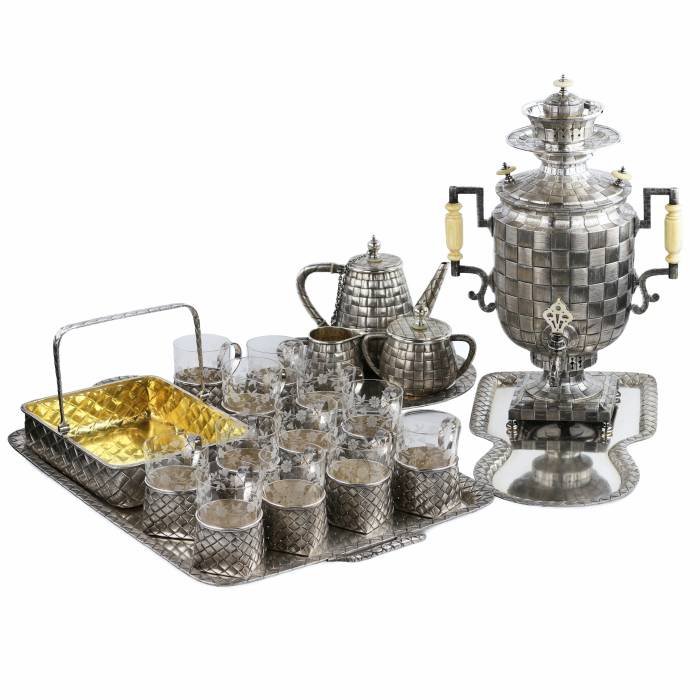
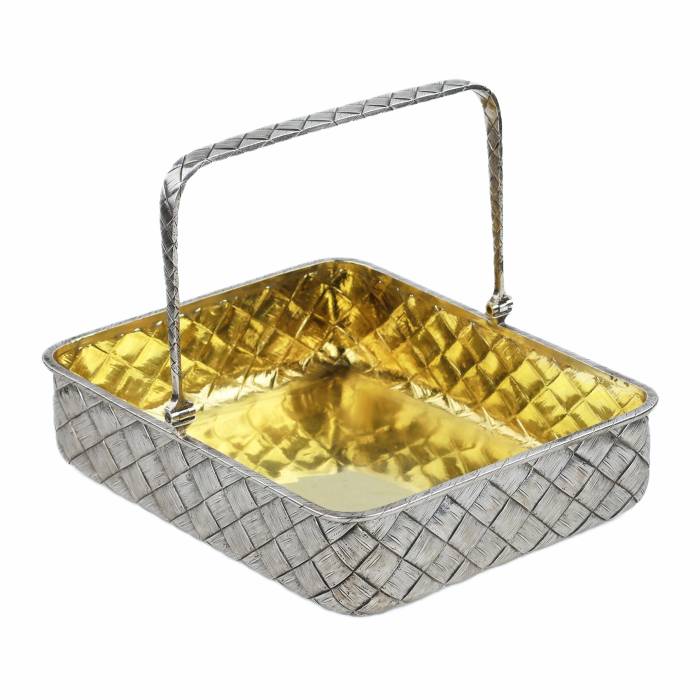
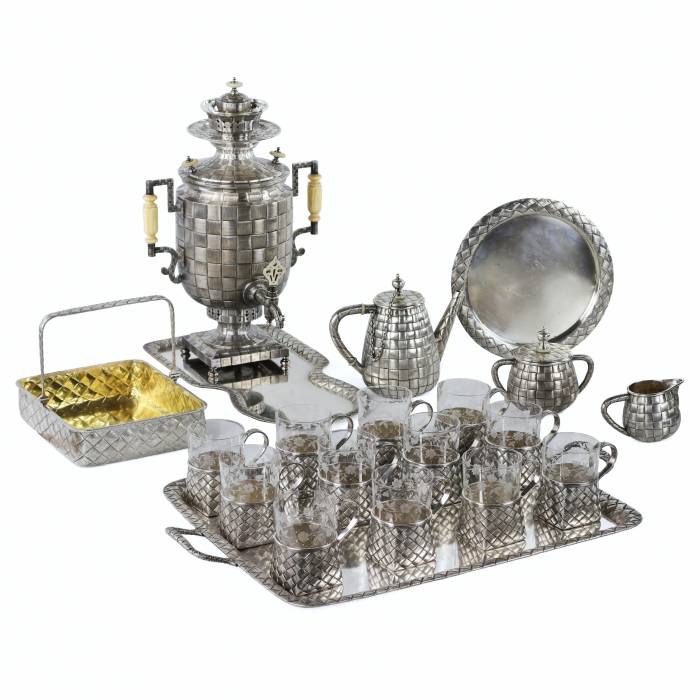
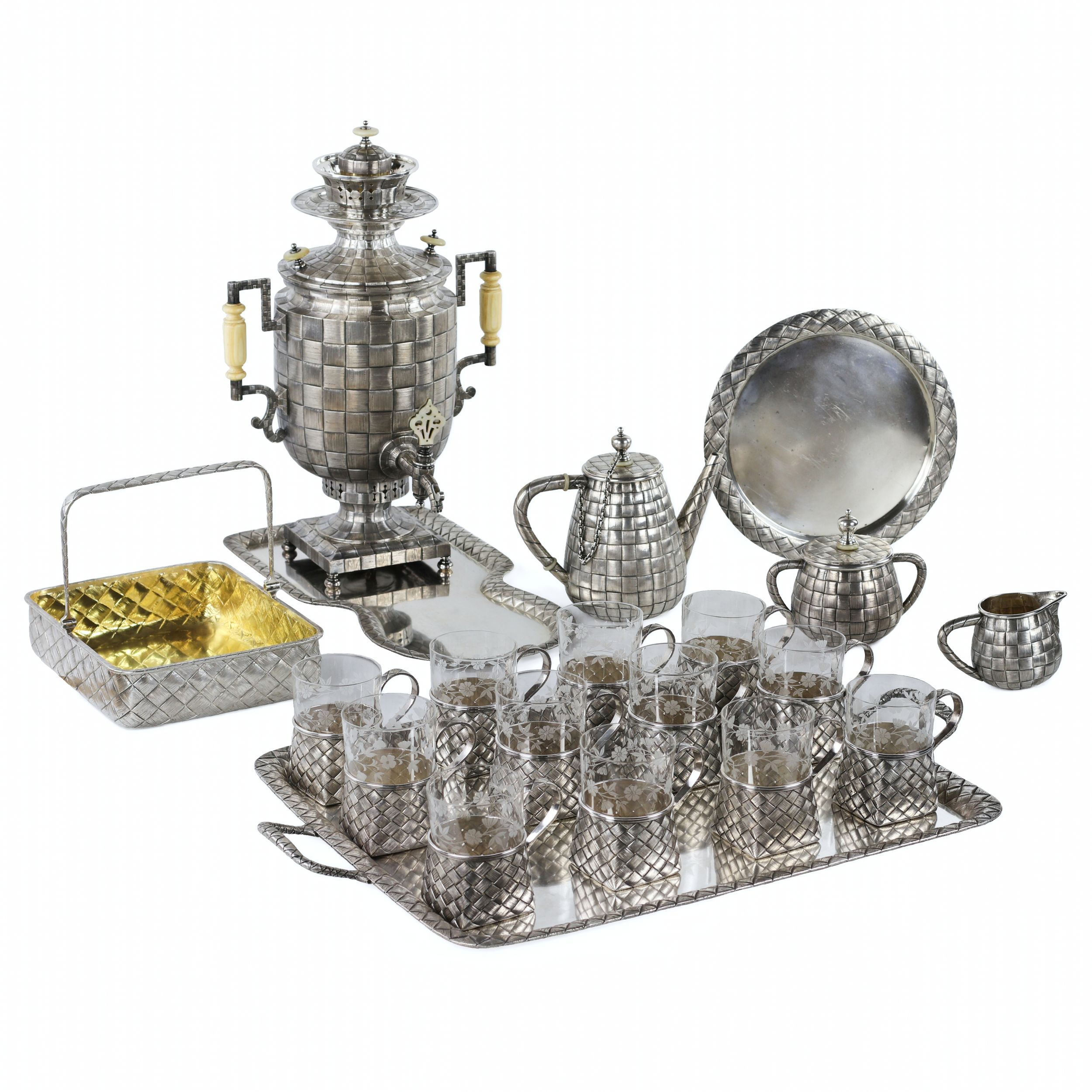
An outstanding example of Russian silversmithing from the late 19th century, the large silver tea service “Bast” was produced at the Grachev Brothers’ factory in St Petersburg between 1883 and 1884. Executed in the Neo-Russian style popular in the third quarter of the 19th century, it employs the rare trompe-l’oeil technique to imitate the texture of woven bast (linden bark). This illusionist approach, also known as obmanka, showcases the exceptional skill of Russian artisans, uniting folk craftsmanship with the refined aesthetics of European decorative art. The illusion of softness and pliability transforms silver into a sophisticated imitation of natural textile, highlighting the virtuosic execution.The service not only reflects a high level of technical mastery but also embodies the artistic currents of its time, combining traditional motifs with innovative design solutions. The set includes: a samovar with matching tray, a large handled tray, a teapot with an elongated spout, a lidded sugar bowl with twin handles, a milk jug, and twelve silver holders with cut-glass tumblers, delicately engraved with floral motifs. The handles and lids of individual pieces are adorned with bone insets, while the samovars faucet is decorated with shimmering mother-of-pearl, lending the composition added refinement and sophistication. This unique tea service is not only a utilitarian object but also a remarkable example of artistic silverwork, highly sought-after among collectors and connoisseurs.

Dimensions:

– Samovar: height – 42 cm, width – 28 cm, weight – 3029 g

– Tray under samovar: length – 42 cm, width – 23 cm, weight – 835 g

– Teapot, milk jug, sugar bowl: height – 18 cm, length – 19 cm, combined weight – 1180 g

– 12 glass holders: height – 8.5 cm, diameter – 10 cm, combined weight – 1400 g

– Large tray: length – 59 cm, width – 39 cm, weight – 2063 g

Total weight of the service: 8507 g

Marks:

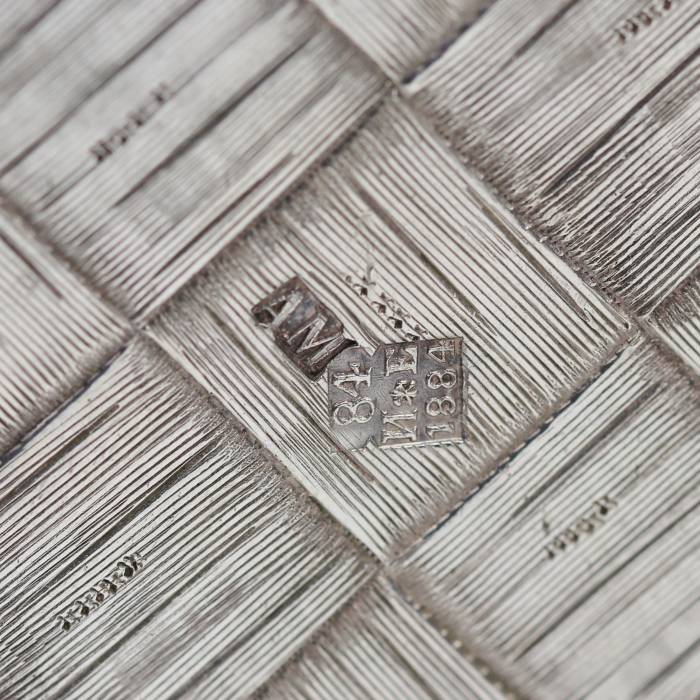
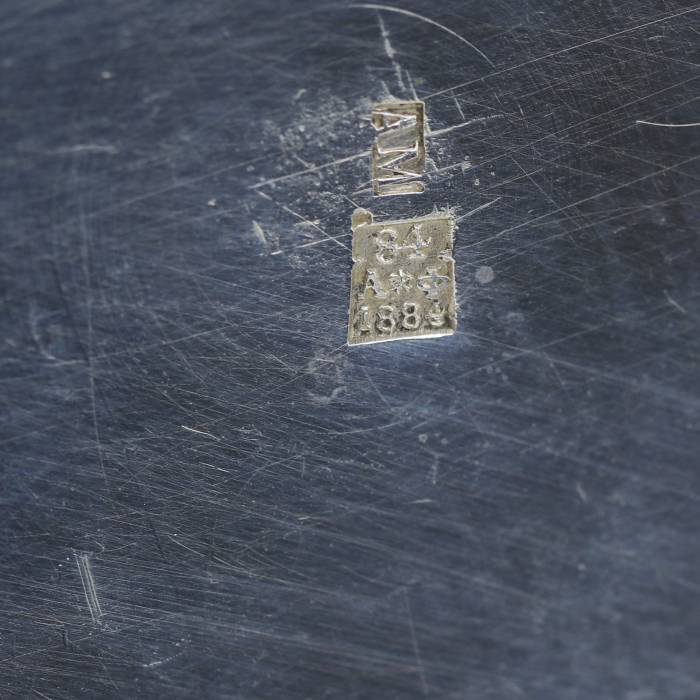
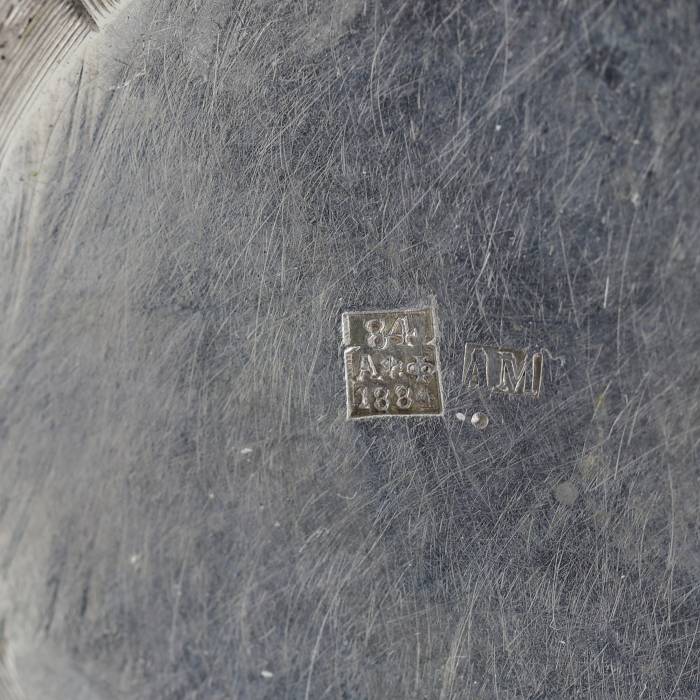
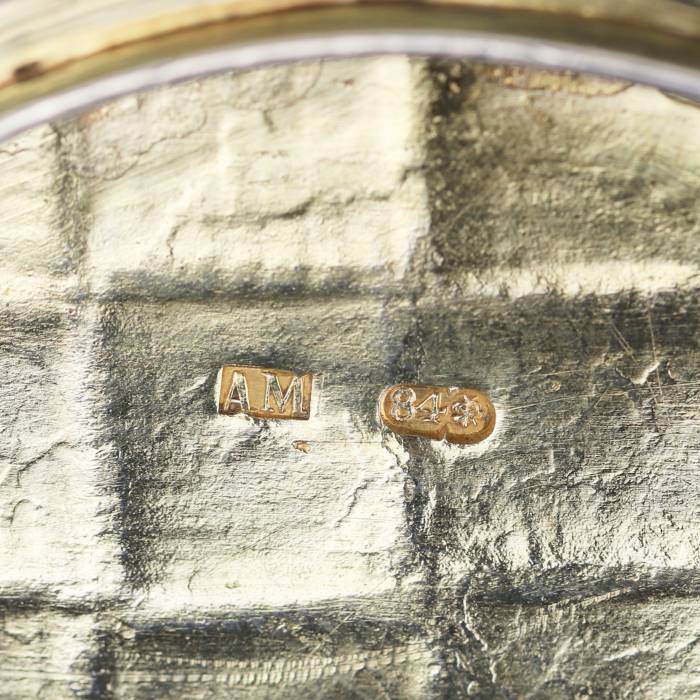
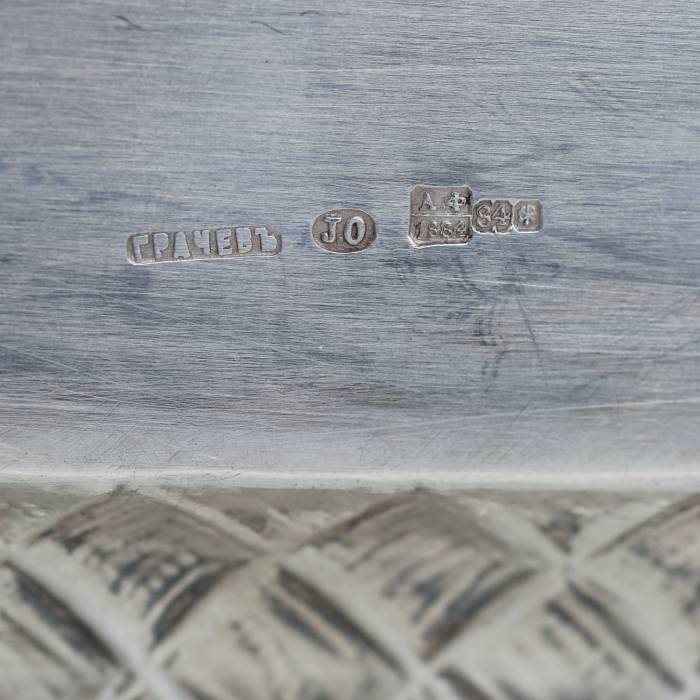
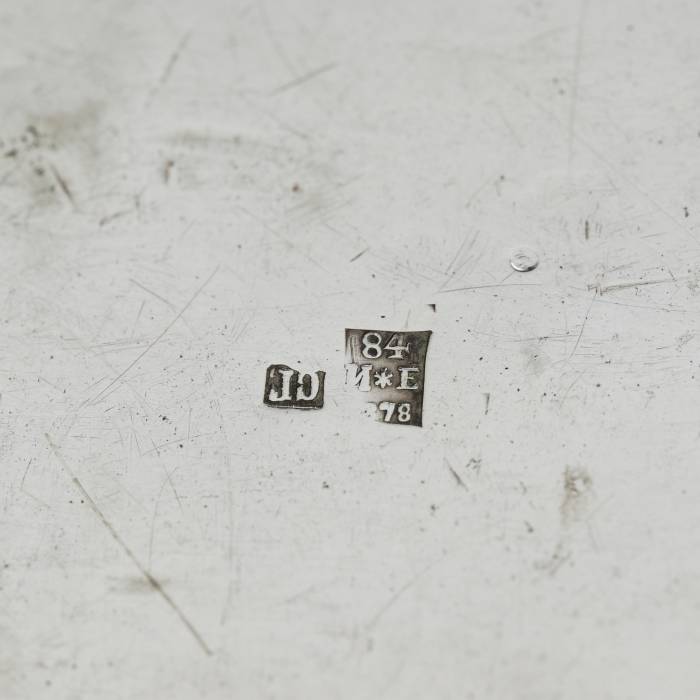
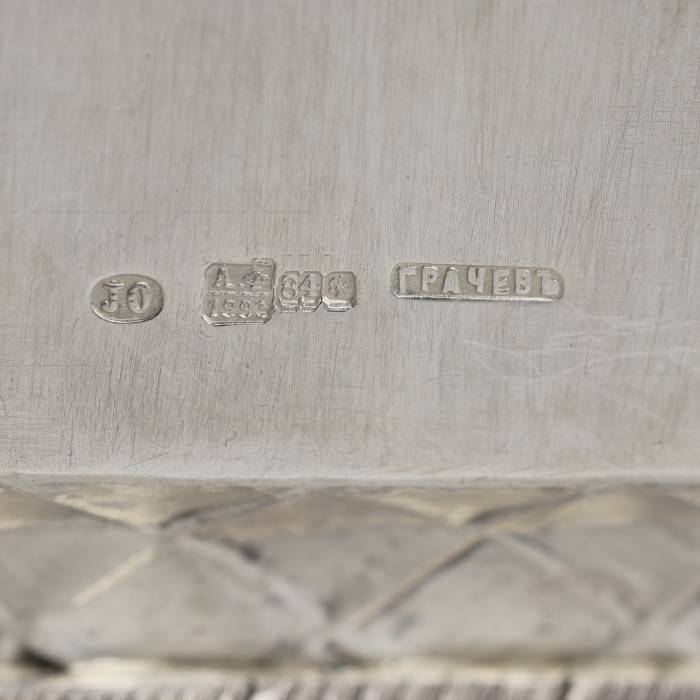
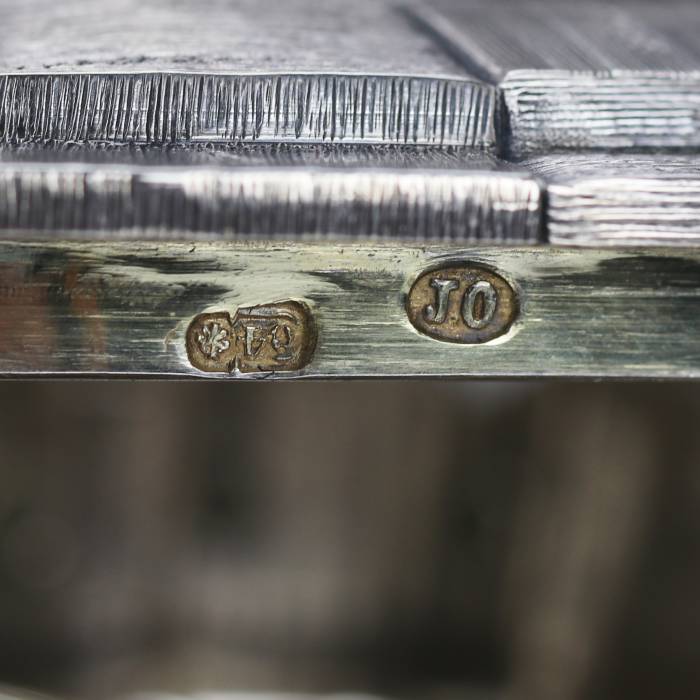
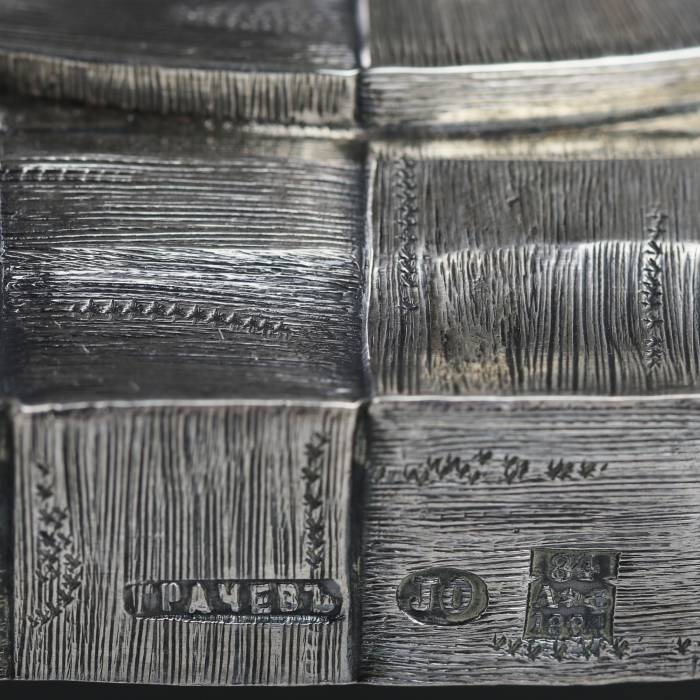
Full maker’s mark of the Grachev Brothers firm, oval mark with initials JO for master jeweler Johann Ferdinandovich Olsonius, rectangular mark with initials A.M. for an unidentified silversmith, St Petersburg assay mark dated 1884 with initials of the assay master Alexander Franz von der Flit, number 84 confirming 84 zolotnik silver standard, circular mark with crossed anchors and sceptre, emblem of the St Petersburg Assay Office.

Art:
russia
Height:
42 cm
Width:
59 cm
Depth:
39 cm
Period:
19th century
Style:
Neo-Russian
Country:
Russia, St. Petersburg
Material:
Silver 84, Gilding
Condition:
Revive
Fair
Good
Very good
Like new
NEO-RUSSIAN STYLE

The Neo-Russian style is an artistic movement that emerged in Russia in the second half of the 19th century during a period of active search for national identity. Inspired by the aesthetics of Old Russian art, ecclesiastical architecture, and folk crafts, it developed as a reaction to the dominance of Western European canons and embodied the idea of cultural self-affirmation and revival. This style became part of a broader ideological movement aiming to restore continuity between the past and the present by merging historical memory with modern forms of artistic expression.In architecture, the Neo-Russian style was manifested in shapes reminiscent of pre-Petrine Russia: tented and domed churches, decorative kokoshniks, polychrome tiles, ornamental brickwork, and intricate carvings. In decorative arts, it featured motifs of ancient ornamentation, stylized plant forms, curvilinear lines, and traditional geometric patterns.The style gained particular momentum in jewelry. Leading workshops of the Russian Empire, including those of Carl Fabergé, Pavel Ovchinnikov, and the Grachev Brothers, embraced archaic forms and folk symbolism. Their creations often featured intricate enamels, engraving, imitation of woven textures, and decorative elements inspired by Russian folklore. These pieces became emblematic of the refined artistic culture of the late 19th and early 20th centuries, representing a synthesis of traditional craftsmanship and contemporary technological achievements.

GRACHEV BROTHERS FACTORY (1866–1918)

The Grachev Brothers Factory was one of the premier jewelry workshops of the Russian Empire, founded in Saint Petersburg in the second half of the 19th century. Having earned the prestigious title of Supplier to the Imperial Court, the factory became renowned for its superb craftsmanship, masterful work in silver, enamel, and engraving, and the incorporation of national motifs in the Neo-Russian style.The Grachev Brothers collaborated with the finest silversmiths, engravers, chasers, enamelers, and miniature sculptors, many of whom had previously worked for renowned firms such as Fabergé, Sazikov, and Ovchinnikov. Among them was Johann Olsonius, a distinguished master of Finnish origin, known for his refined artistic sensibility, exceptional detailing, and flawless execution. His works, marked with his personal stamp, stand out for their exquisite engraving and stylistic precision, making them highly prized as ceremonial and diplomatic gifts.Other notable masters at the factory included I.K. Zakharov, A.F. Martyanov, and F.L. Soldatov, whose initials are found on some of the firm’s finest creations. Thanks to this exceptional level of artistry, the Grachev Brothers’ pieces became benchmarks of Russian jewelry art at the turn of the 20th century.

JOHANN OLSONIUS (1823 – ?)

Johann Olsonius was one of the most prominent jewelers of the second half of the 19th century. A master of Finnish origin, he made a significant contribution to the development of the St. Petersburg decorative arts school. Formed at the intersection of Scandinavian craftsmanship and Russian artistic traditions, Olsonius quickly gained acclaim for his precision, clean lines, and exceptional attention to detail.He devoted much of his career to the Grachev Brothers Factory, one of the leading suppliers to the Imperial Court, creating refined silver pieces known for their stylistic restraint and technical perfection. His maker’s mark, I.O., is found on works executed in repoussé, engraving, and gilding, often in the Neo-Russian or historicist styles.In his work, Olsonius achieved a rare balance between Nordic restraint and Russian decorative richness, producing objects that were both elegant and monumental. A master of textile imitation and complex ornamental motifs, he gave particular importance to symbolism and compositional harmony.

The service is preserved in excellent condition. The gilding is completely preserved. The silver retains a noble sheen, and all engraved and decorative elements remain crisp and legible. The bone and mother-of-pearl inlays are intact and well-preserved, as are the cut-glass tumblers. Minor traces of time are consistent with the age of the set and attest to its authenticity. The completeness of the service, its quality of execution, and the clarity of the marks make this an exceptional example of Russian decorative art.

The condition report is provided for informational purposes only.

It is not comprehensive and may not reflect all defects, restorations, alterations, or adaptations, as Antiqon does not perform professional conservation-level assessments. The information is based on a qualified, yet subjective, evaluation by our specialists.Before purchasing, we recommend consultation with an independent expert.Please also consult our Terms and conditions and Glossary A-Z, which contain important information on lot characteristics and sale conditions.

NEO-RUSSIAN STYLE
The Neo-Russian style is an artistic movement that emerged in Russia at the turn of the 19th and 20th centuries as part of a national-romantic rethinking of historical heritage. It draws on Old Russian architecture, icon painting, and folk art, integrating them with the principles of Art Nouveau and Symbolism in architecture, painting, and the decorative arts.
... Read More

Stay up to date with new arrivals
Save Russian silver and we let you know when new listings appears in this category
Save

Related items