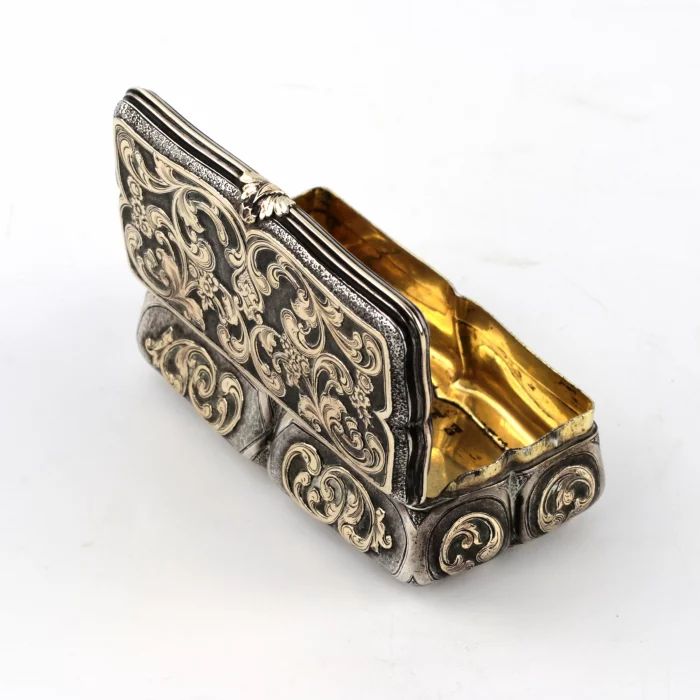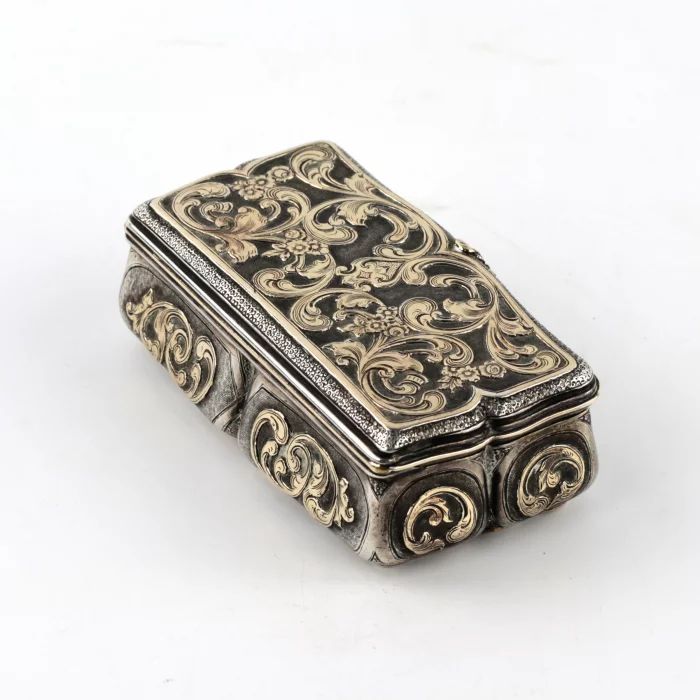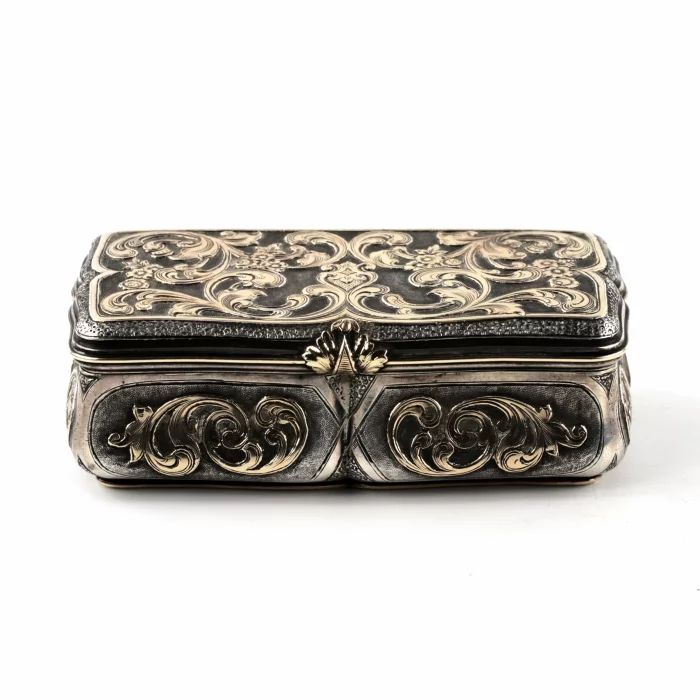

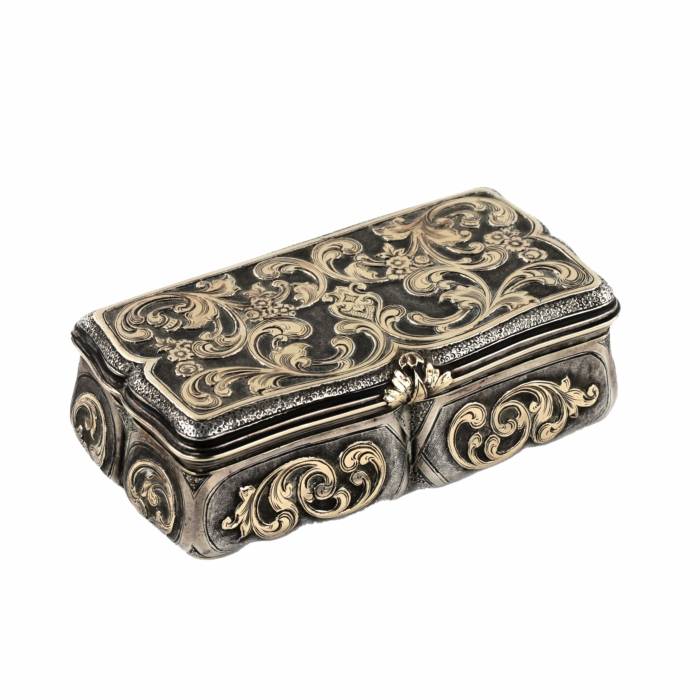
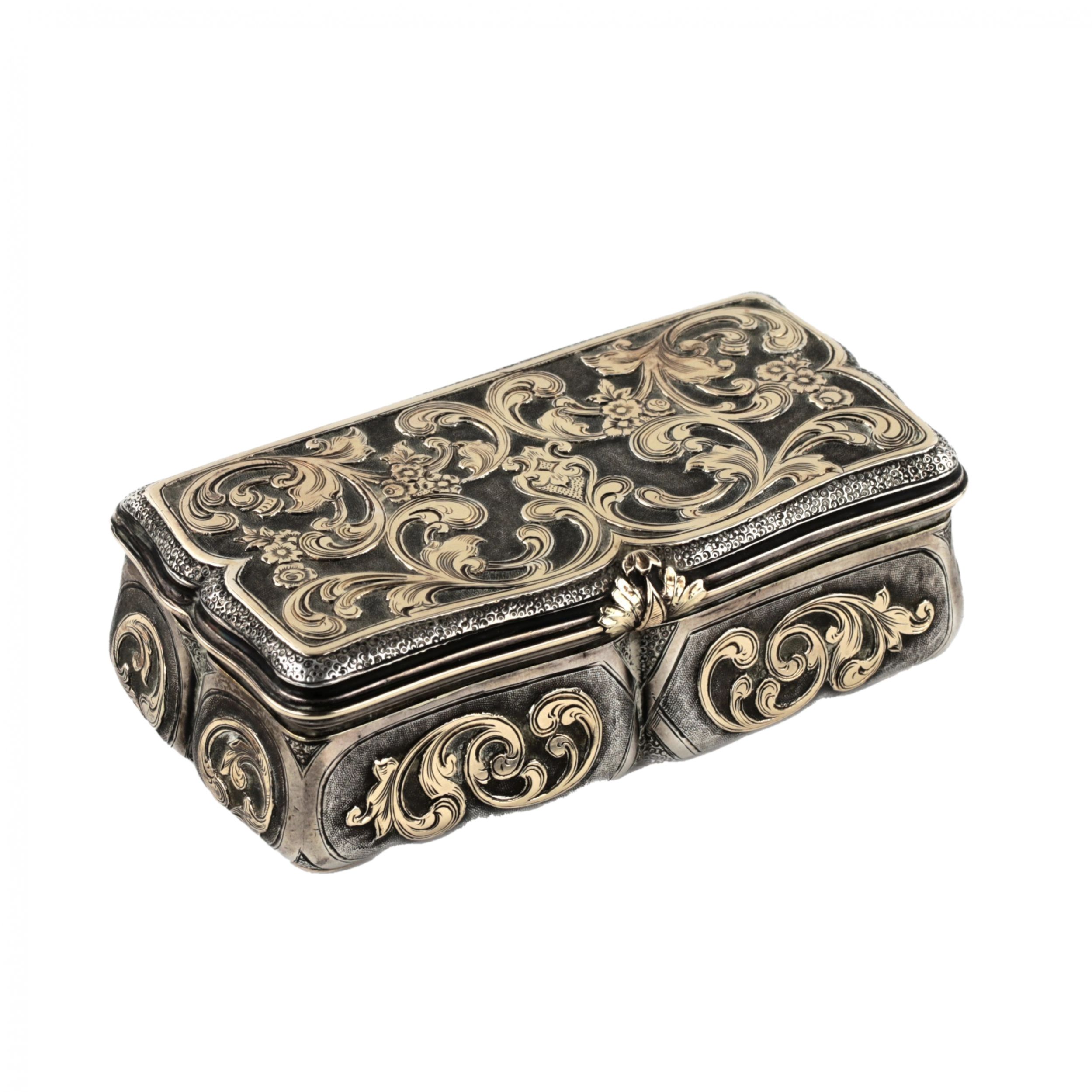
Russian silver snuffbox with gold decor. Mid 19th century.

Russian silver snuffbox with gold decor. Mid 19th century.

ID-ANTQ-5225
2100 EUR
Add to cart
Request more info
Guarantee of Authenticity

At Antiqon ART, we build trust and value your choice. Every purchase of art and antiques with us is an investment backed by our expertise, reputation, and a 100% authenticity guarantee.

Price History

Discover how the value of similar works has evolved over the past 10 years. Art is not only beauty — it's an investment.

Complimentary Shipping & Returns

Antiqon ART offers free packaging, insurance, and delivery for most items purchased through the company. Exceptions include large and oversized items that require specialized packing and shipping.

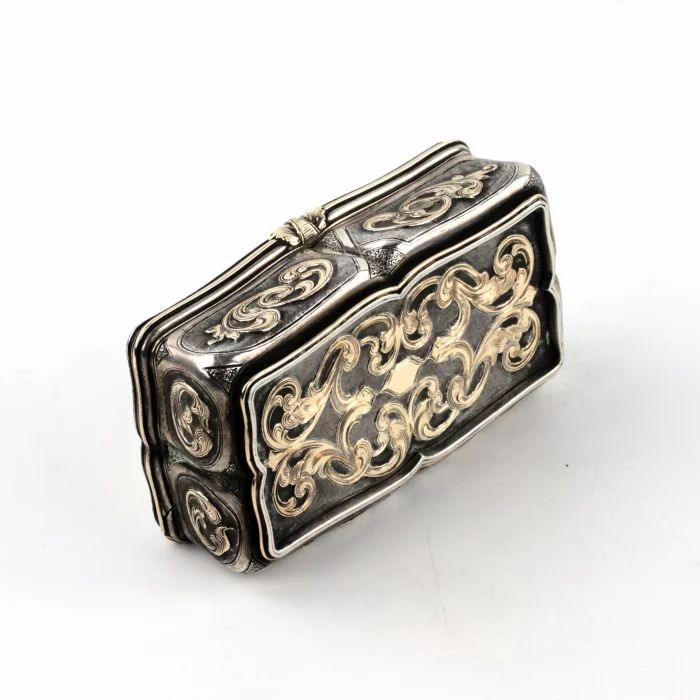
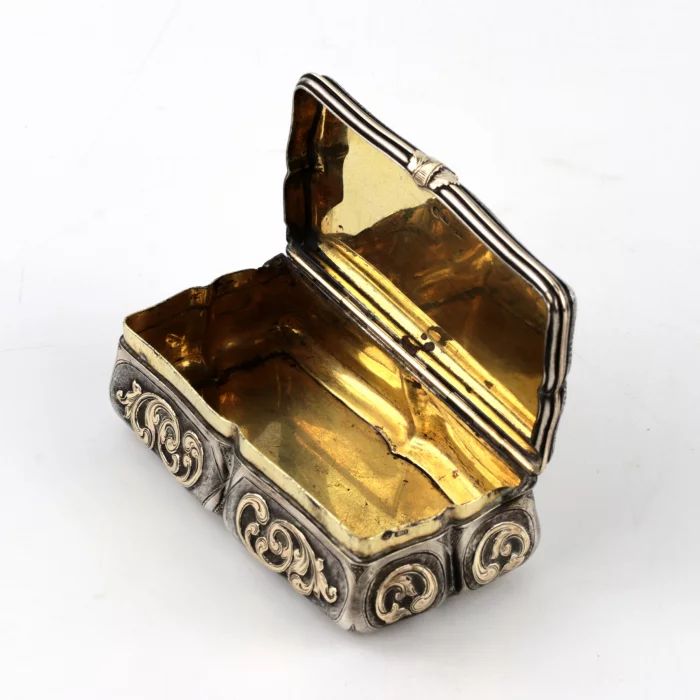
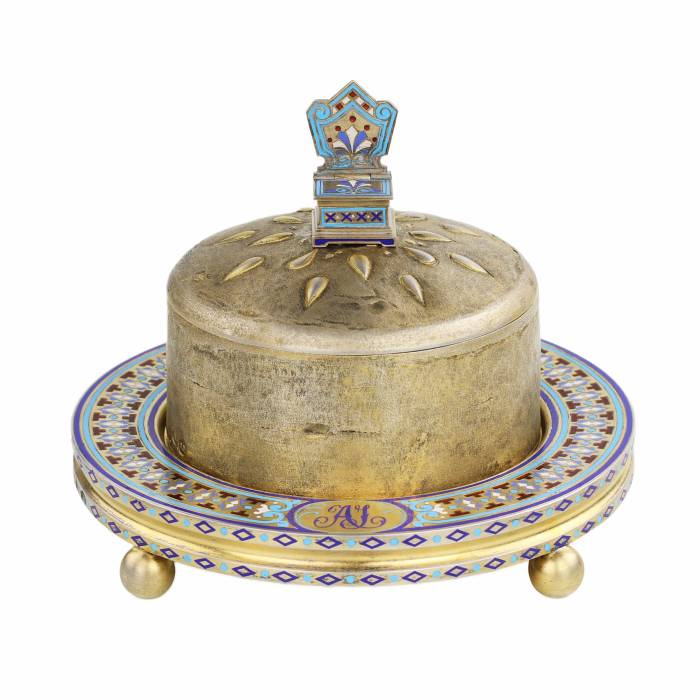
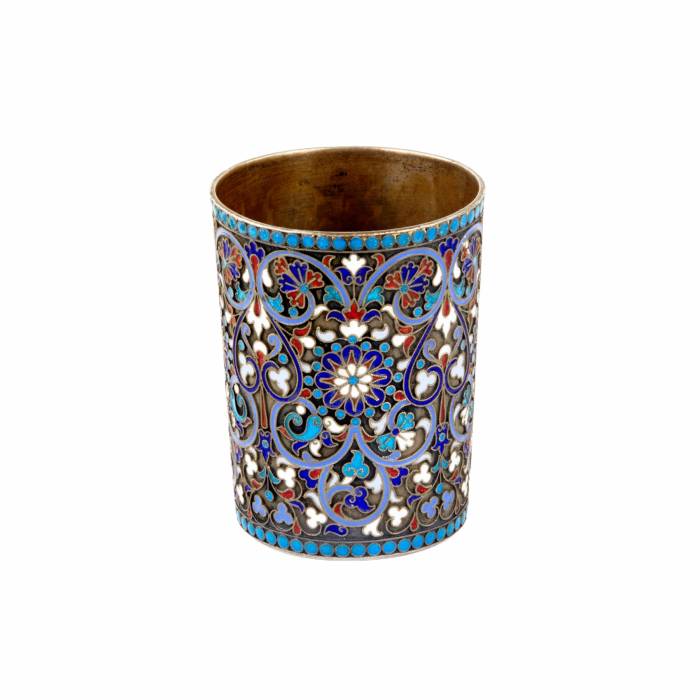
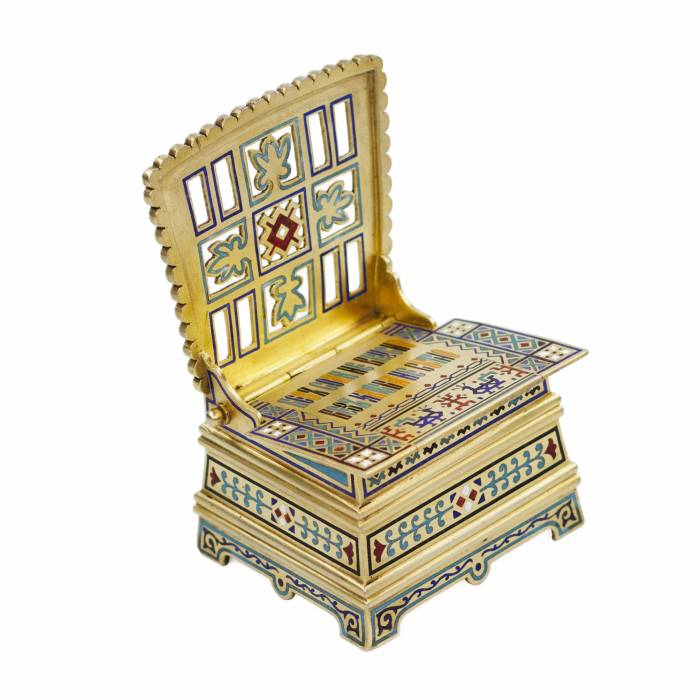
Silver snuffbox with applied gold, Baroque style. Personalized image of luxury and nobility. Observes baroque proportions, canons and forms. Fits perfectly into the anatomy of the hand. The mysterious shimmer of silver pleasantly sets off the festive and sublime sparkle of golden curls and shoots that adorned the snuffbox from all sides.

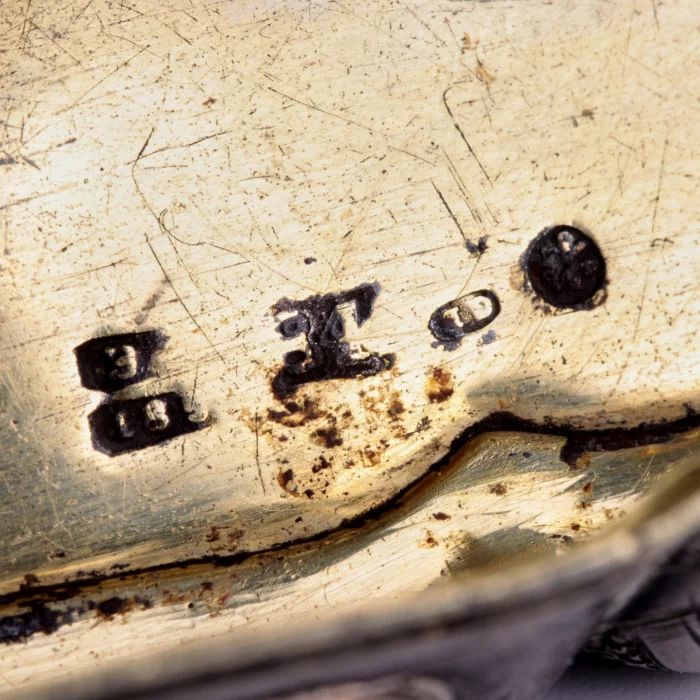
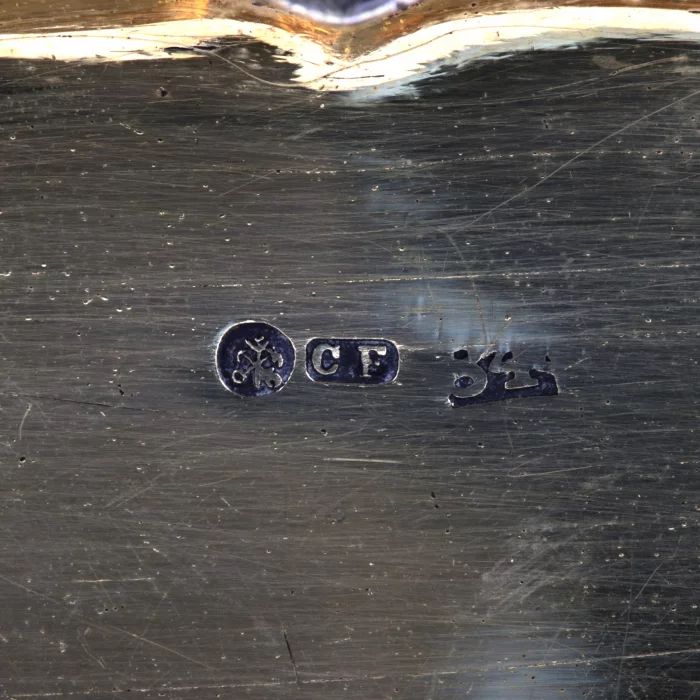
St. Petersburg 185? 84 standard silver, gilding.

Assay master Branderburg Eduard Fedorovich 1850-1866 Author`s initials: SE. Ernst Karl. (Ernst Car). Known as a goldsmith since 1800. He had a workshop in 1849. There are works of the 1850s.

Weight: 129 gr.

Art:
russia
Height:
2.7 cm
Width:
8.7 cm
Depth:
4.5 cm
Period:
Mid-19th century
Style:
Neo-Baroque
Country:
Russia, St. Petersburg
Material:
Silver 84, Gilding
Condition:
Revive
Fair
Good
Very good
Like new

The condition report is provided for informational purposes only.

It is not comprehensive and may not reflect all defects, restorations, alterations, or adaptations, as Antiqon does not perform professional conservation-level assessments. The information is based on a qualified, yet subjective, evaluation by our specialists.Before purchasing, we recommend consultation with an independent expert.Please also consult our Terms and conditions and Glossary A-Z, which contain important information on lot characteristics and sale conditions.
Neo-Baroque.
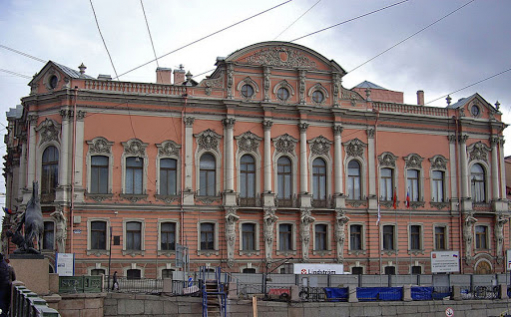
Neo-baroque is one of the neo-styles that developed in 19th century European art during the period of historicism. Has several different regional variations. In St. Petersburg, the most European city of the Russian Empire, the period of historicism of artistic thinking and neo-styles of the 19th century began to reproduce or, as they said at that time, "renewal in their previous form" of the monuments of the "Peter′s Baroque" period and buildings "in the taste of Count Bartholomew Rastrelli" ... These samples are not baroque architecture in the classical sense, but a special fusion of the Renaissance, Baroque and Mannerist architecture of the Nordic countries, and in Elizabethan time - a bizarre combination of elements of classicism, baroque and French rococo. Neo-baroque features are evident in the interior of St. Isaac′s Cathedral in St. Petersburg (O. Montferrand, 1818-1858), in the Mariinsky Palace, built in the neo-Renaissance style by A.I. Stackenschneider (1839-1844) and in the most important work of the "second baroque": the Beloselsky-Belozersky palace (1846-1848) on the Nevsky Prospect of the Russian capital. In the facades of the Beloselsky-Belozersky palace, the architect Stakenschneider followed the general composition of the Stroganov palace, erected by F.B. Rastrelli was also on Nevsky Prospekt a century earlier. However, Stackenschneider′s powerful plasticity of Rastrelli′s decor turned into refined, but petty "dry" ornamentation, which was positively evaluated by the critics of that time as an improvement in style. Graphic rigidity, refinement and fragmentation, as a rule, distinguish any neo-style from its historical prototype. Such are also many other neo-baroque monuments in St. Petersburg of the middle and second half of the 19th century.
... Read More

Stay up to date with new arrivals
Save Russian silver and we let you know when new listings appears in this category
Save

Related items