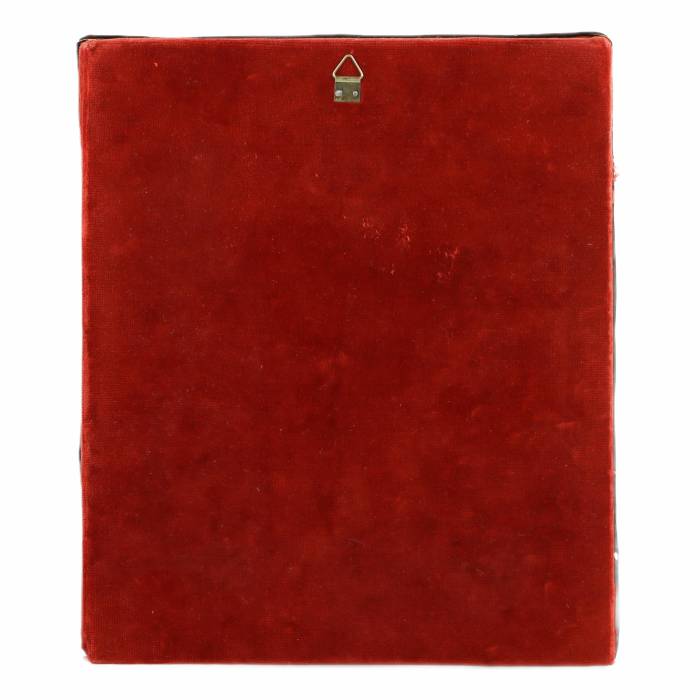

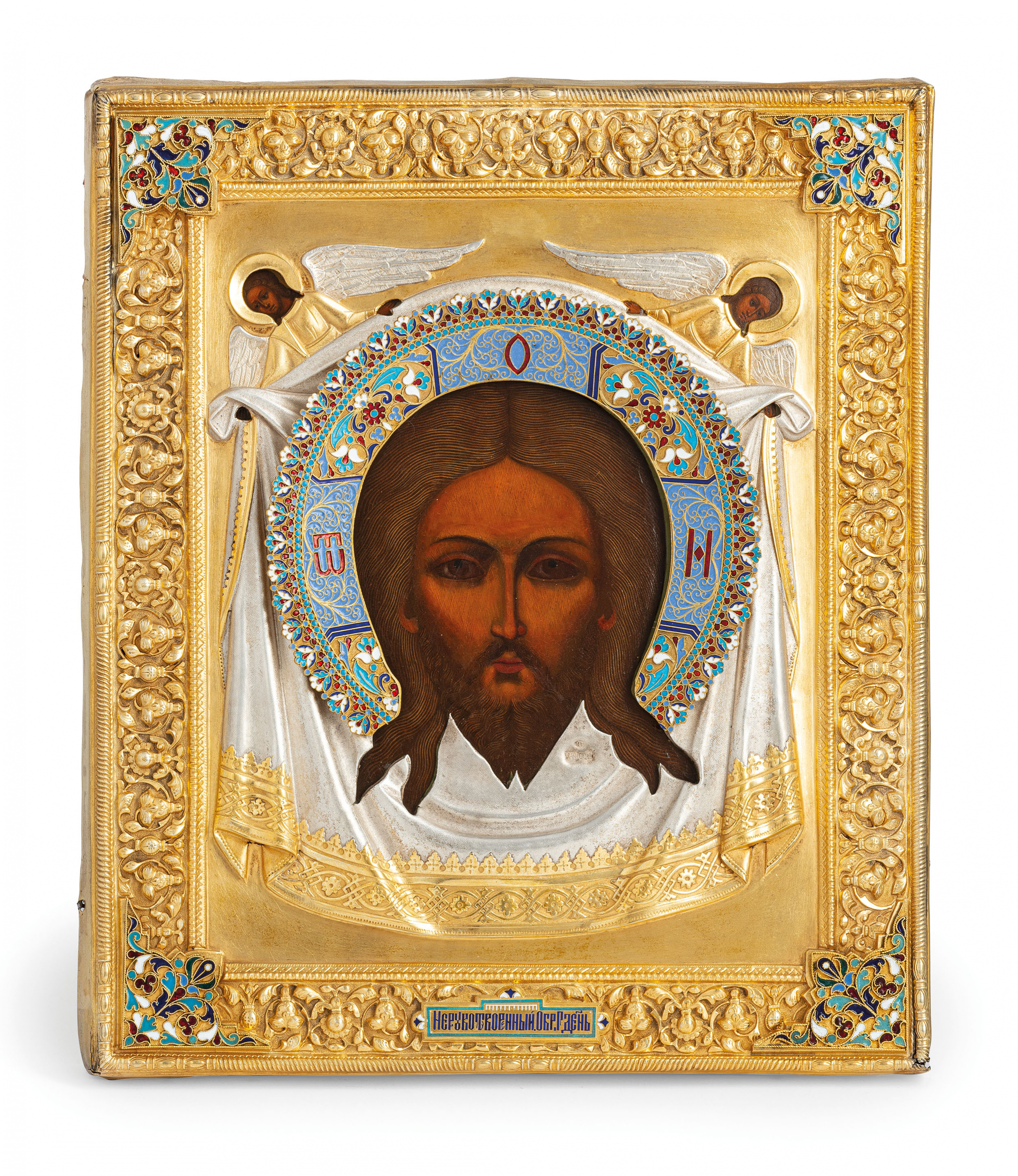
THE HOLY MANDYLION (SPAS NERUKOTVORNY) IN A SILVER-GILT ENAMELLED OKLAD BY IVAN TARABROV MOSCOW, RUSSIA, 1894

THE HOLY MANDYLION (SPAS NERUKOTVORNY) IN A SILVER-GILT ENAMELLED OKLAD BY IVAN TARABROV MOSCOW, RUSSIA, 1894

ID-ANTQ-12216
35000 EUR
Add to cart
Request more info
Guarantee of Authenticity

At Antiqon ART, we build trust and value your choice. Every purchase of art and antiques with us is an investment backed by our expertise, reputation, and a 100% authenticity guarantee.

Price History

Discover how the value of similar works has evolved over the past 10 years. Art is not only beauty — it's an investment.

Complimentary Shipping & Returns

Antiqon ART offers free packaging, insurance, and delivery for most items purchased through the company. Exceptions include large and oversized items that require specialized packing and shipping.

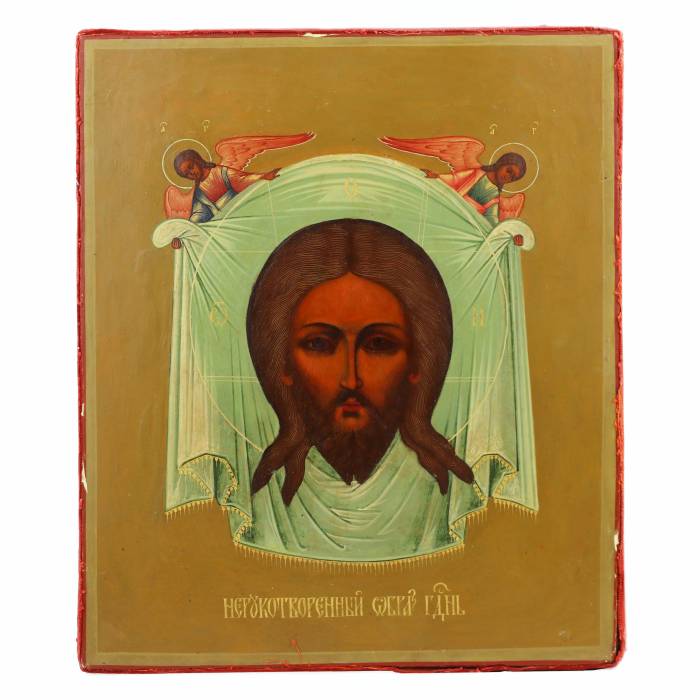
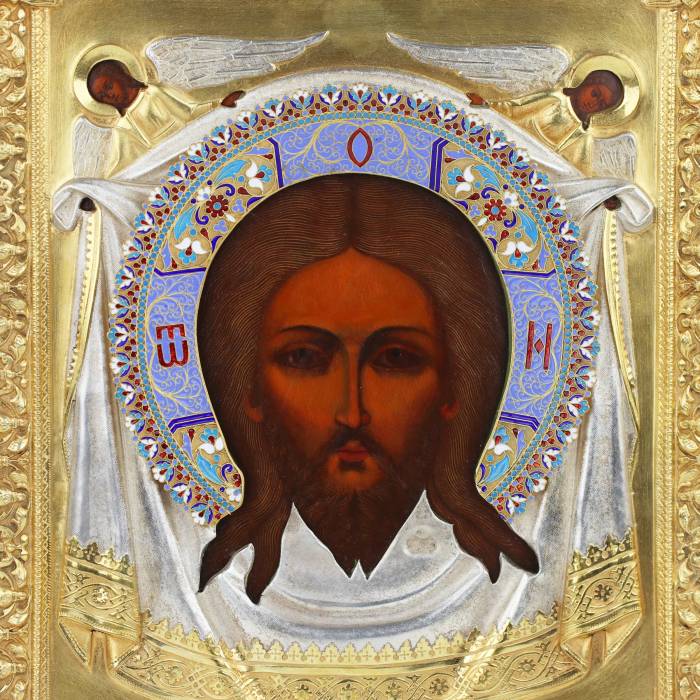
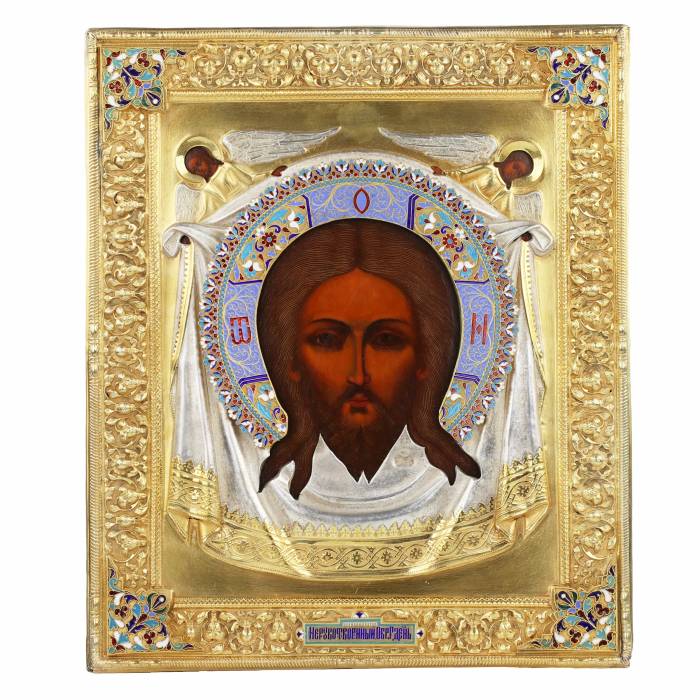
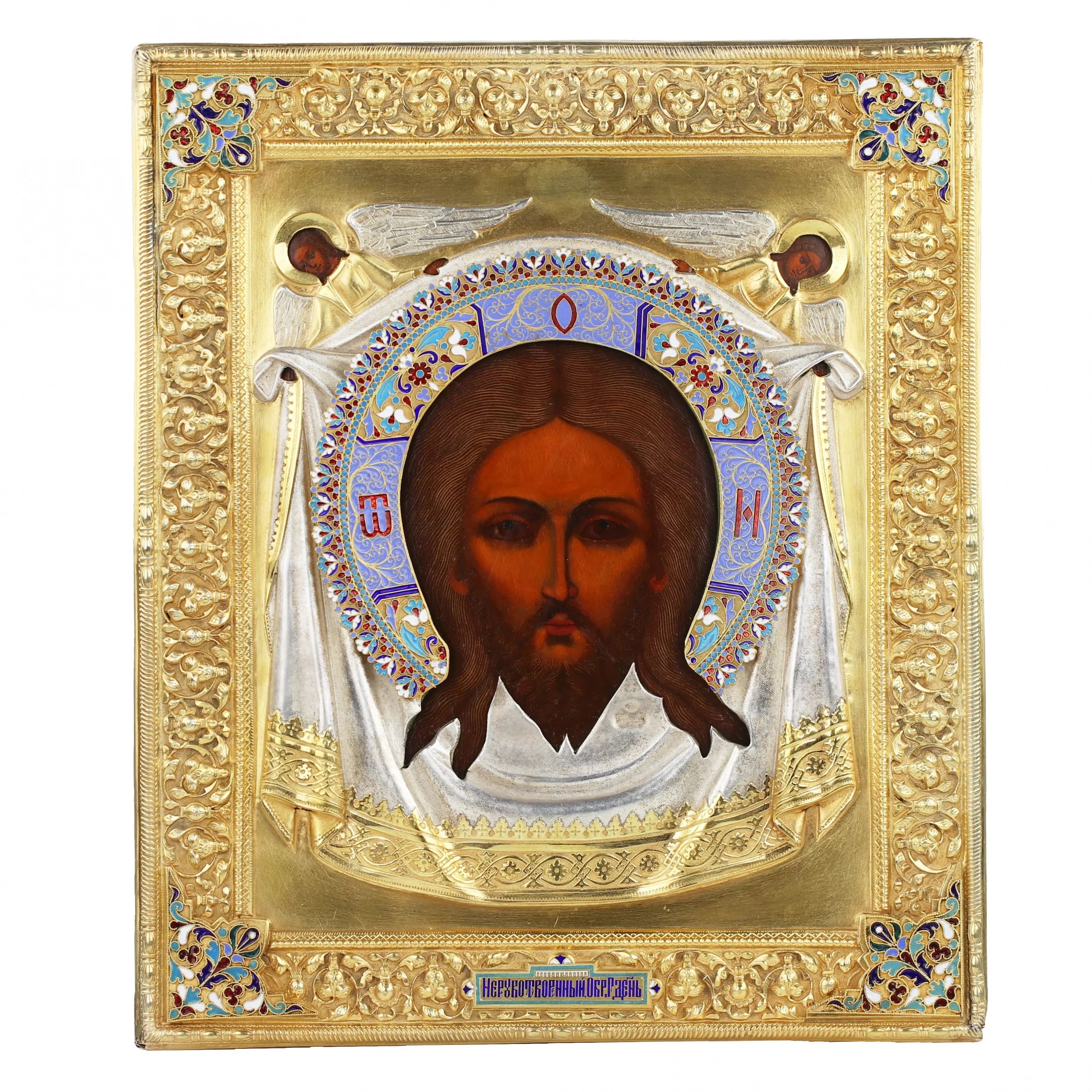
The Holy Mandylion (Spas Nerukotvorny) is an outstanding example of late 19th-century Russian Orthodox art, in which strict canonical tradition is harmoniously combined with the virtuoso craftsmanship of the Moscow silversmithing school. The image of Christ, executed in tempera on wood, is distinguished by the soft modelling of the features, profound inner concentration, and a penetrating, contemplative gaze. The composition is complemented by two angels holding the cloth bearing the miraculous image, reinforcing the theological meaning and emphasising the idea of divine revelation and heavenly protection.

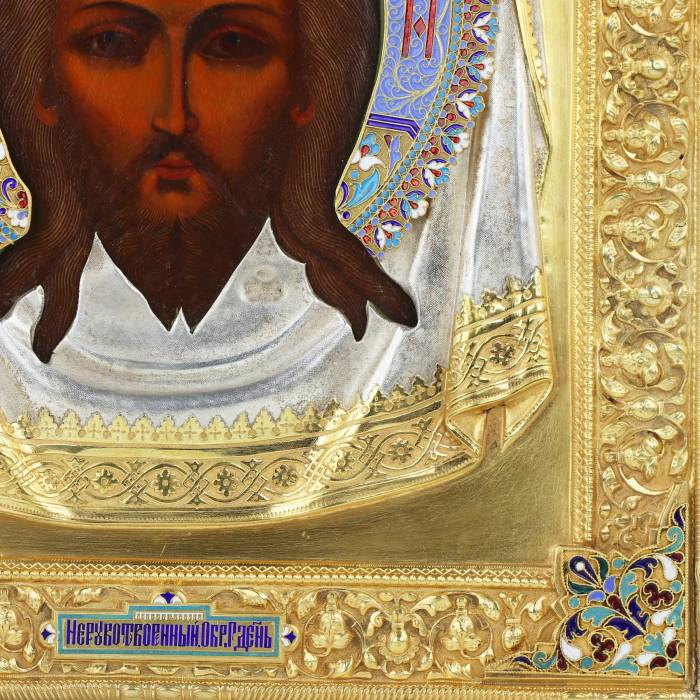
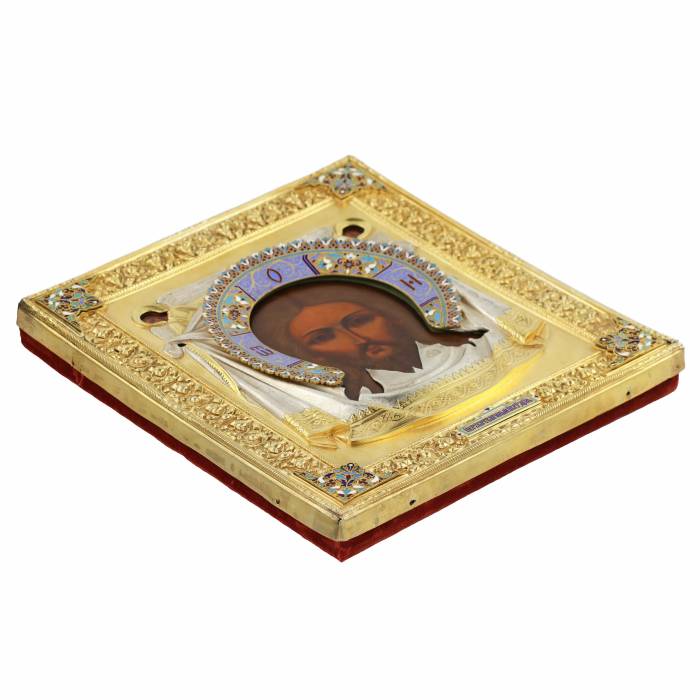
The icon is set within a sumptuous silver-gilt oklad created in 1894 in the renowned Moscow workshop of Ivan Filippovich Tarabrov. The oklad is richly adorned with cloisonné and champlevé enamels. The halo surrounding the face of Christ is decorated with an intricate ornamental design featuring deep blue, red, and white tones set against a gilt and blue ground. A distinctive characteristic of Tarabrov’s workshop is the use of gold foil beneath the red enamel, producing a luminous depth of colour and an inner radiance.

The cloth (ubrus) bearing the image of Christ is embellished with finely chased decoration on a silver ground, its edges framed by raised ornamental patterns on gilt surfaces. The corner plaques are adorned with vegetal motifs executed in filigree with enamel infill. The fields of the oklad are further enriched with elegant high-relief vegetal ornamentation and bordered by engraved bands, lending the composition harmony and refinement. Every detail of the oklad testifies to exceptional precision of execution and refined artistic taste, enhancing the sacred and solemn character of the image.

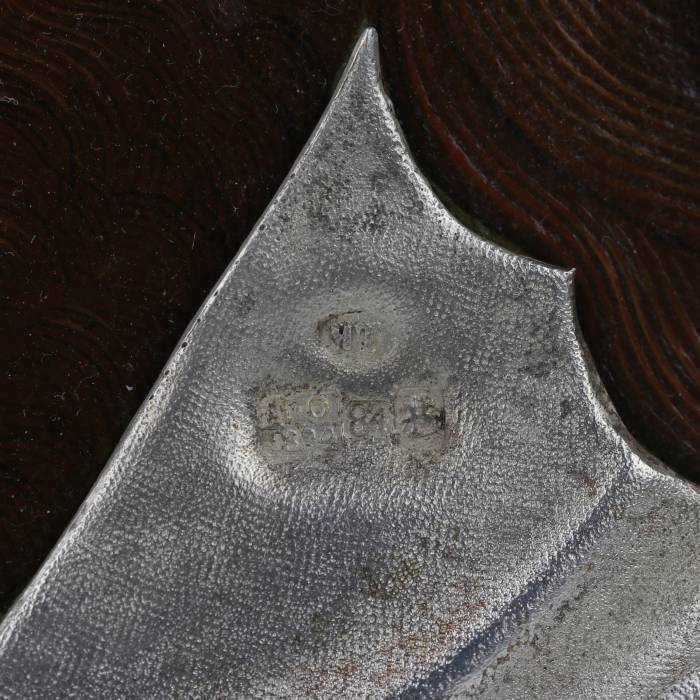
Marks: Cyrillic letters “IT” – maker’s mark of the silversmith Ivan Filippovich Tarabrov; Assay mark with the initials of the assay master “L•O” (Oleks Lev Fyodorovich) positioned above the date “1894”; Moscow city mark depicting Saint George slaying the dragon.

Technique and materials: Wood, tempera; silver, gilding; cloisonné and champlevé enamels; chasing, engraving, filigree.

Dimensions: 31.5 × 28 cm.

Art:
russia
Height:
31.5 cm
Width:
28 cm
Depth:
4 cm
Period:
Late 19th century
Style:
Neo-Russian
Country:
Russia, Moscow
Material:
Silver 84, Cloisonné enamel, Gilding
Condition:
Revive
Fair
Good
Very good
Like new

The image of the Holy Mandylion occupies a central place in Byzantine and Russian iconography. According to ancient tradition, the face of Christ was miraculously imprinted on a cloth and sent to King Abgar of Edessa, making it the first non-hand-made image of Christ. In Russian religious culture, this iconographic type gained particular prominence from the 15th century onward and became one of the principal symbols of Orthodox faith, spiritual protection, and divine presence.

By the late 19th century, the image of the Holy Mandylion had become an integral part of the repertoire of leading icon-painting and silversmithing workshops of the Russian Empire. The Moscow school was especially noted for its decorative richness, combining ancient canonical forms with the aesthetics of the late Imperial style. Founded in the 1870s, the workshop of Ivan Tarabrov achieved wide recognition for its exceptional quality and innovative technical approaches. His works demonstrate masterful handling of enamel, chasing, and gilding, as well as the distinctive use of gold foil beneath enamel layers.

Tarabrov’s oklads were exhibited at major national exhibitions, received high contemporary acclaim, and were acquired for both ecclesiastical and private collections. Today, comparable works are represented in leading museum collections, including the State Historical Museum, the Kremlin Armoury, and the State Tretyakov Gallery. The present icon, dated 1894, belongs to the mature period of the master’s oeuvre and vividly illustrates the defining characteristics of his style: impeccable technical execution, complex ornamental design, stylistic unity, and a rare balance between canonical severity and decorative richness. It stands among the most significant examples of late Russian icon-painting and silversmithing art.

The icon is in good antique condition. The enamels display natural age-related craquelure. The gilding remains bright. No losses observed. The painted surface is stable.

The condition report is provided for informational purposes only.

It is not comprehensive and may not reflect all defects, restorations, alterations, or adaptations, as Antiqon does not perform professional conservation-level assessments. The information is based on a qualified, yet subjective, evaluation by our specialists.Before purchasing, we recommend consultation with an independent expert.Please also consult our Terms and conditions and Glossary A-Z, which contain important information on lot characteristics and sale conditions.
Factory of I.F. Tarabrov (1893-1917)
I.F. Tarabrov Factory: History, Achievements, and Masterpieces of Russian Jewelry Art The I.F. Tarabrov Factory stands as one of the brightest examples of Russian jewelry craftsmanship from the late 19th to early 20th centuries. Renowned as a unique producer of gold and silver items, the factory was celebrated both in Russia and internationally. Established in Moscow in 1893 by Ivan Filippovich Tarabrov, the workshop quickly rose to prominence, creating exquisite metalworks that combined refined craftsmanship with sophisticated artistic style. Founding and Development of the Factory Ivan Filippovich Tarabrov, a talented entrepreneur and jeweler, founded the enterprise in 1893. It soon became a symbol of quality and refinement. Initially located on Krasnokholmskaya Street, the factory later moved to Tarabrov′s private residence on Bolshaya Dvoryanskaya Street (now Pioneer Street) in Moscow. By 1897, the factory employed 46 workers and achieved an annual production volume of 52,000 rubles. Its primary focus was on creating jewelry, interior decor items, icon covers, and decorative pieces that adorned the homes of the nobility and churches. Technological Achievements The I.F. Tarabrov Factory was one of the first in Russia to adopt innovative methods for processing gold and silver, utilizing domestic raw materials and developing unique enamel techniques. A signature feature of its products was the use of transparent green enamel and multicolored dots against backgrounds of contrasting enamel shades, lending a vivid painterly quality to the pieces. Beneath red enamel, gold foil was always applied, creating a distinctive brilliance. Sharp relief chasing and modernist elements such as asymmetry and botanical ornaments gave the factory′s creations a unique identity. Artistic Features One of the key hallmarks of the factory′s works was fine engraving, the use of enamel, and meticulous ornamentation. The compositions were characterized by a harmonious blend of blue, red, and white tones. Modernist motifs, including clover flowers, buds along field edges, and multilobed crown designs, emphasized the sophistication of the pieces. The exceptional quality of the factory′s works was ensured by the expertise of engravers and artists collaborating with the factory. Most Renowned Works of the Factory "Imperial Lily" Necklace (1895, Moscow) — A luxurious gold necklace with diamonds and enamel, crafted in the Art Nouveau style, symbolizing the refined taste of the era."Harvest Celebration" Bowl (1897, State Historical Museum, Moscow) — A silver bowl adorned with multicolored enamel, depicting rural scenes."Russian Ornament" Snuffbox (1900, Sergiev Posad Museum-Reserve) — A decorative gold snuffbox with filigree and enamel, highly popular among the nobility."Christ Pantocrator" Icon (1905, Church Archaeological Cabinet of the Moscow Theological Academy) — A silver icon cover embellished with mother-of-pearl and intricate chasing."Northern Lights" Bracelet (1902, Private Collection) — A platinum and diamond bracelet, notable for its unique interplay of light and shadow."Chamomile Summer" Tea Set (1910, Moscow Kremlin Museums) — A silver set coated with floral enamel, combining elegance with functionality. Hallmarks and Identification Features The factory’s hallmarks, "IT" and "I.T.," by Ivan Tarabrov, were distinctive:A hallmark featuring the initials "IT" enclosed in a square.Another type included "I.T." with dots under each letter, enclosed in a rectangle.The third variant for icon covers featured "I.T." with dots under each letter, enclosed in a triangle.These hallmarks were used to identify the factory′s products, highlighting their artistic and historical value. Items bearing these hallmarks can be found in major Russian and international museum collections. Legacy of the Factory Today, the works of the I.F. Tarabrov Factory are an integral part of Russia′s cultural heritage. They are preserved in prominent museums, including the State Historical Museum, the Moscow Kremlin Museums, the Sergiev Posad Museum-Reserve, the Church Archaeological Cabinet of the Moscow Theological Academy, and the Fabergé Museum in Saint Petersburg, as well as in private collections worldwide. Each piece represents not only exceptional craftsmanship but also the history of an era encapsulated in precious metals. Conclusion The I.F. Tarabrov Factory holds a unique place in the history of Russian jewelry art. Its products, which seamlessly combined technical excellence with artistic sophistication, became symbols of high taste and skill. The factory′s story is not only a tale of entrepreneurial and artistic success but also an enduring contribution to the world′s cultural heritage.
... Read More

Stay up to date with new arrivals
Save Icons and we let you know when new listings appears in this category
Save

Related items