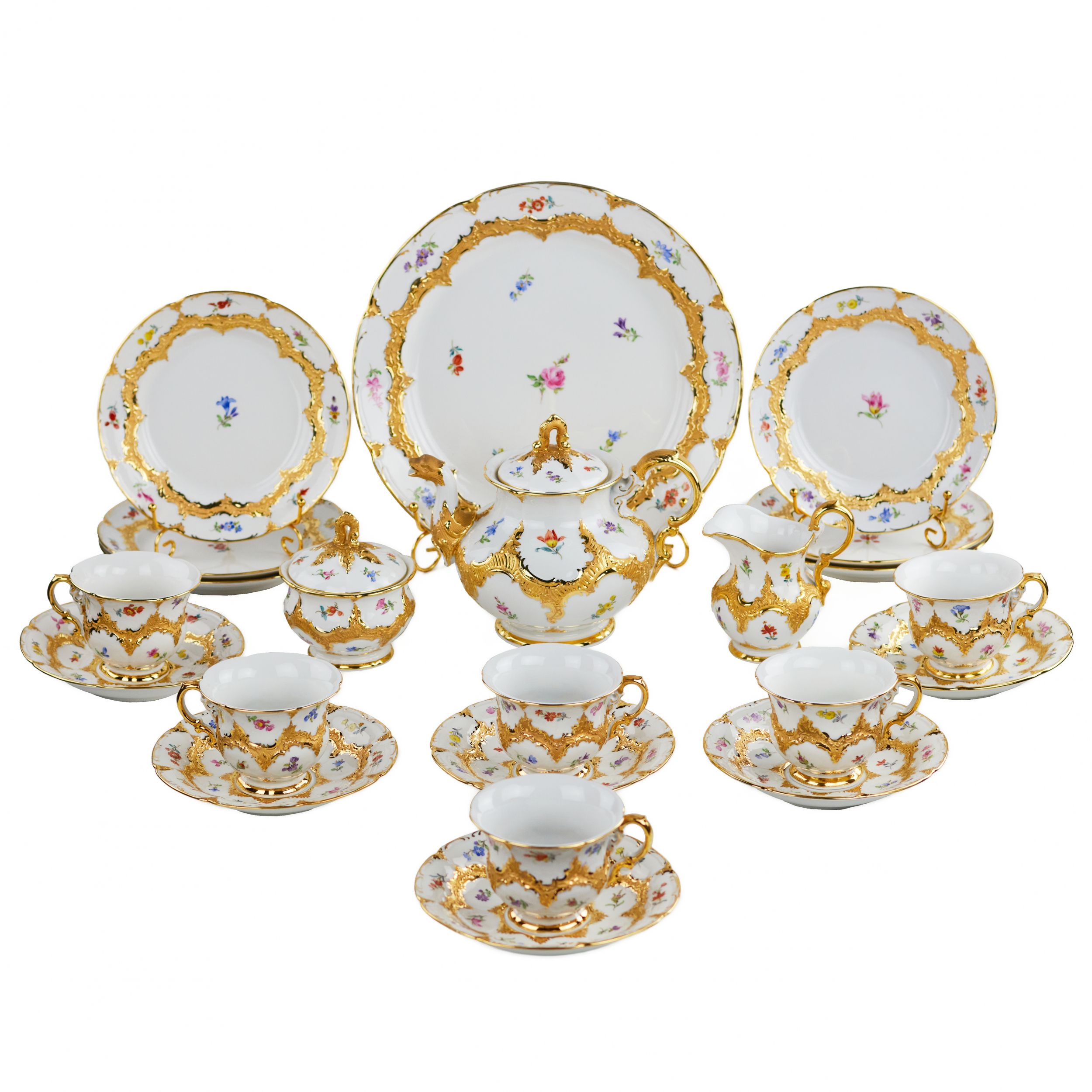



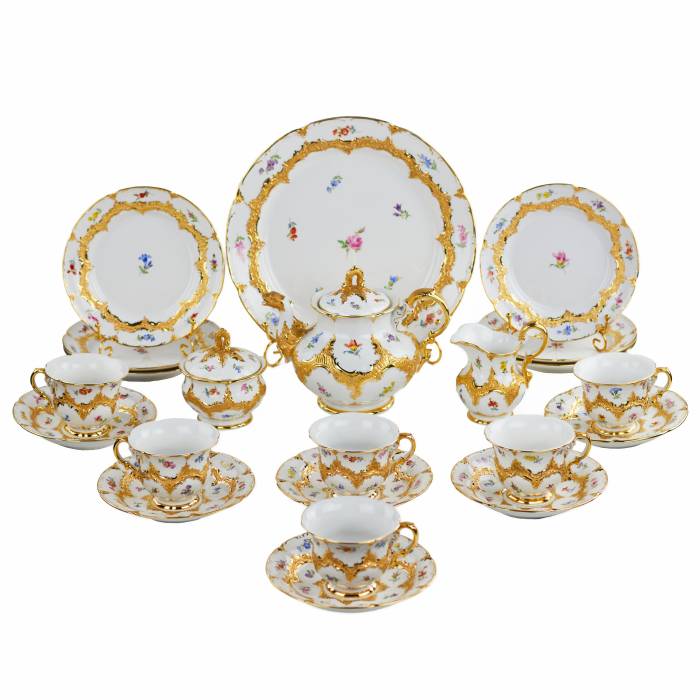
TEA AND COFFEE SERVICE MEISSEN FOR SIX PERSONS GERMANY, 20TH CENTURY
AntiqonART consultant will contact you within one business day after receiving your request.
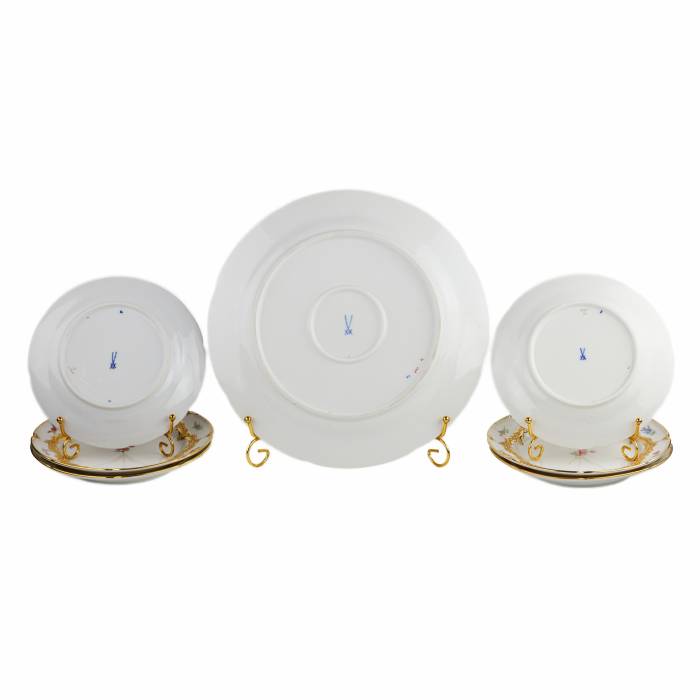
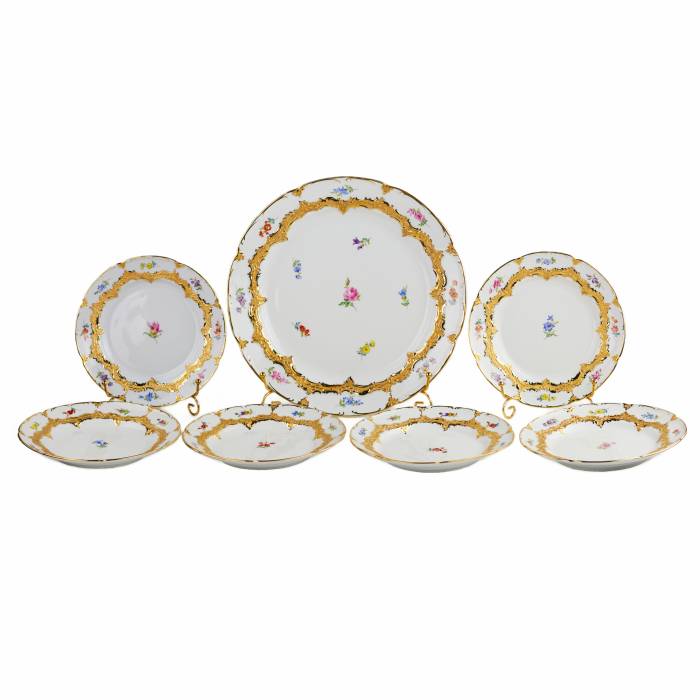
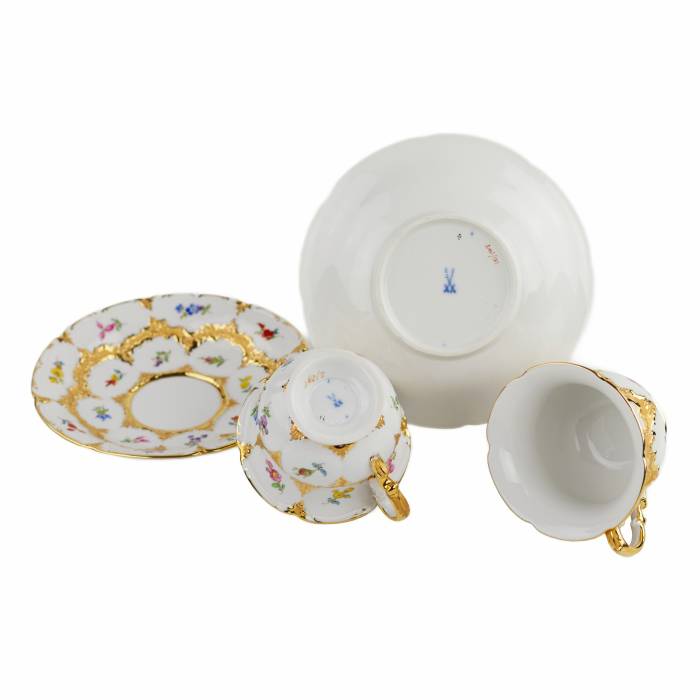
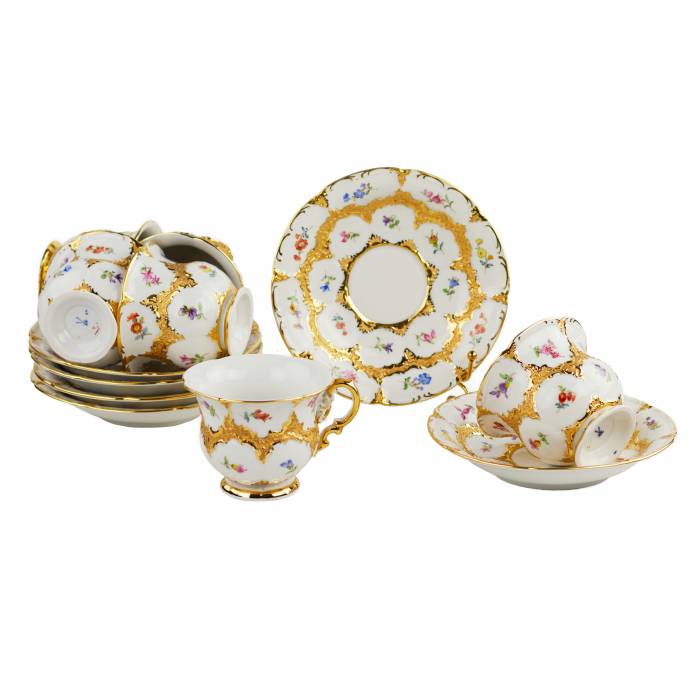
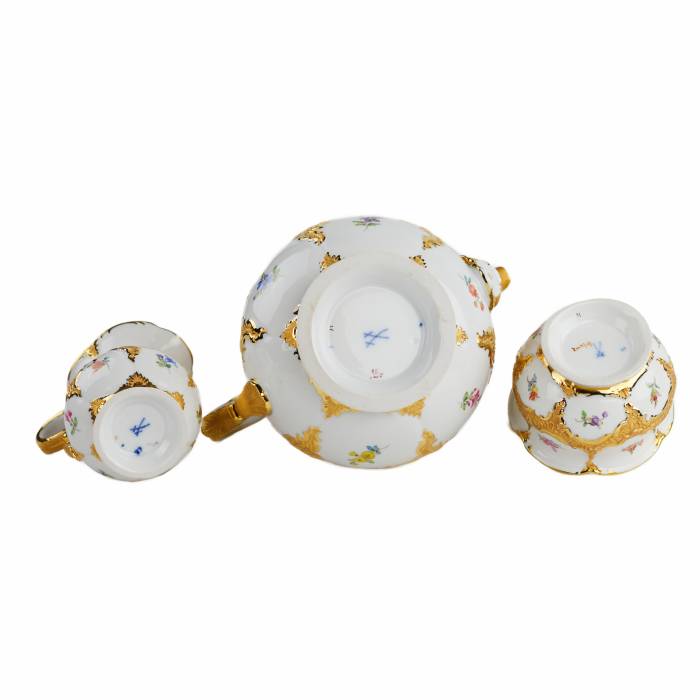
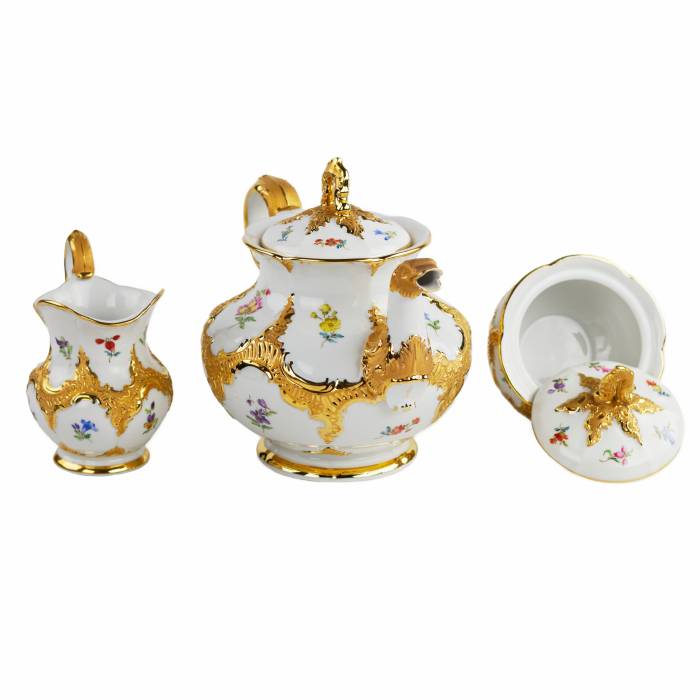
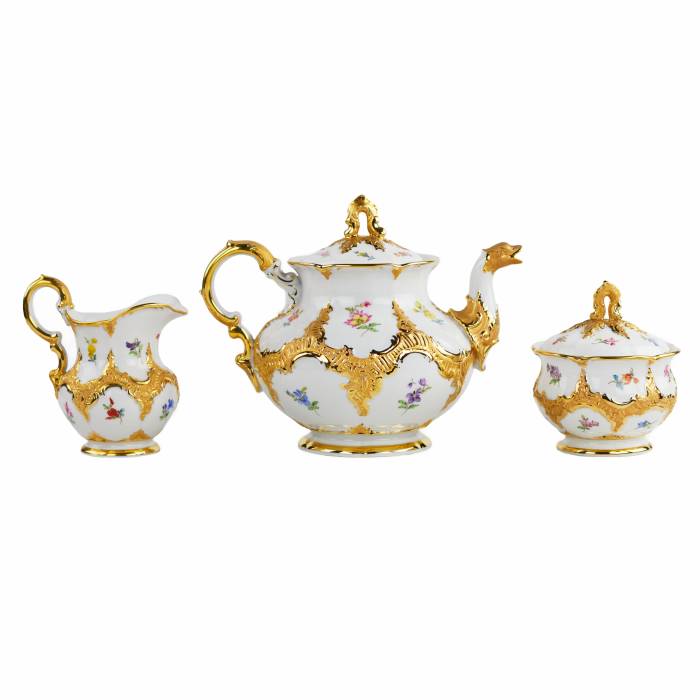
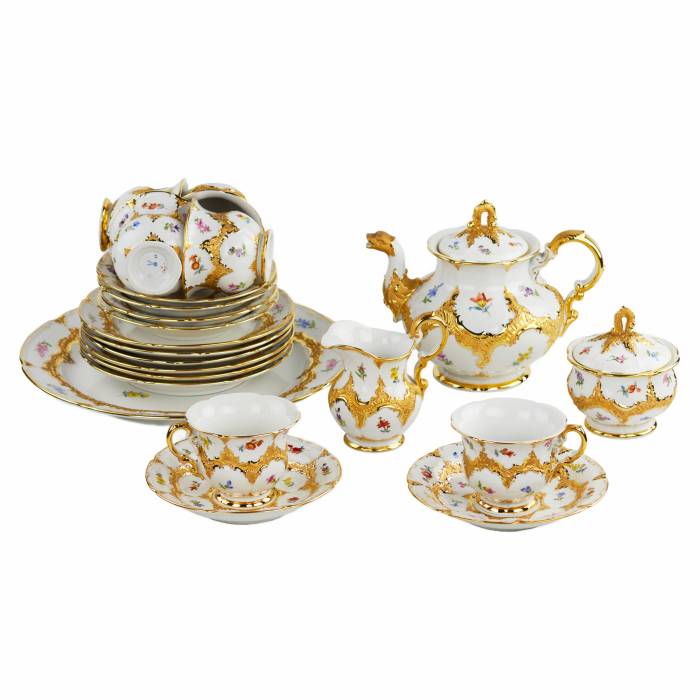
A porcelain tea and coffee service for six persons, created by the renowned Meissen Porcelain Manufactory. The ensemble comprises 22 pieces and represents an elegant interpretation of Late Rococo with elements of Neo-Rococo, characteristic of Meissen production of the 20th century. The pure white porcelain is richly adorned with relief gilding and refined hand-painted polychrome decoration featuring small, freely scattered floral motifs. Undulating rims, plastic gilt scrolls and graceful handles emphasize the sculptural quality of the forms and refer to the classical models of the manufactory. The balanced and ceremonial composition allows the service to be regarded as a representative ensemble intended for formal table settings and a refined collector’s interior.
Marks: Underglaze cobalt-blue Meissen crossed swords mark.
Dimensions:
Teapot: Height 19 cm, diameter 16 cm.
Milk jug: Height 11 cm, diameter 9 cm.
Sugar bowl: Height 11 cm, diameter 10 cm.
Cup: Height 8 cm, diameter 10 cm.
Serving dish: Diameter 30 cm.
Plate: Diameter 20 cm.
Saucer: Diameter 17 cm.
Condition: Very good. Gilding well preserved.
The Meissen Porcelain Manufactory, founded in 1710 in Saxony, occupies a unique position in the history of European decorative arts as the first manufactory to successfully produce true hard-paste porcelain in Europe. From its inception, Meissen established itself as a benchmark of artistic and technical excellence, setting standards of form, decoration and quality that influenced porcelain production across the continent for centuries.
In the 20th century, the manufactory consistently pursued a historicist approach, drawing upon its own artistic legacy of the 18th century while adapting it to contemporary tastes and expectations. The revival and reinterpretation of Rococo and Neo-Rococo motifs became one of the defining directions of Meissen production during this period. Undulating contours, refined sculptural modelling, relief gilding and floral decoration directly reference the courtly Saxon services of the 18th century, many of which are today preserved in the museum collections of Dresden and other major European institutions.
Tea and coffee services of this type played an important role in European domestic culture of the 20th century, combining functional use with a distinctly representative character. They were regarded not merely as utilitarian objects, but as status ensembles reflecting cultural continuity, refined taste and social standing. The preservation of hand-painting, elaborate decorative techniques and classical forms ensured Meissen porcelain remained an object of sustained interest among collectors and connoisseurs.
This service therefore exemplifies Meissen’s 20th-century strategy of maintaining historical identity while uniting the artistic canons of the past with the aesthetic and technical standards of its own time.
The service is in very good condition. The porcelain shows no cracks, chips or restorations. The gilding is well preserved, with only minimal, natural signs of age on the raised relief elements. The painted decoration remains bright, with no losses or fading. Overall condition is consistent with a high level of preservation for objects of this type and period.
The condition report is provided for informational purposes only.
It is not comprehensive and may not reflect all defects, restorations, alterations, or adaptations, as Antiqon does not perform professional conservation-level assessments. The information is based on a qualified, yet subjective, evaluation by our specialists.Before purchasing, we recommend consultation with an independent expert.Please also consult our Terms and conditions and Glossary A-Z, which contain important information on lot characteristics and sale conditions.