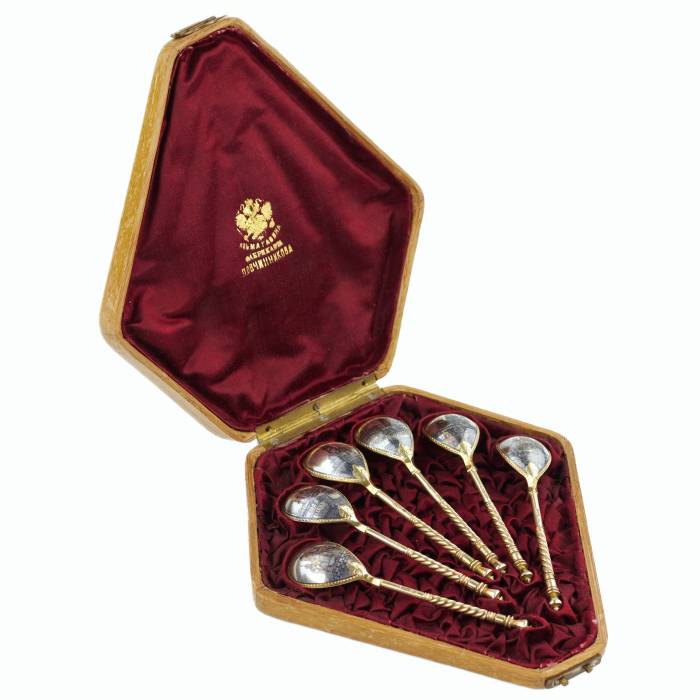
SET OF SILVER TEASPOONS IN ORIGINAL CASE, WORKSHOP OF VASILY SEMYONOV, RUSSIA,MOSCOW, 1896.

SET OF SILVER TEASPOONS IN ORIGINAL CASE, WORKSHOP OF VASILY SEMYONOV, RUSSIA,MOSCOW, 1896.

ID-ANTQ-13317
3500 EUR
Add to cart
Request more info
Guarantee of Authenticity

At Antiqon ART, we build trust and value your choice. Every purchase of art and antiques with us is an investment backed by our expertise, reputation, and a 100% authenticity guarantee.

Price History

Discover how the value of similar works has evolved over the past 10 years. Art is not only beauty — it's an investment.

Complimentary Shipping & Returns

Antiqon ART offers free packaging, insurance, and delivery for most items purchased through the company. Exceptions include large and oversized items that require specialized packing and shipping.

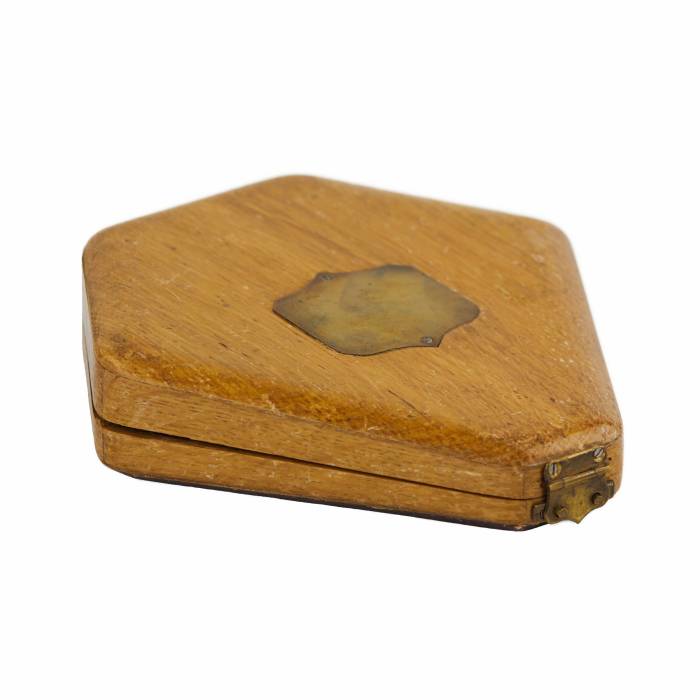
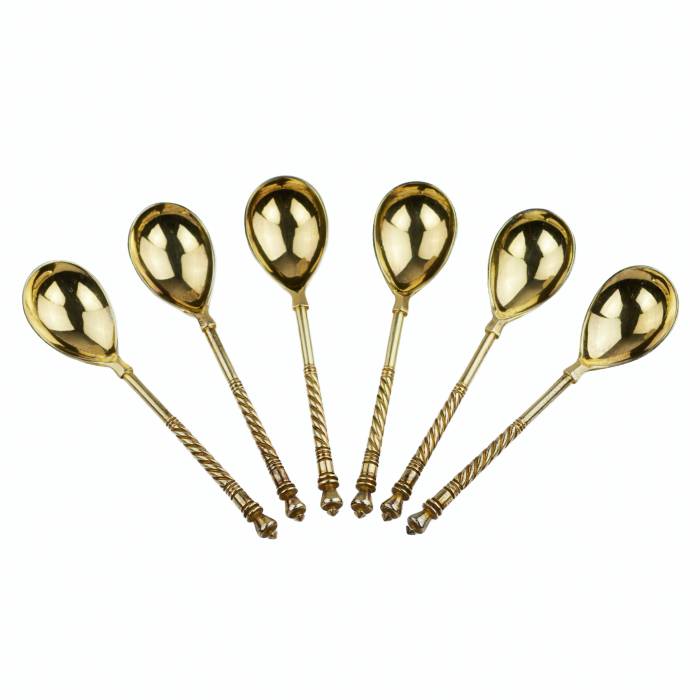
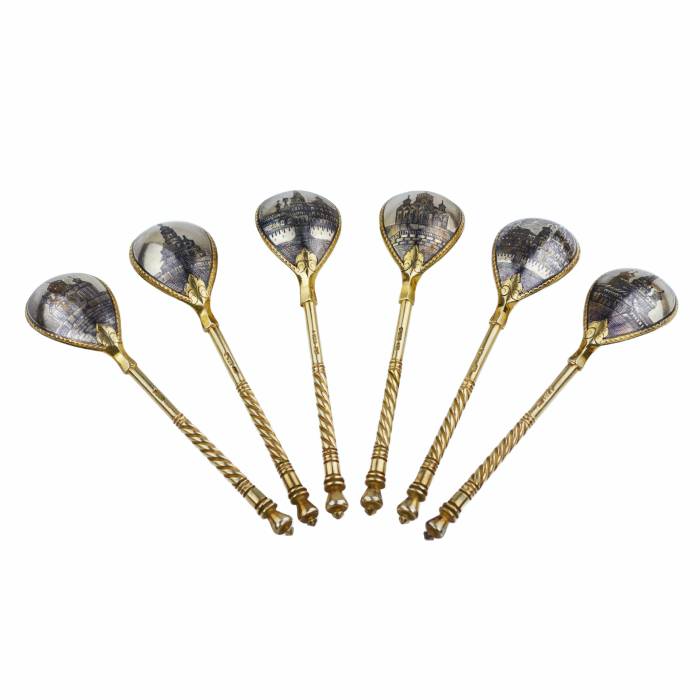
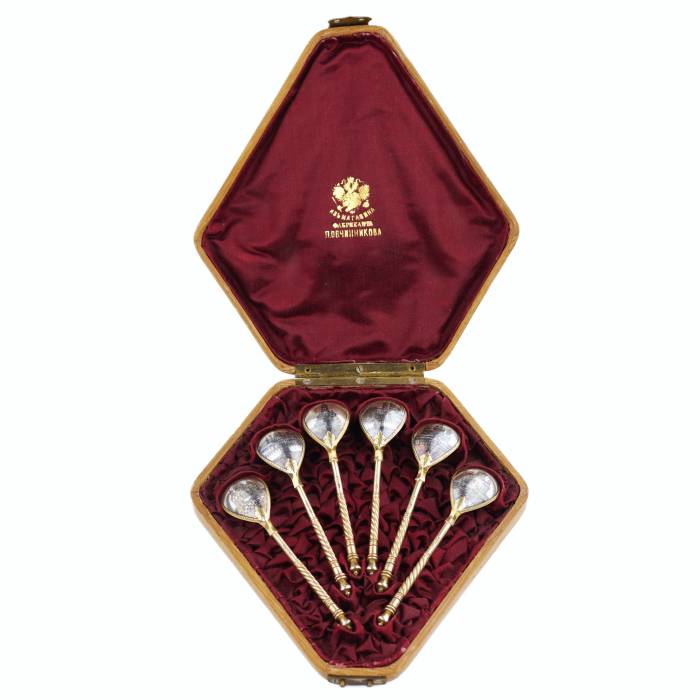
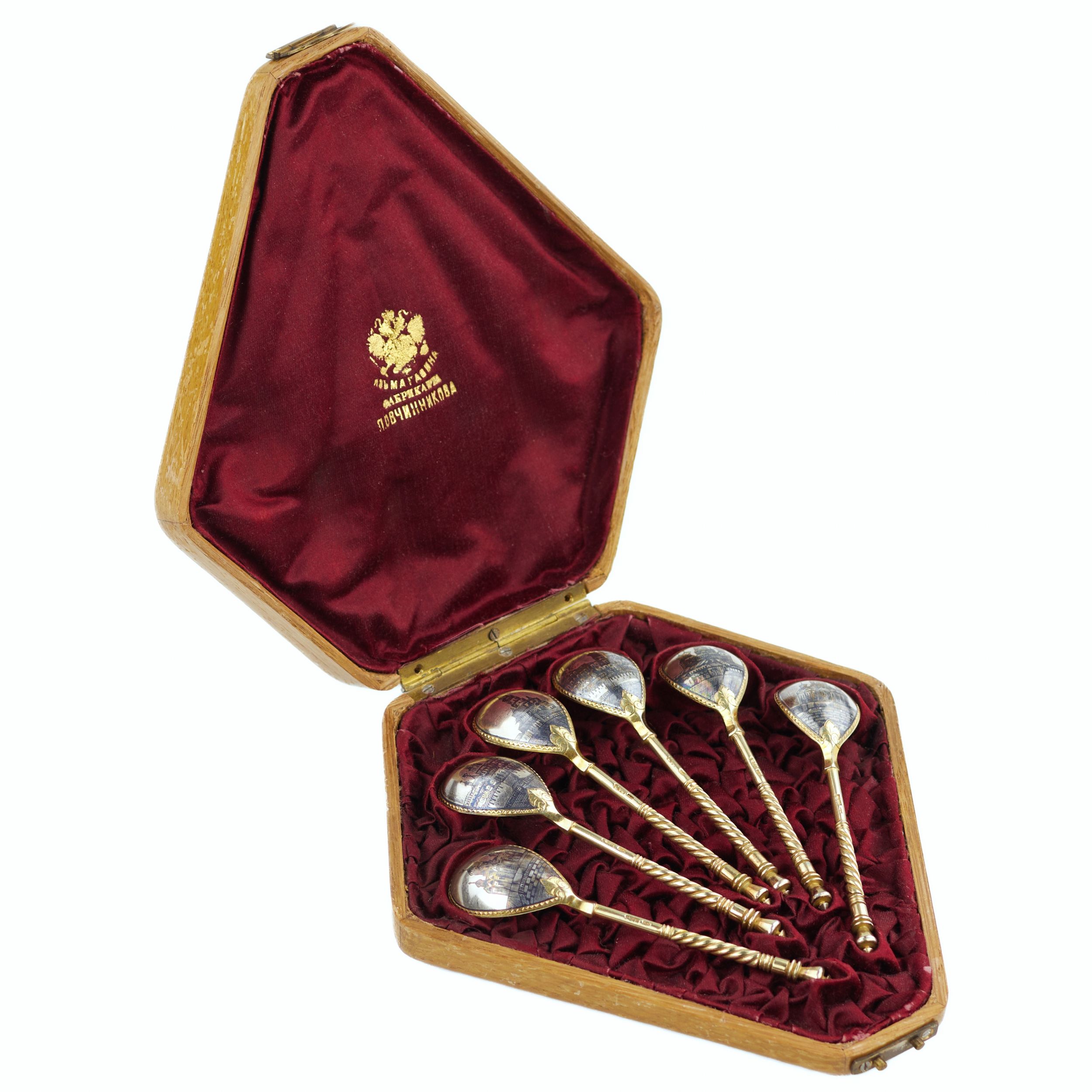
A rare collectible set of six silver teaspoons (84 zolotniks), decorated with niello landscapes of Moscow architecture on the back of the bowls. The views include: Saint Basil’s Cathedral, the Kremlin, the Cathedral of Christ the Saviour, the Ivan the Great Bell Tower, the towers of Kitai-Gorod, and panoramic perspectives of Red Square. All scenes are executed with jeweller’s precision in the characteristic niello technique. The spoons are parcel-gilt with elegant twisted handles. Preserved in the original case, lined with crimson velvet and stamped in gold with the inscription: “FROM THE SHOP OF THE MANUFACTURER P.A. OVTCHINNIKOV” under the Imperial double-headed eagle, indicating distribution through the official Supplier to the Imperial Court.

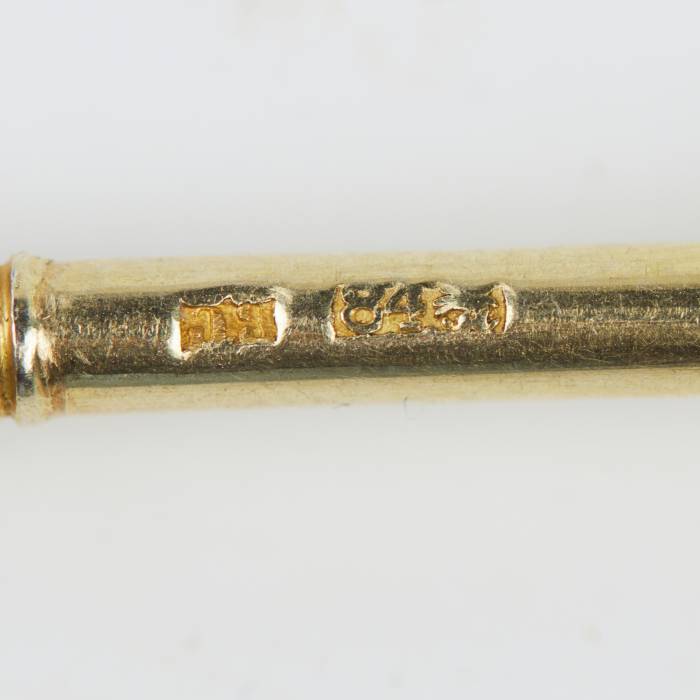
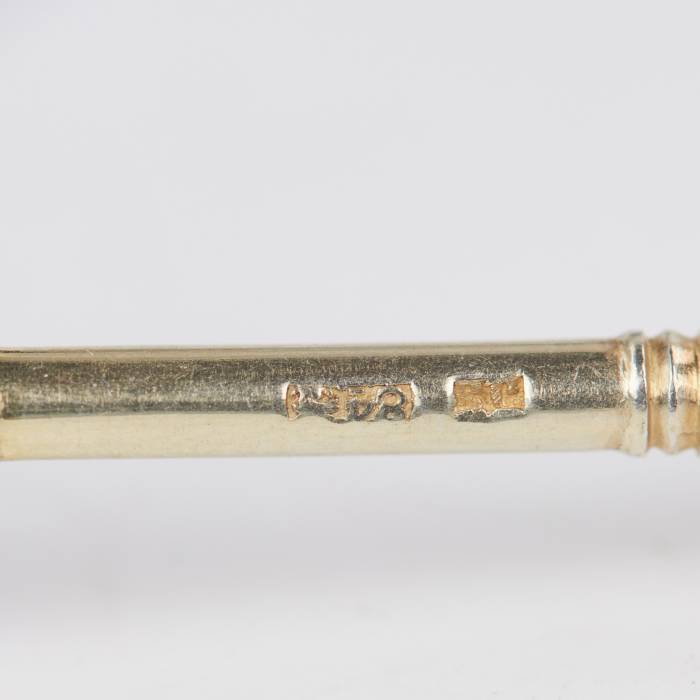
Hallmarks: Moscow mark after 1896 (kokoshnik profile facing left); “84” silver standard; maker’s mark “ВС” for Vasily Semyonov, Moscow silversmith and founder of the workshop established in 1852.

Dimensions: Length: 10.5 × 2 cm.

Weight: Total weight: 95 g.

Condition: Good preservation. Niello intact, parcel-gilt rich and even. Original case in good condition, with traces of age.

Art:
russia
Height:
18 cm
Width:
17 cm
Depth:
3 cm
Period:
Late 19th century
Style:
Neo-Russian
Country:
Russia
Material:
Silver 84, Gilding, Blacking
Condition:
Revive
Fair
Good
Very good
Like new

In the late nineteenth century, Moscow experienced a flourishing of decorative arts, and silverwork became one of the capital’s finest artistic achievements. Niello, an ancient technique known since medieval Rus’, found renewed expression in the hands of jewellers of the period. The contrast of finely engraved lines filled with black alloy allowed artisans to create miniature architectural panoramas with striking accuracy on functional objects.

The spoons in this set feature iconic monuments of Moscow: Saint Basil’s Cathedral with its colourful domes, the Kremlin towers, the monumental Cathedral of Christ the Saviour, the soaring Ivan the Great Bell Tower, and the historic perspectives of Kitai-Gorod and Red Square. Each depiction was more than ornament; it symbolised national memory and imperial identity, bridging Russia’s past with its present grandeur.

While produced by independent workshops such as that of Vasily Semyonov, these sets were frequently retailed through prestigious houses like Ovchinnikov’s, official purveyor to the Imperial Court. The gilded stamp inside the case confirms this elite provenance and situates the spoons within the imperial retail network.

Such sets were often presented at All-Russian industrial exhibitions or exported abroad as exemplars of national style. Today, Moscow-view niello spoons are preserved in the State Historical Museum, the Hermitage, and leading private collections. They stand as eloquent witnesses to the golden age of Russian silverwork on the eve of the Empire’s collapse.

Good preservation. Niello intact, parcel-gilt rich and even. Original case in good condition, with traces of age.

The condition report is provided for informational purposes only.

It is not comprehensive and may not reflect all defects, restorations, alterations, or adaptations, as Antiqon does not perform professional conservation-level assessments. The information is based on a qualified, yet subjective, evaluation by our specialists.Before purchasing, we recommend consultation with an independent expert.Please also consult our Terms and conditions and Glossary A-Z, which contain important information on lot characteristics and sale conditions.
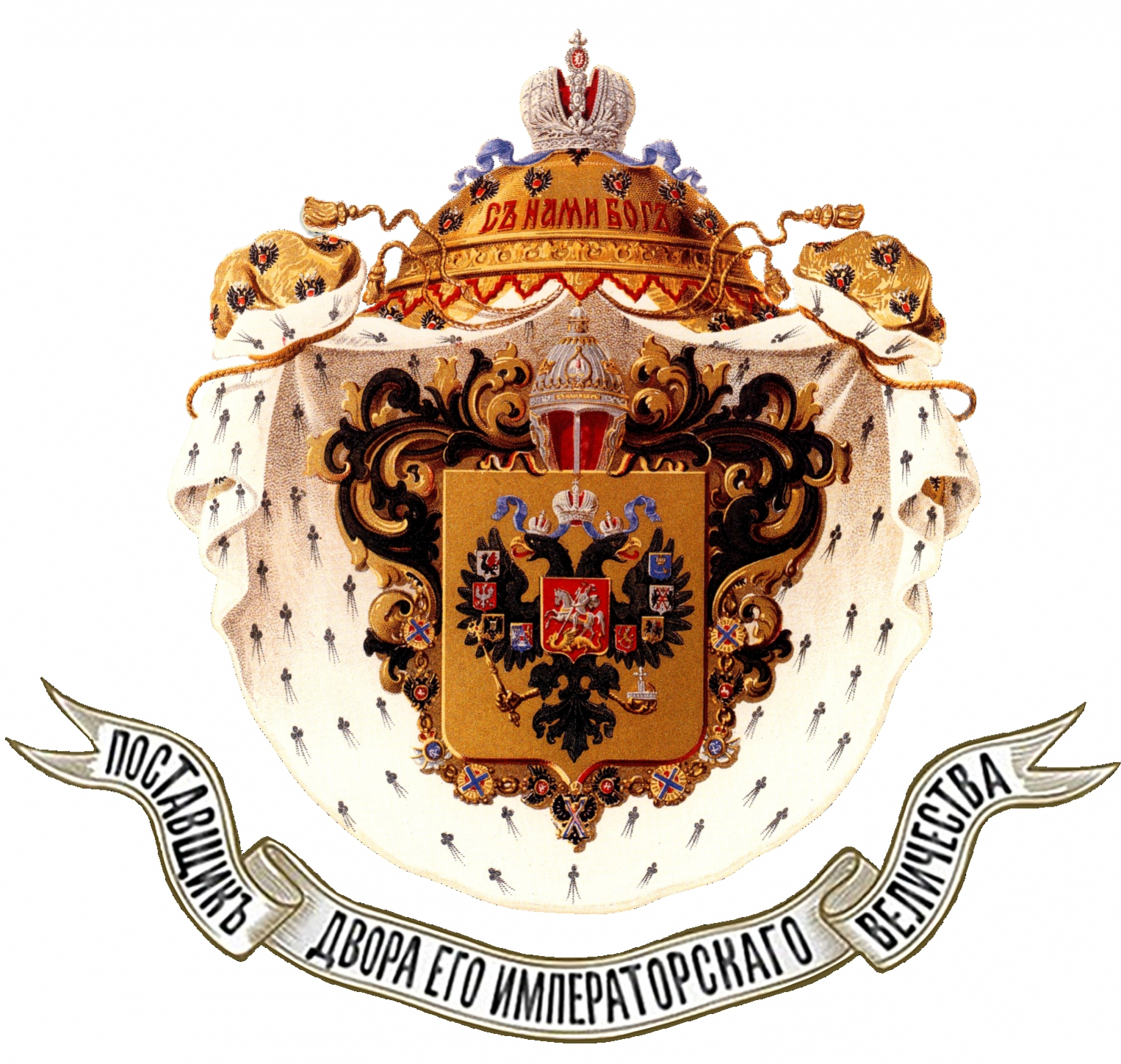
Firm P.A.Ovchinnikov (1851 -1917)
The firm of Pavel Akimovich Ovchinnikov was one of the largest jewelry companies in Imperial Russia during the second half of the 19th and the early 20th century. Official Purveyor to the Court of His Imperial Majesty. Founded in 1851, the enterprise quickly became a flagship of Russian jewelry art, earning international acclaim for its exceptional gold and silver pieces adorned with enamel, niello, and engraving in the spirit of historicism and neo-Russian style. The Master’s Path: From Apprentice to Factory FounderPavel Akimovich Ovchinnikov was born into the family of a serf owned by Prince Volkonsky. As a boy, he demonstrated remarkable drawing skills and was sent to Moscow to apprentice for eight years in the gold and silversmith workshop of his brother Andrey Akimovich. After gaining his freedom and marrying in 1850, he invested his wife′s dowry of 1,000 rubles into starting his own business. In 1851, he opened a workshop that grew into a full-fledged factory by 1853.By 1854, the company’s annual turnover exceeded 1.5 million rubles. The factory’s output began reaching the Moscow elite and clergy. In 1865, the firm participated in national and international exhibitions, earning prestigious awards—gold and silver medals, the Legion of Honour (Paris, 1867), and the Iron Cross (Vienna, 1873). Purveyor to the Imperial Court In 1865, the firm was officially recognized as a purveyor to the Imperial Court, a title reaffirmed in 1881 and 1896. In 1873, a branch was opened in St. Petersburg, and in 1878, the company began supplying the household of Grand Duke Mikhail Nikolaevich. Ovchinnikov’s products were present in the major palaces of the empire and were exported across Europe and the East. Revolution in Enamel ArtOne of the firm’s greatest contributions was the development of artistic enamel. Ovchinnikov’s craftsmen were the first in Russia to use plique-à-jour enamel—a translucent technique requiring extreme skill. Enamel became not just decorative but a central artistic element. It was often combined with niello, engraving, carving, and gilding. At the 1872 Polytechnic Exhibition in Moscow, Ovchinnikov presented a service decorated with niello medallions depicting Moscow cityscapes and bright enamel ornamentation—a highlight of the event. Oriental Style and the ChinoiserieTrendOvchinnikov was among the first in Moscow to master Eastern stylistics, which became popular in late 19th-century Europe and Russia. In the spirit of chinoiserie, his workshop produced caskets, snuffboxes, and trays adorned with enamel lacquer, precious stones, and exotic motifs. This aesthetic appealed to aristocratic tastes and added to the firm’s international fame.Artistic CollaborationsPavel Akimovich worked closely with many leading artists, architects, and sculptors of his time. These included E. Lanceray, A. Zhukovsky, G. Hartmann, D. Chichagov, I. Monighetti, A. Zakharov, V. Borovsky, S. Komarov, and L. Dahl. Their designs were brought to life in silver, enamel, and gold—each object becoming a masterpiece of applied art. Jewelry School and Master TrainingIn 1875, Ovchinnikov founded a jewelry school for 130 gifted children. The school was awarded a silver medal at the 1882 All-Russian Exhibition and became a major source of talent for Russia’s jewelry industry. It played a crucial role in the development of professional art education. Flourishing and the End of an Era The firm′s peak came in the 1870s–1880s. After Pavel Ovchinnikov’s death in 1888, the business was managed by his sons. They carried on the tradition of enamel painting and showcased their innovative works at the 1900 Paris World′s Fair. The firm operated until 1917, when revolutionary events brought its story to a close. Legacy: Museum Collections Today, works by the firm “P.A. Ovchinnikov” are part of major museum collections around the world:State Hermitage Museum – icons, processional crosses, and enamel reliquaries;State Historical Museum – tea sets, cigarette cases, and objects in the historicist style;Moscow Kremlin Museums – chalices, kovshi, and ecclesiastical items;Museum of Decorative Arts, Moscow – examples of painted and plique-à-jour enamel;Victoria and Albert Museum, London – pieces in the Byzantine style;The Walters Art Museum, USA – enamel vases, bowls, and snuffboxes.
... Read More

Stay up to date with new arrivals
Save Russian silver and we let you know when new listings appears in this category
Save

Related items