


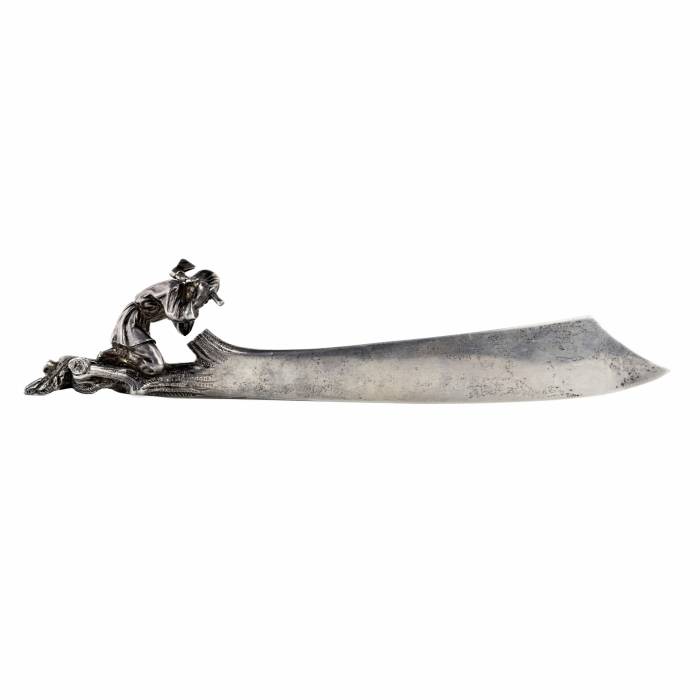
SILVER LETTER OPENER WITH A PEASANT FIGURE, KARL FABERGÉ FIRM, MOSCOW, 1880s
AntiqonART consultant will contact you within one business day after receiving your request.
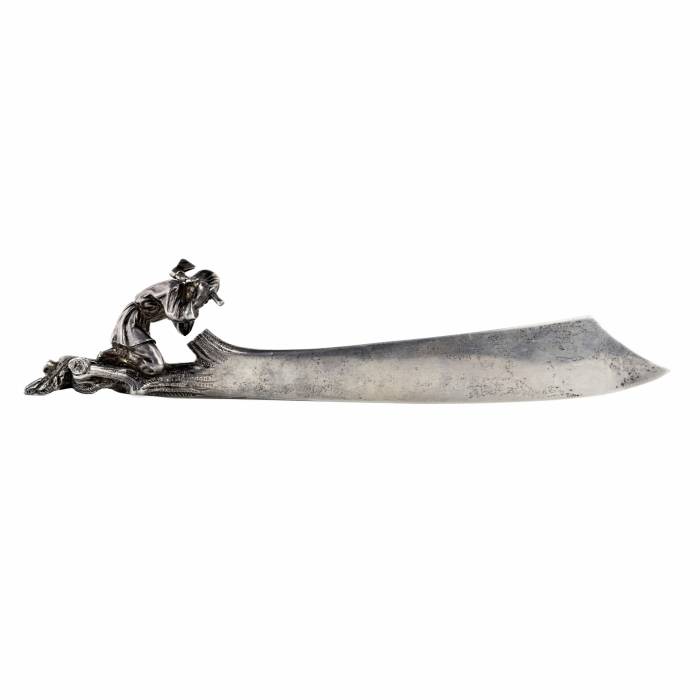
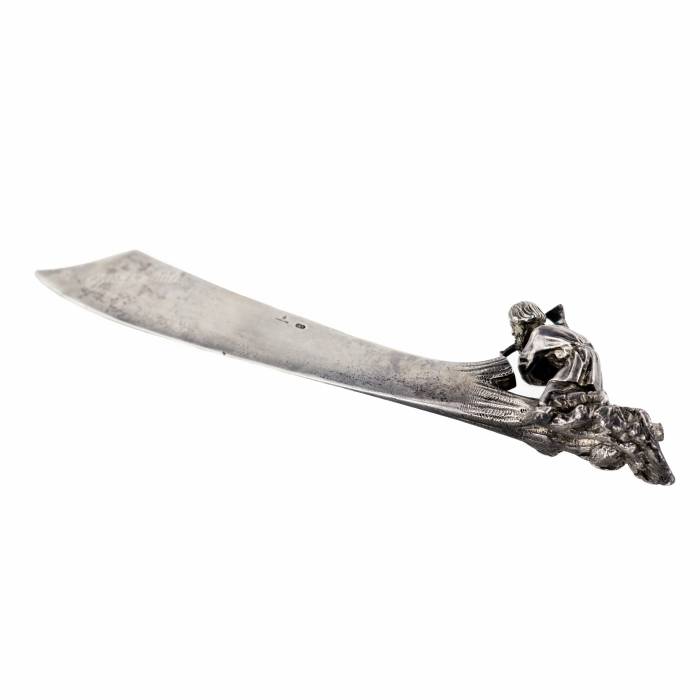
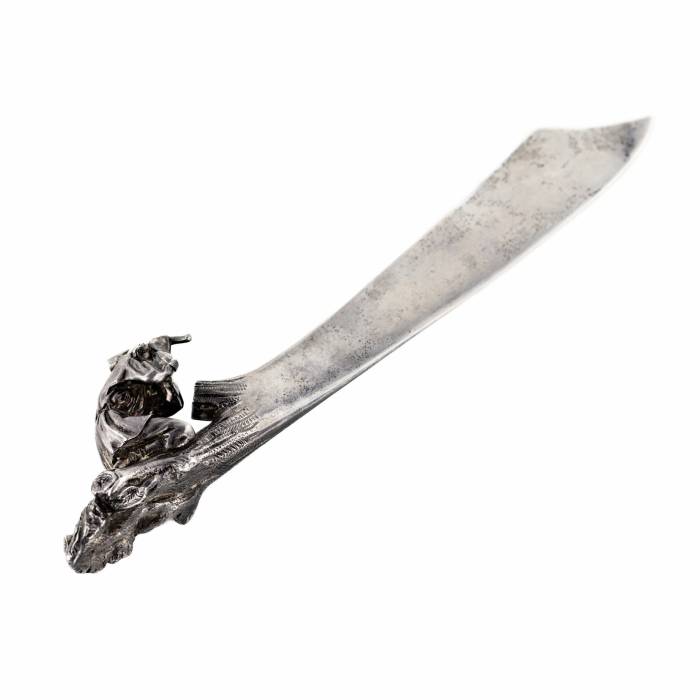
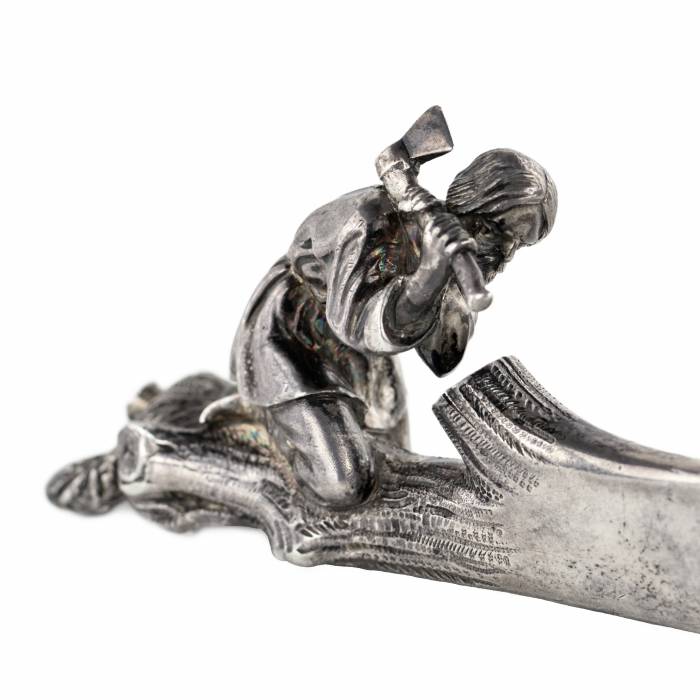
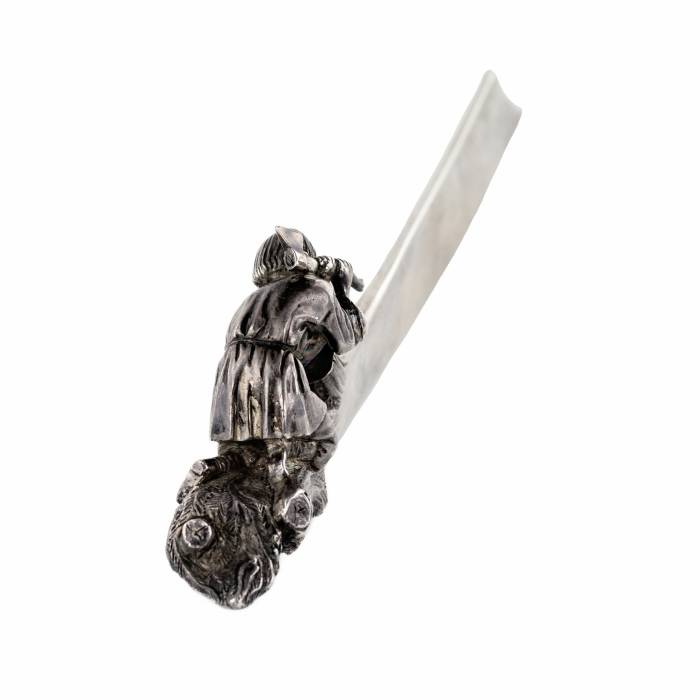
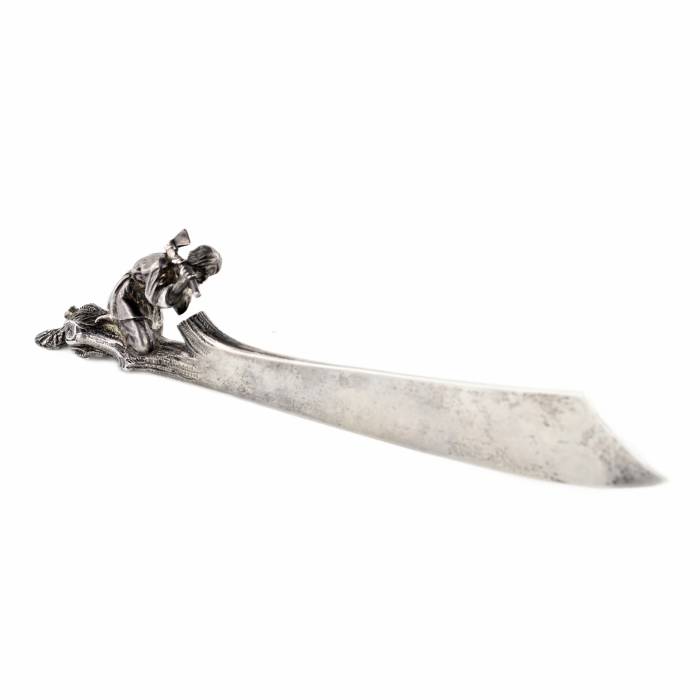
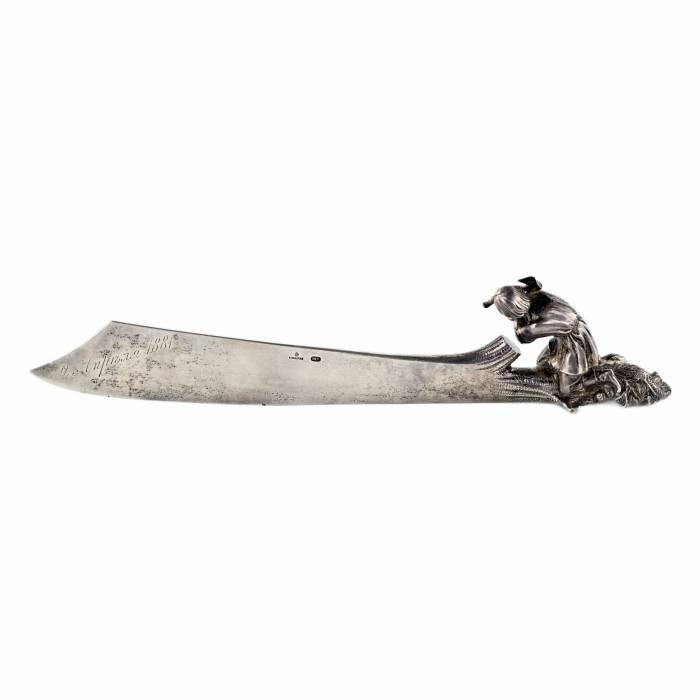
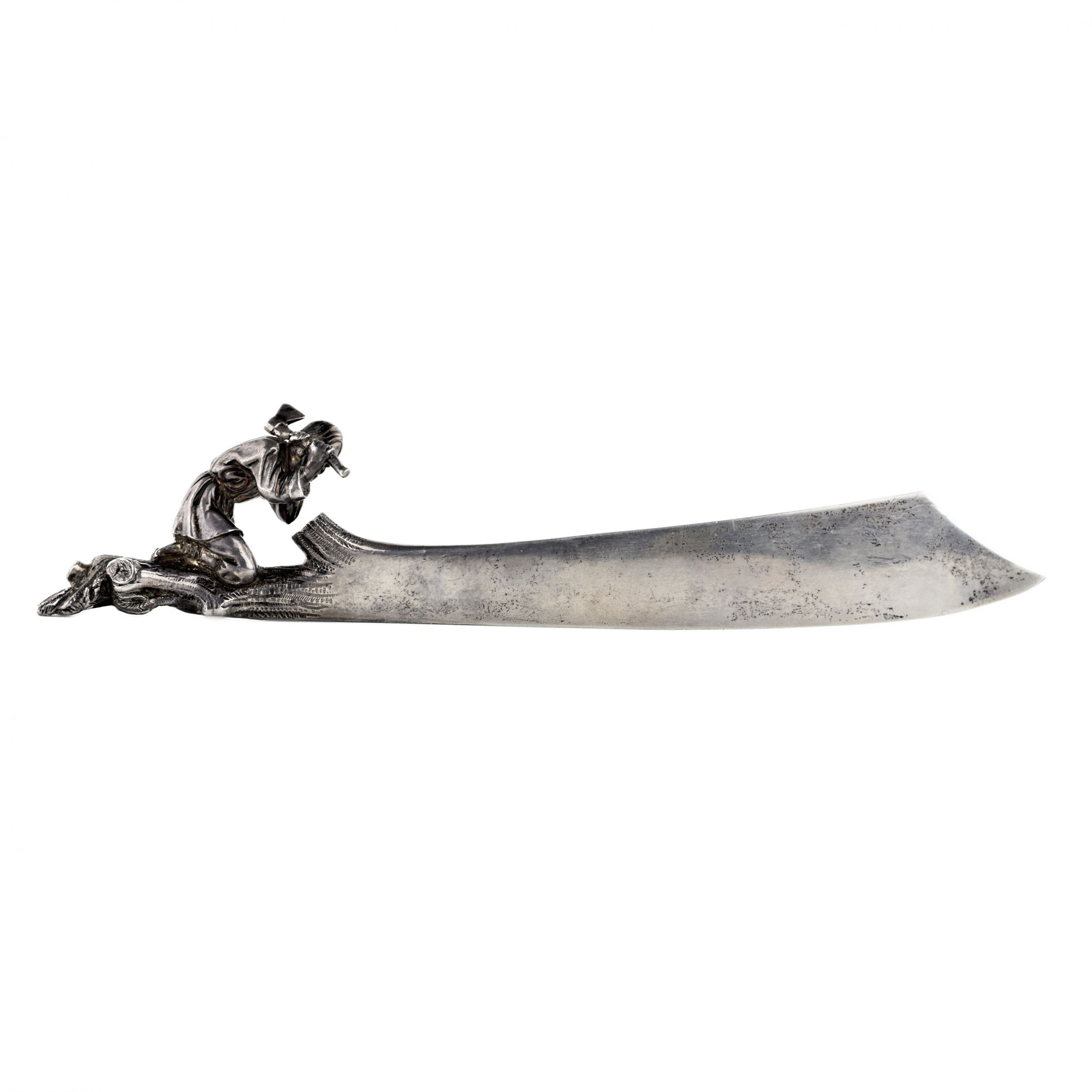
An original silver letter opener crafted by the Karl Fabergé firm in Moscow in the last quarter of the 19th century. The piece represents a rare example of decorative sculpture that combines utilitarian function with artistic expression. The handle is modelled as a Russian peasant chopping a log with an axe. The blade, symbolically continuing as a thinning piece of wood, forms a harmonious extension of the composition. The flat root-textured base serves as a stable stand, allowing the object to be displayed vertically as an independent work of art.
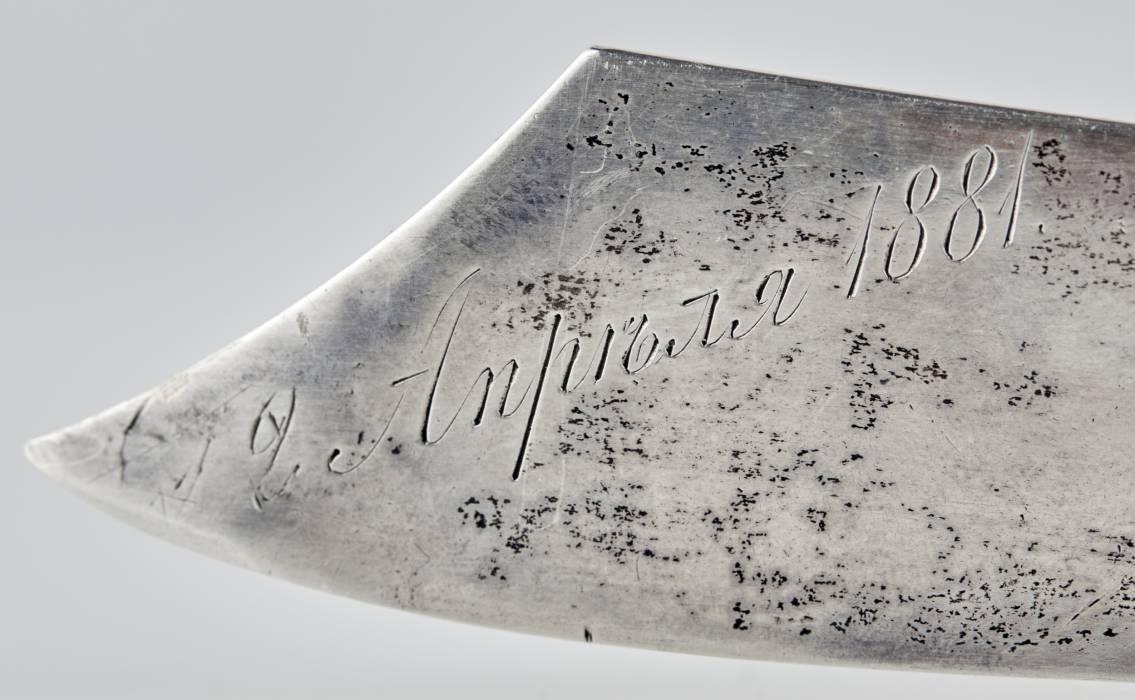
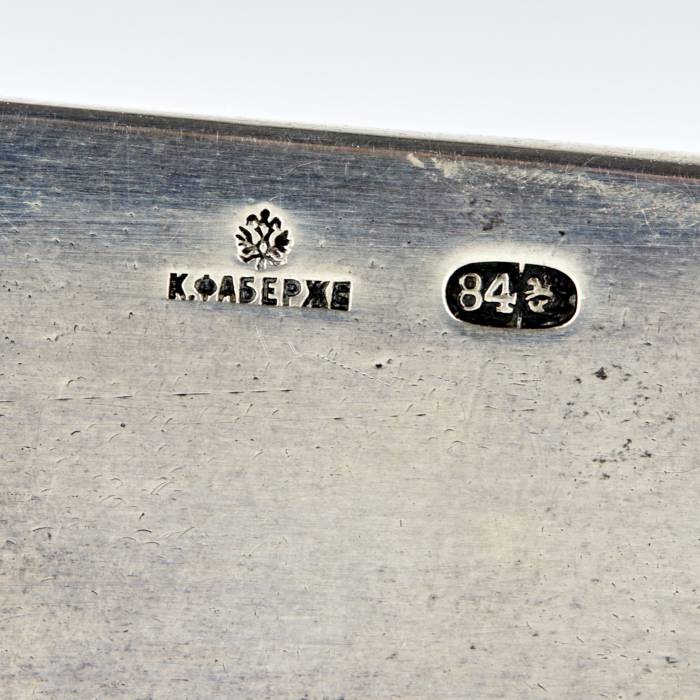
Marks: Full Fabergé hallmark beneath the double-headed eagle with the inscription K. FABERGÉ, assay mark 84 with the Moscow city coat of arms. Engraved date: 2 April 1881.
Dimensions: Length 21.5 cm.
Weight: 228 g.
Condition: Excellent, with a light patina of age, no deformations or restorations.
Provenance: Private European collection.
The Karl Fabergé firm, founded in Saint Petersburg with a branch in Moscow, is synonymous with the highest level of jewellery art of the late 19th - early 20th century. The Moscow workshop, specialising in silver and decorative objects, paid particular attention to genre and everyday subjects inspired by the Russian people. Objects such as this letter opener illustrate Fabergé’s distinctive approach of transforming ordinary items into works of art, blending sculptural expressiveness, subtle humour and ethnographic authenticity.
The depiction of a peasant absorbed in his work refers to the theme of labour, which became highly popular in Russian decorative art during the second half of the 19th century. Scenes of rural life were seen as embodiments of moral ideals — simplicity, diligence and inner strength. Fabergé often turned to such folk motifs in miniature compositions and desk ornaments created for cultivated patrons fascinated by the aesthetics of the “Russian style”.
This letter opener is a rare example of Fabergé’s genre sculpture, where technical precision is combined with a touch of irony and refined artistic taste. The masterfully rendered folds of clothing, the dynamic movement and the expressive pose of the figure create a vivid sense of animation.
Today, such works are exceptionally rare and valued as testimony to the finest silversmithing culture of Imperial Russia. Comparable examples are preserved in major museums, including the State Hermitage and the Victoria and Albert Museum, which hold similar objects from the Moscow branch of Fabergé.
Excellent condition with even silver patina, minimal signs of age and natural lustre typical of authentic Fabergé pieces.
The condition report is provided for informational purposes only.
It is not comprehensive and may not reflect all defects, restorations, alterations, or adaptations, as Antiqon does not perform professional conservation-level assessments. The information is based on a qualified, yet subjective, evaluation by our specialists.Before purchasing, we recommend consultation with an independent expert.Please also consult our Terms and conditions and Glossary A-Z, which contain important information on lot characteristics and sale conditions.