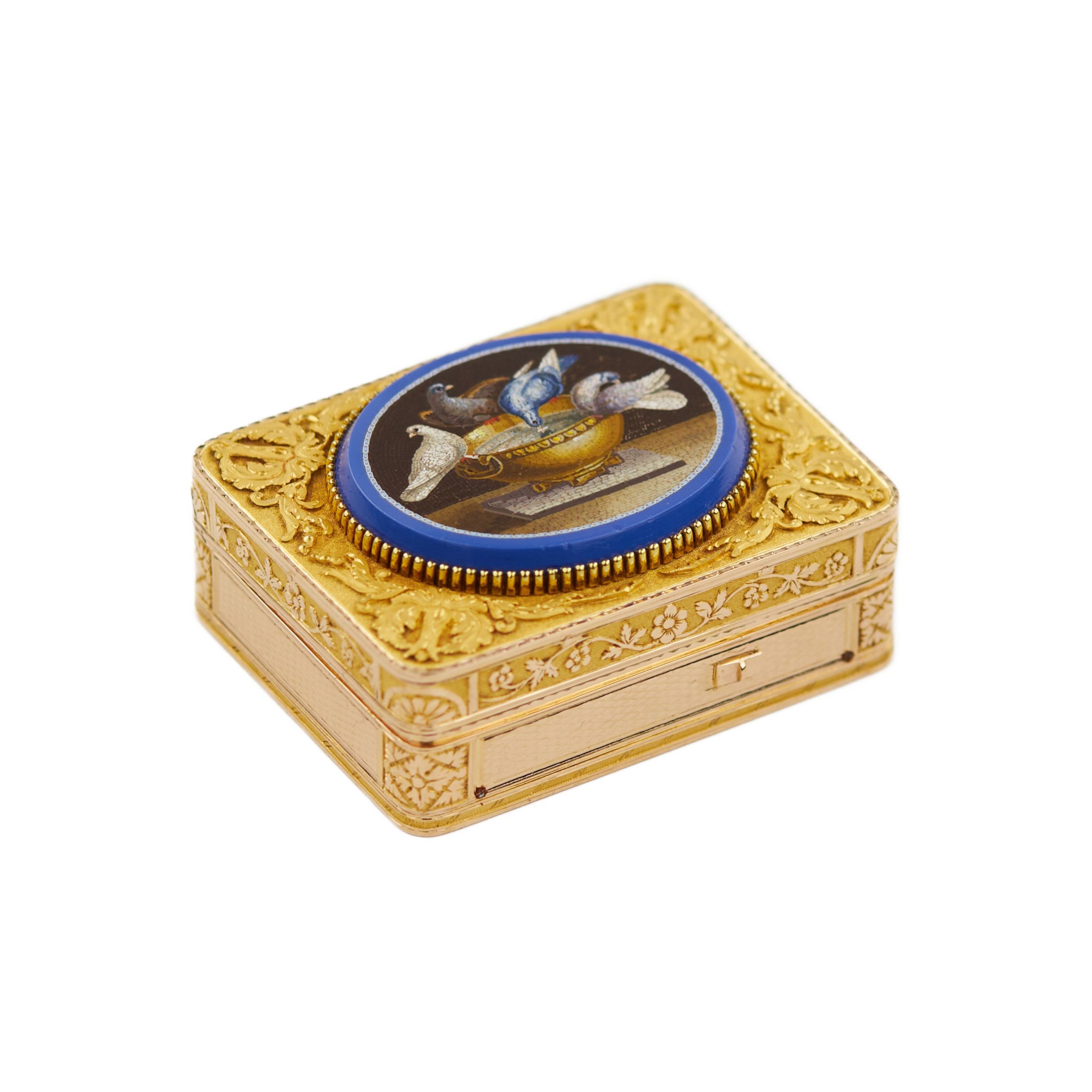
MUSICAL SNUFFBOX WITH MICROMOSAIC PLINY`S DOVES FRANCE, 1819–1838
AntiqonART consultant will contact you within one business day after receiving your request.
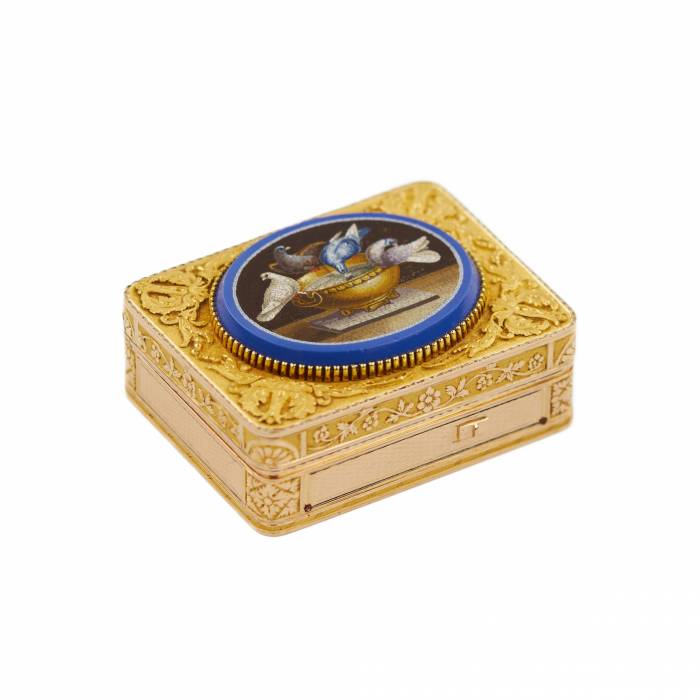
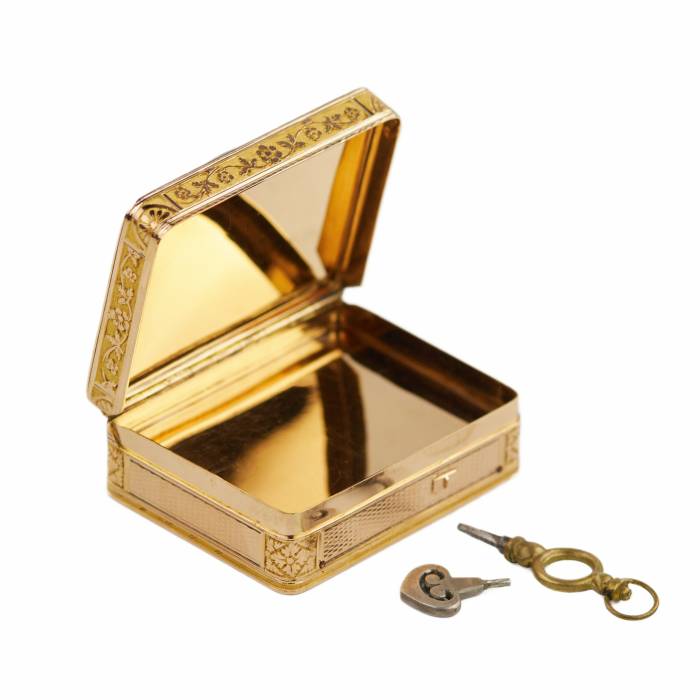
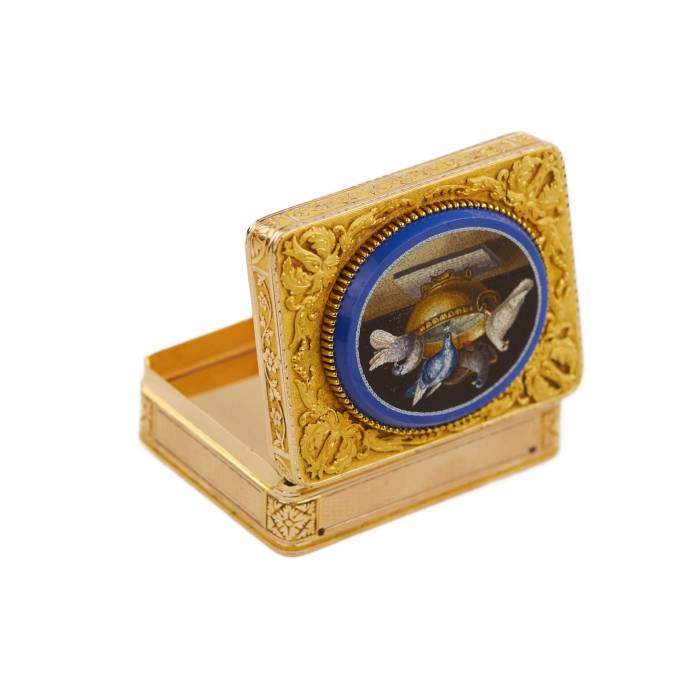
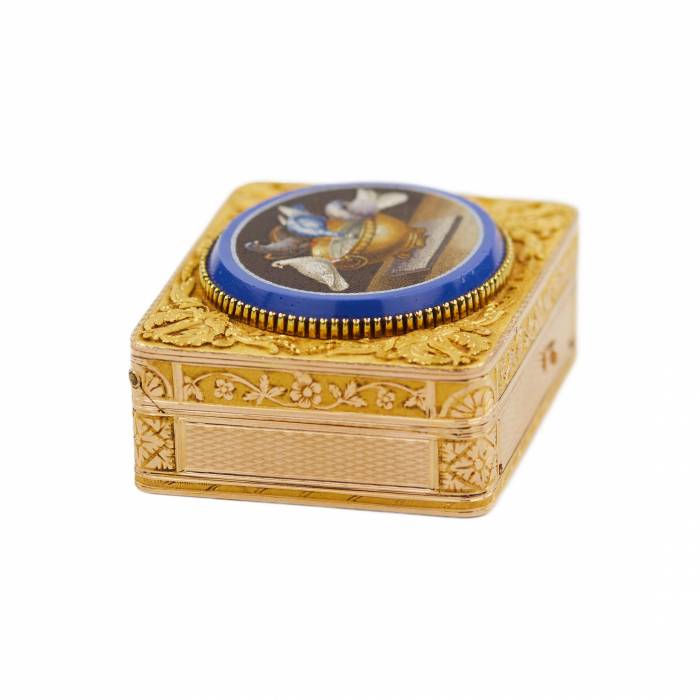
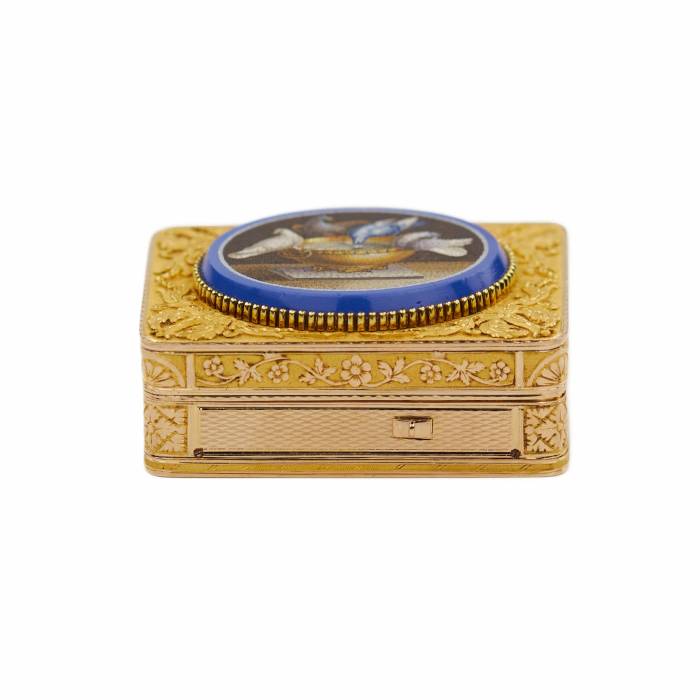
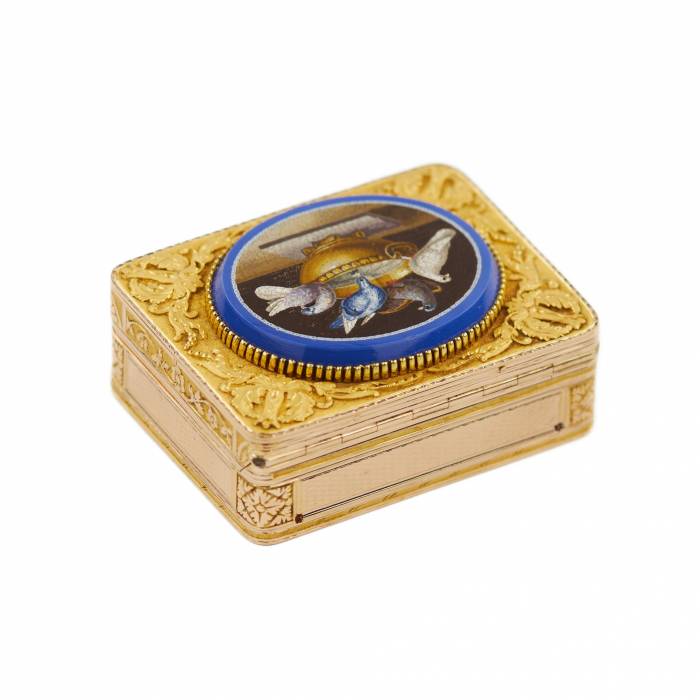
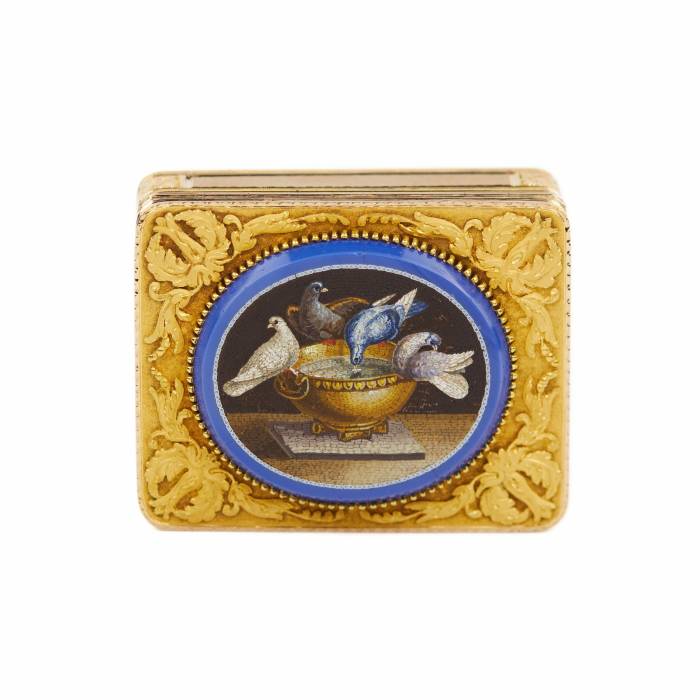
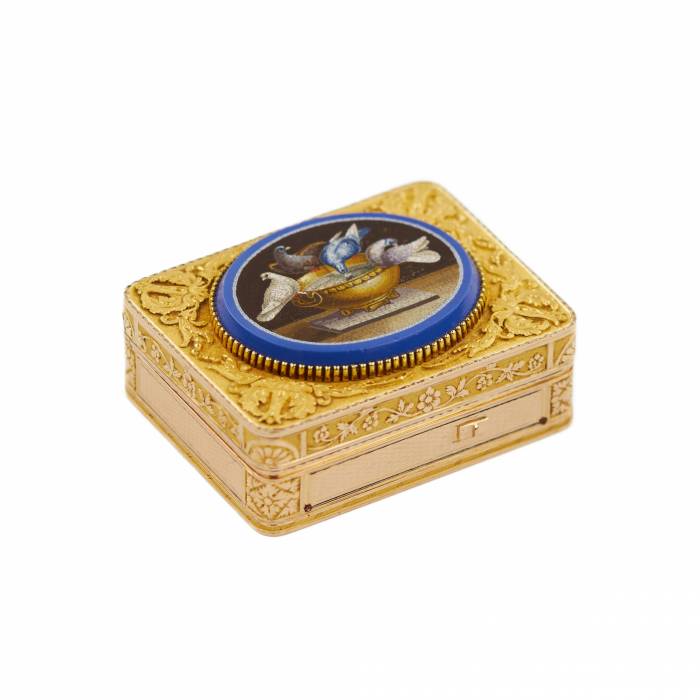
A rare and exquisite musical snuffbox crafted from 18-karat gold, decorated with a unique micromosaic depicting Pliny`s Doves, one of the most recognizable motifs of classical antiquity. The composition, executed in the Roman micromosaic technique, depicts four doves perched on the rim of a gilded bowl and alludes to the famous mosaic found in Hadrian`s Villa in Tivoli. The image is framed by a rich blue border and placed on a lid richly embossed with floral motifs.
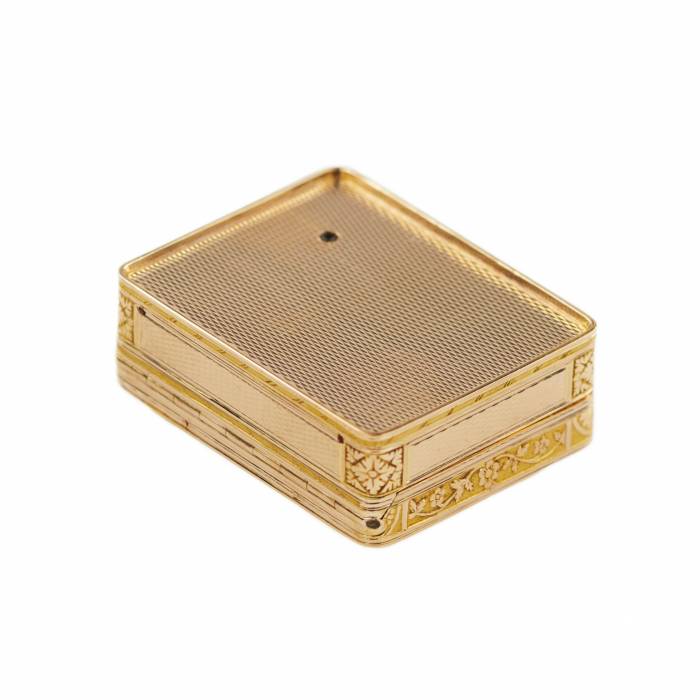
The box body is crafted with exceptional care: the sides are decorated with a floral frieze, a guilloche background, and ornamental inlays on the corners. Inside is the musical mechanism, which retains its original structure with fan-shaped reeds. Two keys are included for winding the mechanism and activating the melody.
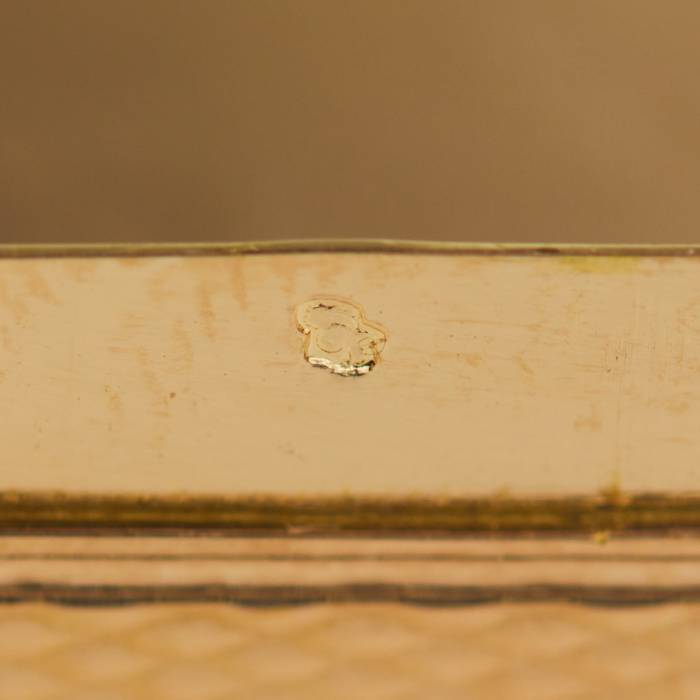
Hallmarks: French export hallmark rooster with a right profile (18K gold, 1819-1838), hallmark in the form of a teapot spout (presumably an assay inspector`s or jewelry workshop`s hallmark).
Dimensions: 4.5 x 3.5 cm. Height 2 cm. Medallion: 3.5 x 2.5 mm.
Weight: 83 g
Condition: Good. The musical mechanism has been completely overhauled.
Origin: France, first half of the 19th century, export product for the European or Russian market.
Musical snuffboxes with micromosaics hold a special place in 19th-century European decorative arts, combining goldsmithing, mechanical ingenuity, and fine imagery. During the Bourbon Restoration (1814–1830) and the July Monarchy (1830–1848), French artisans produced luxurious items both for domestic use and for export to Russia, Britain, and Central Europe.
The micromosaic adorning the lid reflects Roman traditions and the Vatican Mosaic Workshop of the 18th–19th centuries. The motif of the “Pigeons of Pliny” is based on an ancient Roman mosaic found in Tivoli and now housed in the Capitoline Museums in Rome. It became highly popular among neoclassical collectors as a symbol of peace, harmony, and beauty.
Musical mechanisms of this type were first developed in Switzerland, especially in Geneva and Sainte-Croix, and exported to France, where they were incorporated into luxurious gold snuffboxes. The presence of a fan-blade system with manual winding suggests an early type typical of 1810–1830.
Gold snuffboxes with micromosaics and musical movements were especially prized at royal courts, including in the Russian Empire, and often served as diplomatic gifts. The rooster mark — one of France’s earliest compulsory export hallmarks — allows the object to be confidently dated between 1819 and 1838.
Good condition. The musical mechanism has been fully serviced. All elements original, including winding keys.
The condition report is provided for informational purposes only.
It is not comprehensive and may not reflect all defects, restorations, alterations, or adaptations, as Antiqon does not perform professional conservation-level assessments. The information is based on a qualified, yet subjective, evaluation by our specialists.Before purchasing, we recommend consultation with an independent expert.Please also consult our Terms and conditions and Glossary A-Z, which contain important information on lot characteristics and sale conditions.