


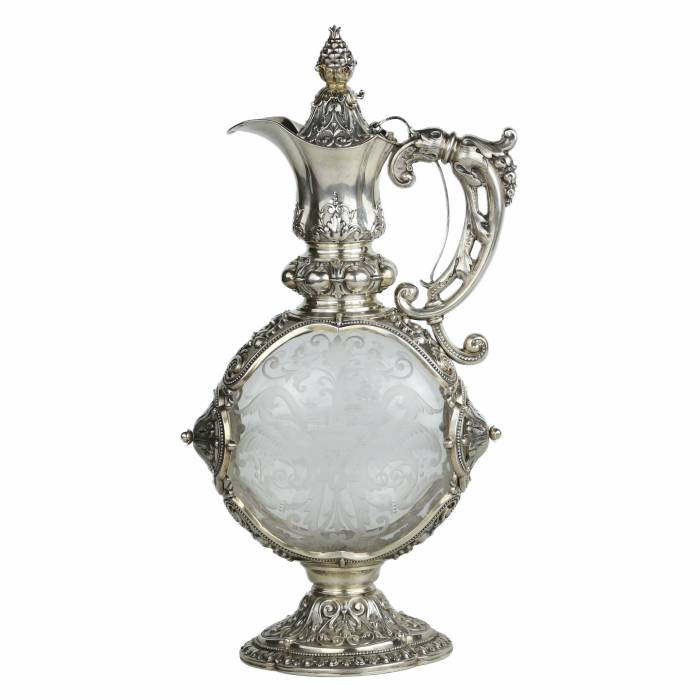
WINE EWER IN NEO-RENAISSANCE STYLE GERMANY, SECOND HALF OF THE 19TH CENTURY
AntiqonART consultant will contact you within one business day after receiving your request.
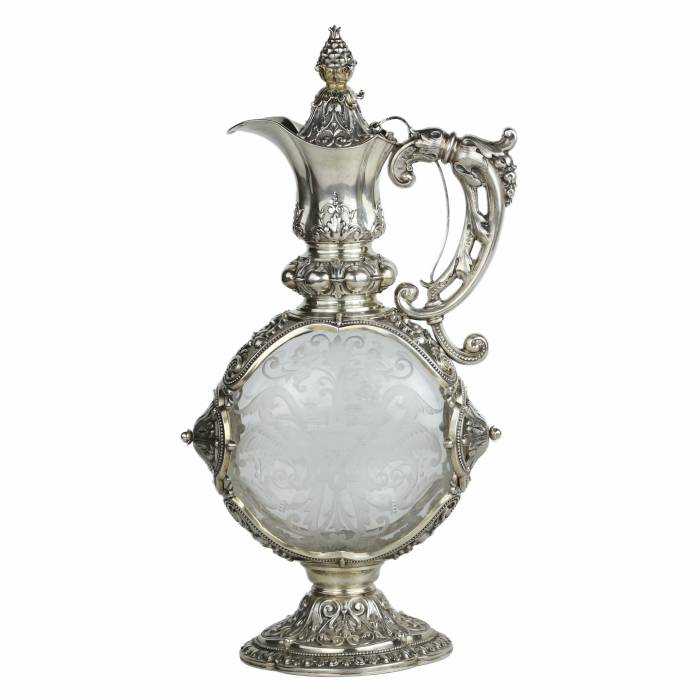
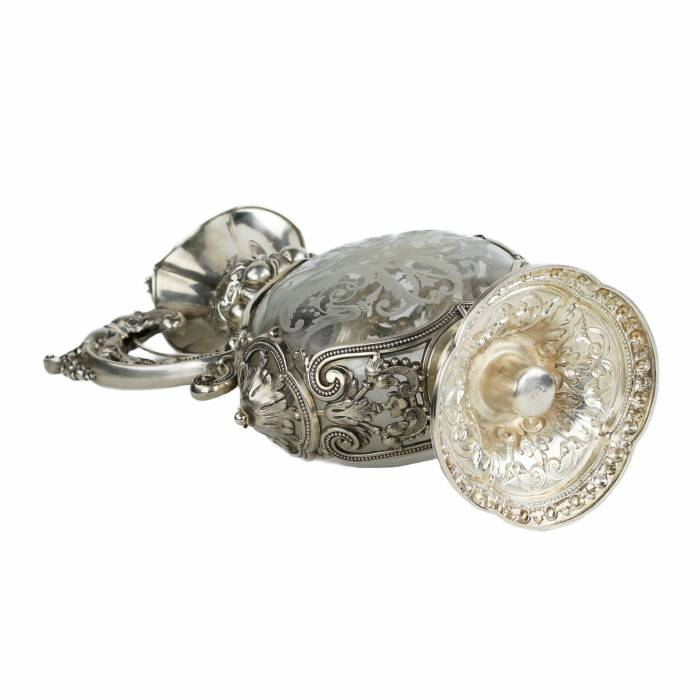
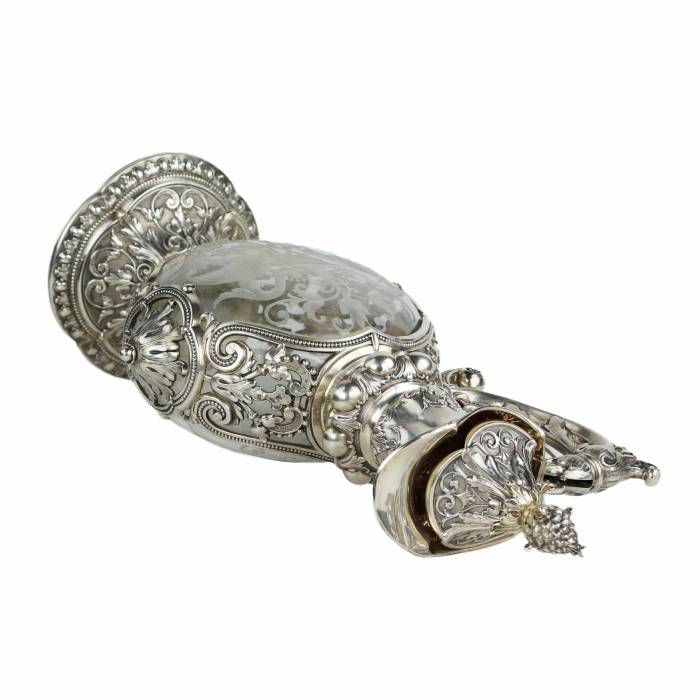
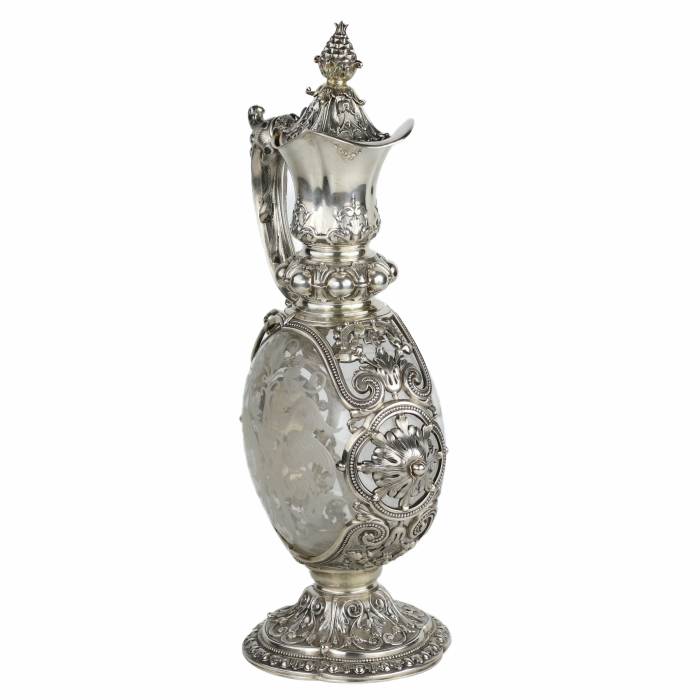
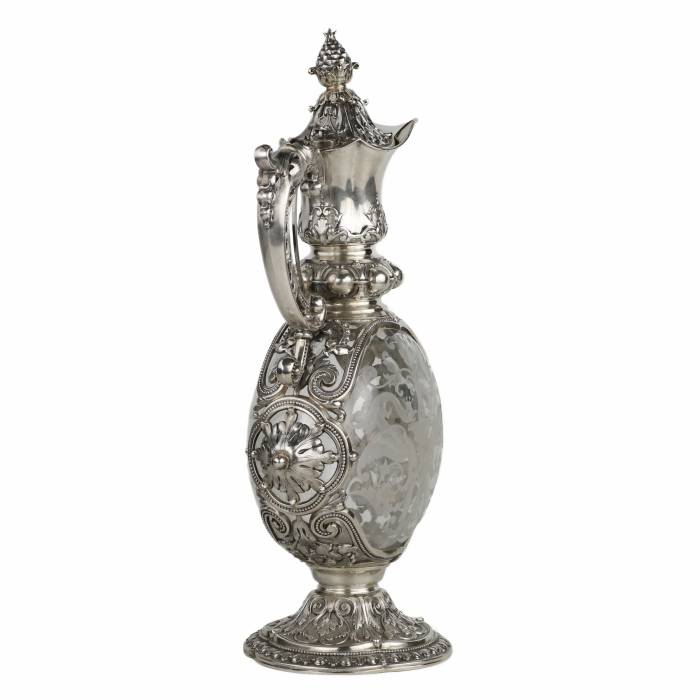
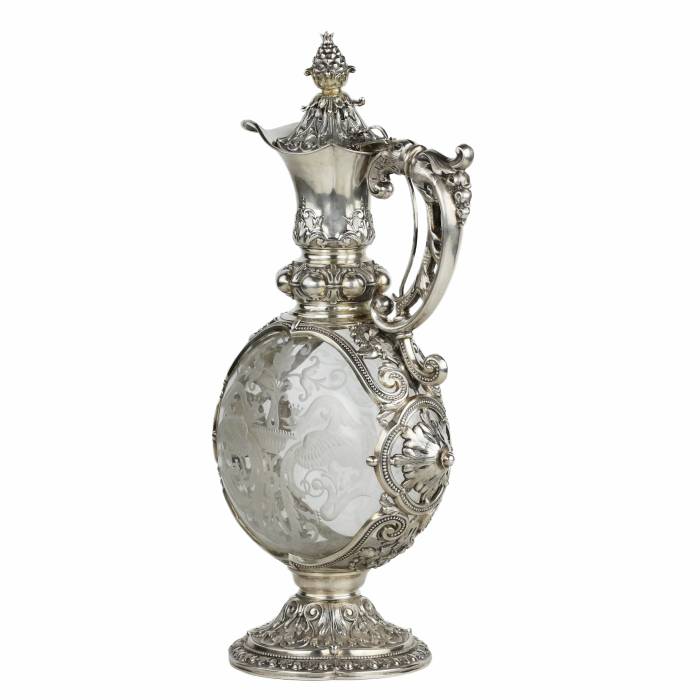
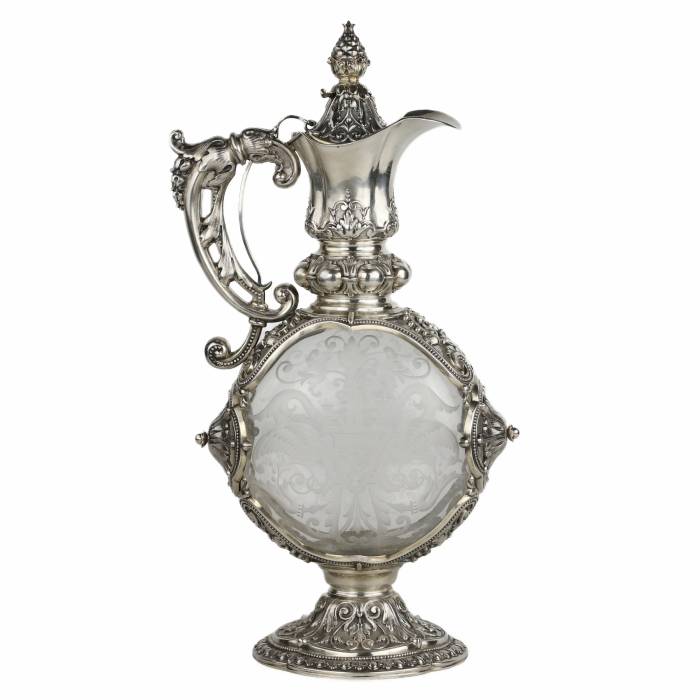
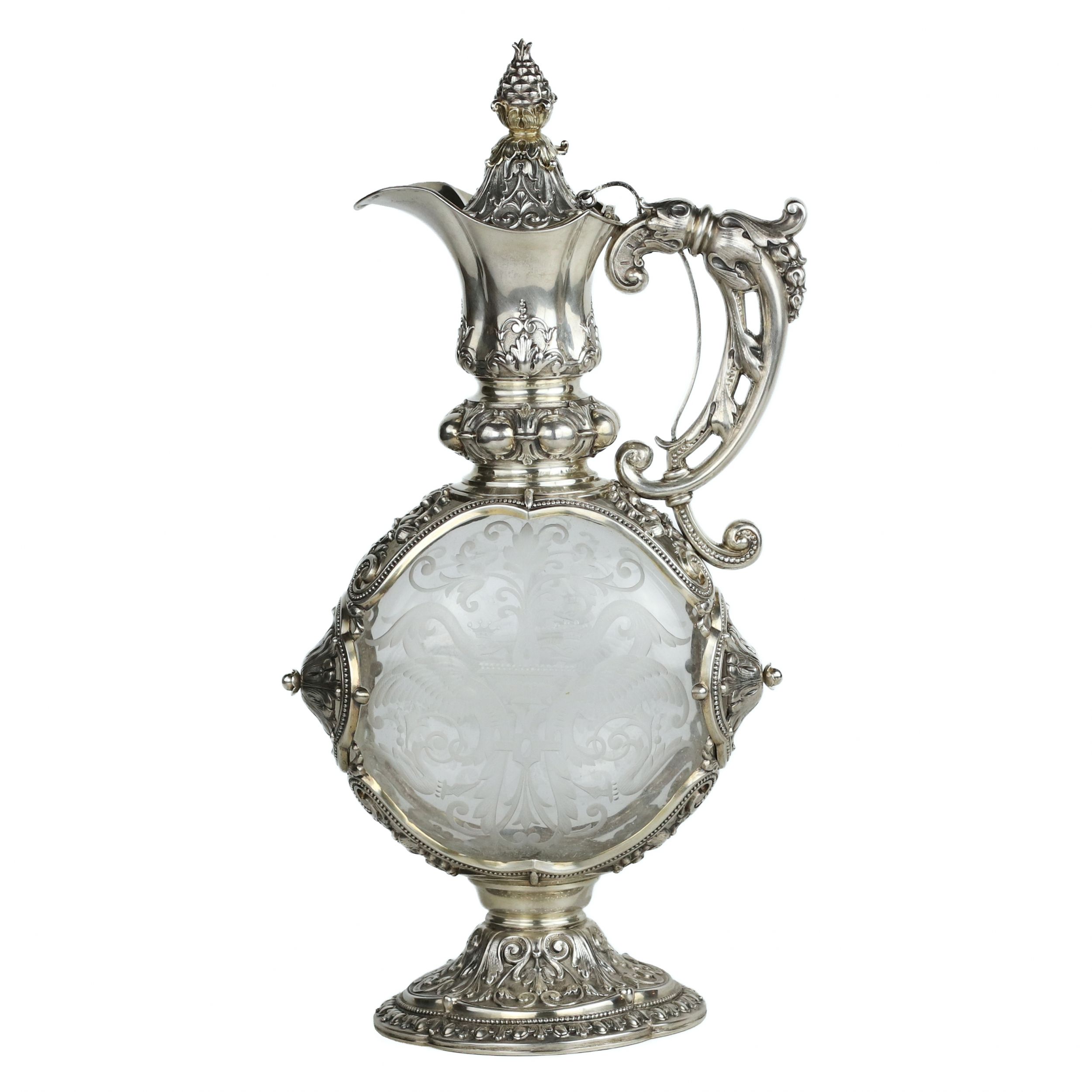
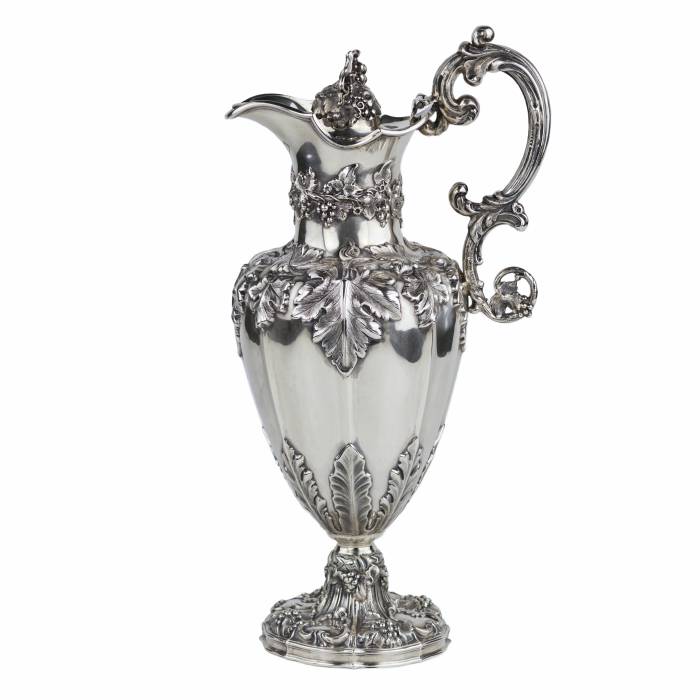
An exquisite wine ewer crafted in Germany in the second half of the 19th century in the Neo-Renaissance style. The body is made of transparent engraved glass with ornamental motifs depicting two swans surrounded by floral scrolls, creating a lace-like effect. The vessel is mounted in a silver frame richly decorated with relief festoons, acanthus leaves, rocaille scrolls, and cartouches.
The base is shaped as a quatrefoil stand with Renaissance-style lace ornamentation. The tall neck is adorned with leaf and rocaille motifs. The silver handle is executed in elaborate plasticity with vegetal forms and is connected to the hinged lid of the spout. The lid, crowned with a pinecone finial, is operated through a lever mechanism incorporated into the handle.
This piece represents the highest level of German silversmithing, combining refined glass engraving with sumptuous silver mounts.
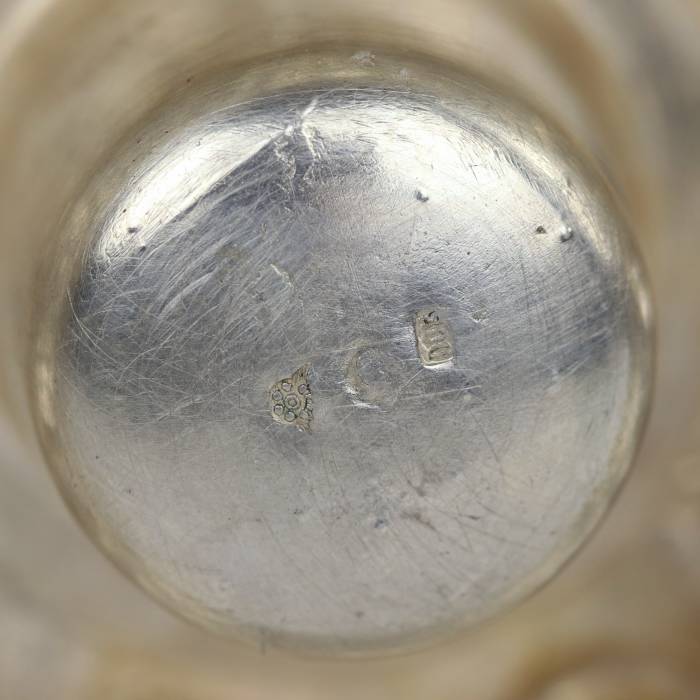
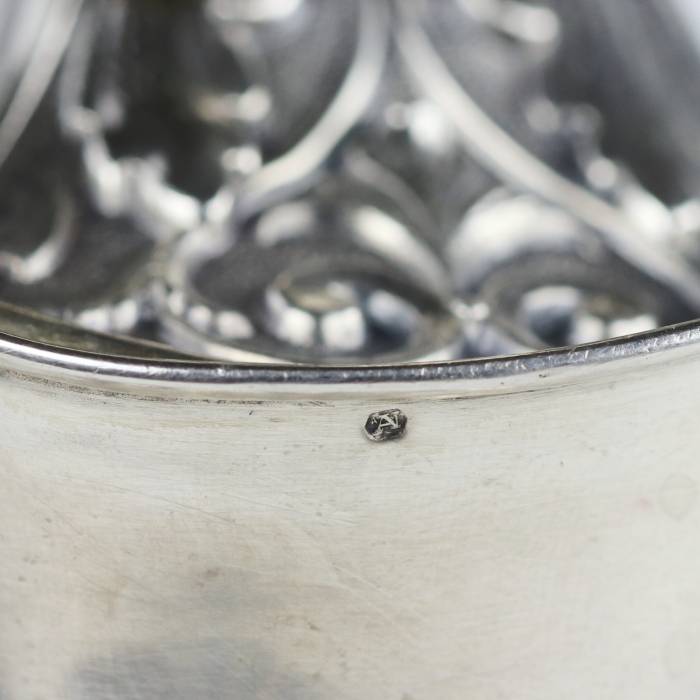
Marks:
– Maker’s mark: initials “AAI” in a rectangular shield.
– Assay: “800” silver, in use in Germany in the second half of the 19th century.
Dimensions: Height 37.5 cm; width 18.5 cm.
Material: Glass, silver (800 standard), gilding.
Condition: Good condition, with natural patina of age; no losses; lid and mechanism fully functional.
In the second half of the 19th century, Germany experienced a flourishing of decorative arts, strongly influenced by historic revival styles. The Neo-Renaissance, inspired by the art and architecture of the 16th century, became a dominant aesthetic, embodying grandeur and elevated taste. Such objects were not merely utilitarian vessels but also works of art that adorned banquet tables and symbolized the refinement of their owners.
Wine ewers in glass and silver played a prominent role in European dining culture, combining functionality with artistic value. German workshops, including renowned centers such as Hanau, produced lavish examples for both the aristocracy and the rising bourgeoisie of the Gründerzeit period, when economic prosperity was matched by cultural revival.
The swan motif carries deep symbolism: across European tradition, swans were associated with purity, fidelity, and grace. The acanthus and rocaille decoration reflects the visual language of Neo-Renaissance design, blending classical antiquity with Baroque-inspired ornament.
This ewer is a rare synthesis of glass engraving and German silversmithing, a remarkable example of 19th-century decorative art, embodying the spirit of the Gründerzeit.
The piece is in very good collectible condition: glass intact without chips or cracks; silver with natural patina of age; lid and hinge in working order; partial remains of original gilding.
The condition report is provided for informational purposes only.
It is not comprehensive and may not reflect all defects, restorations, alterations, or adaptations, as Antiqon does not perform professional conservation-level assessments. The information is based on a qualified, yet subjective, evaluation by our specialists.Before purchasing, we recommend consultation with an independent expert.Please also consult our Terms and conditions and Glossary A-Z, which contain important information on lot characteristics and sale conditions.