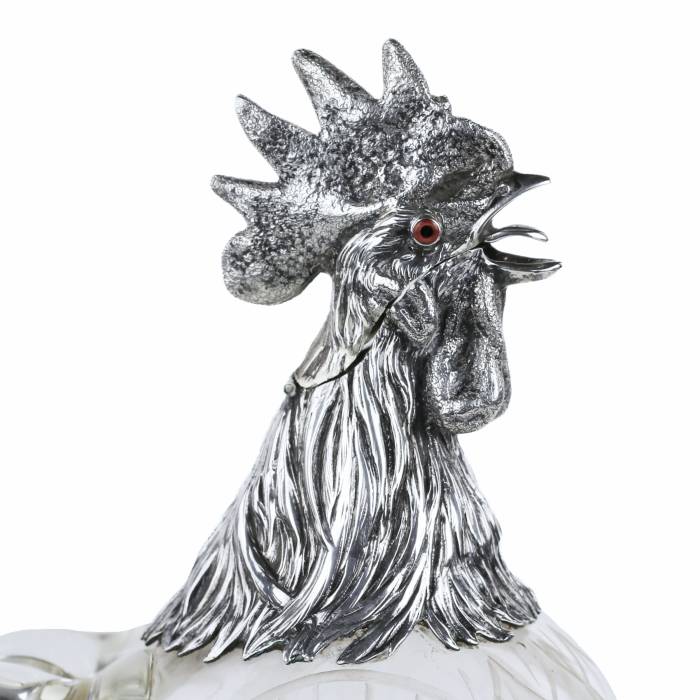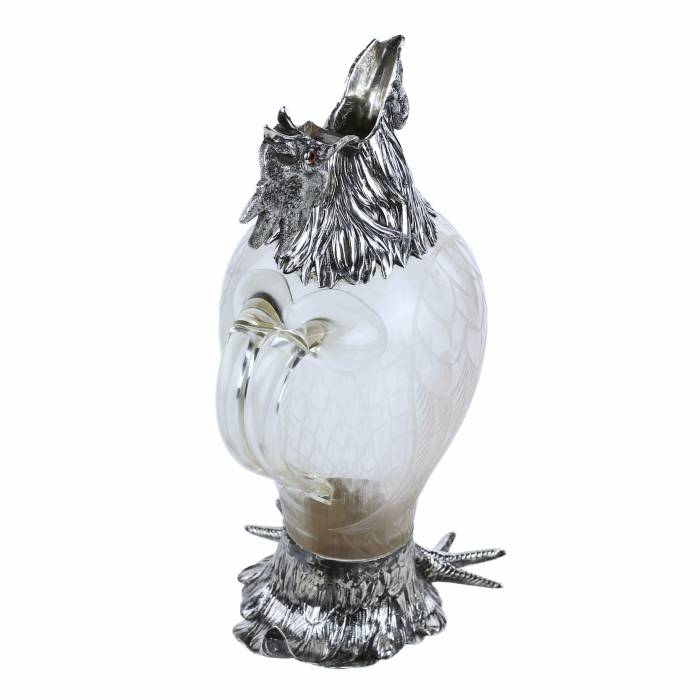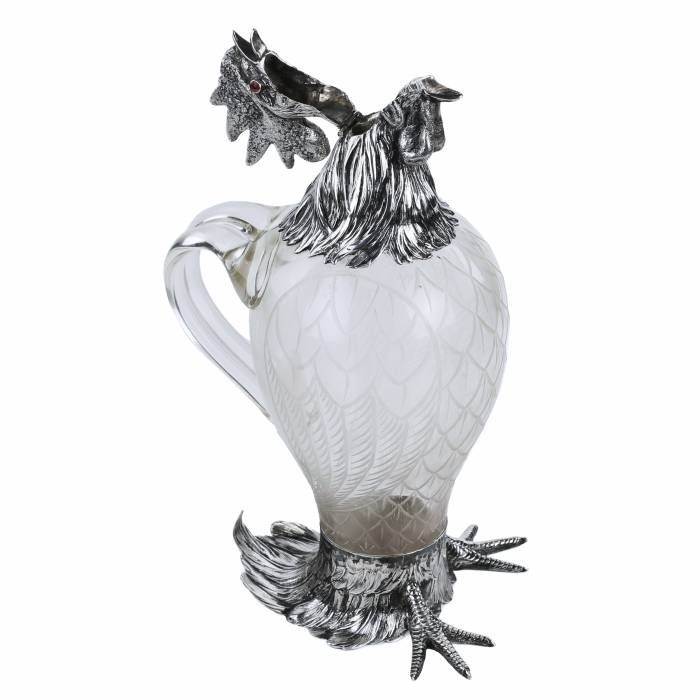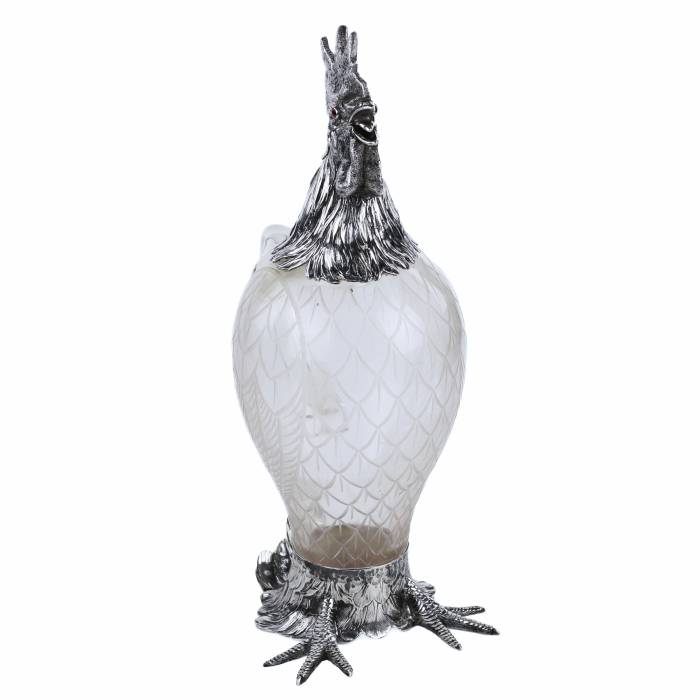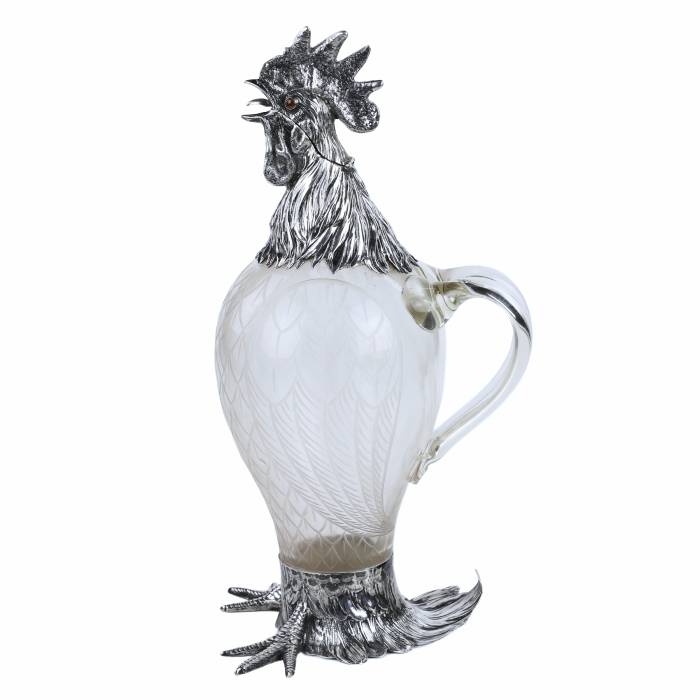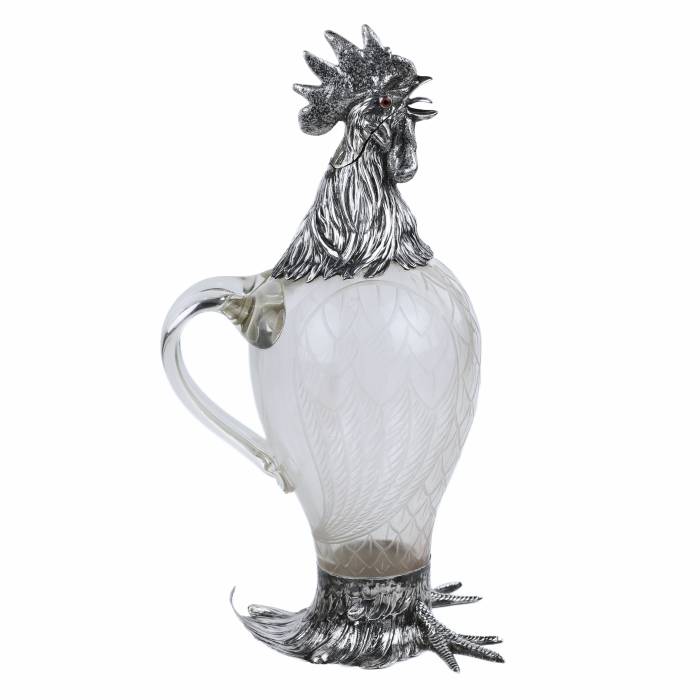

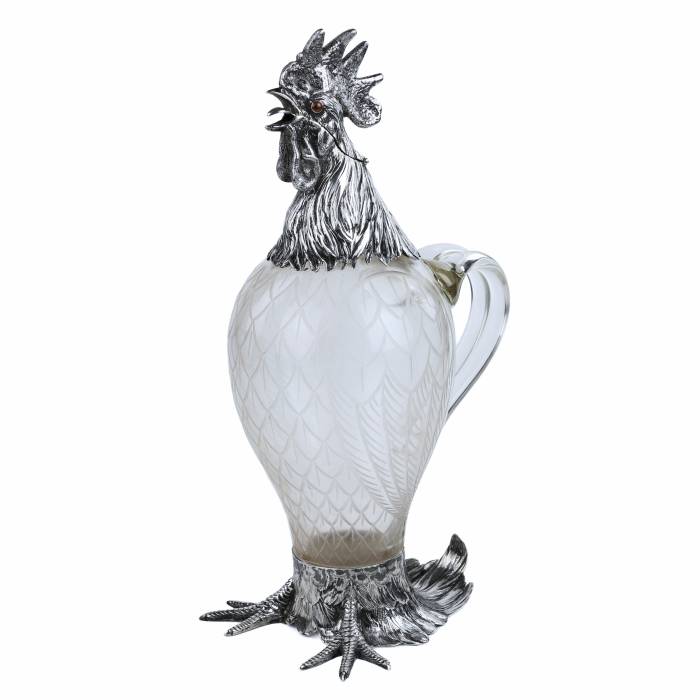
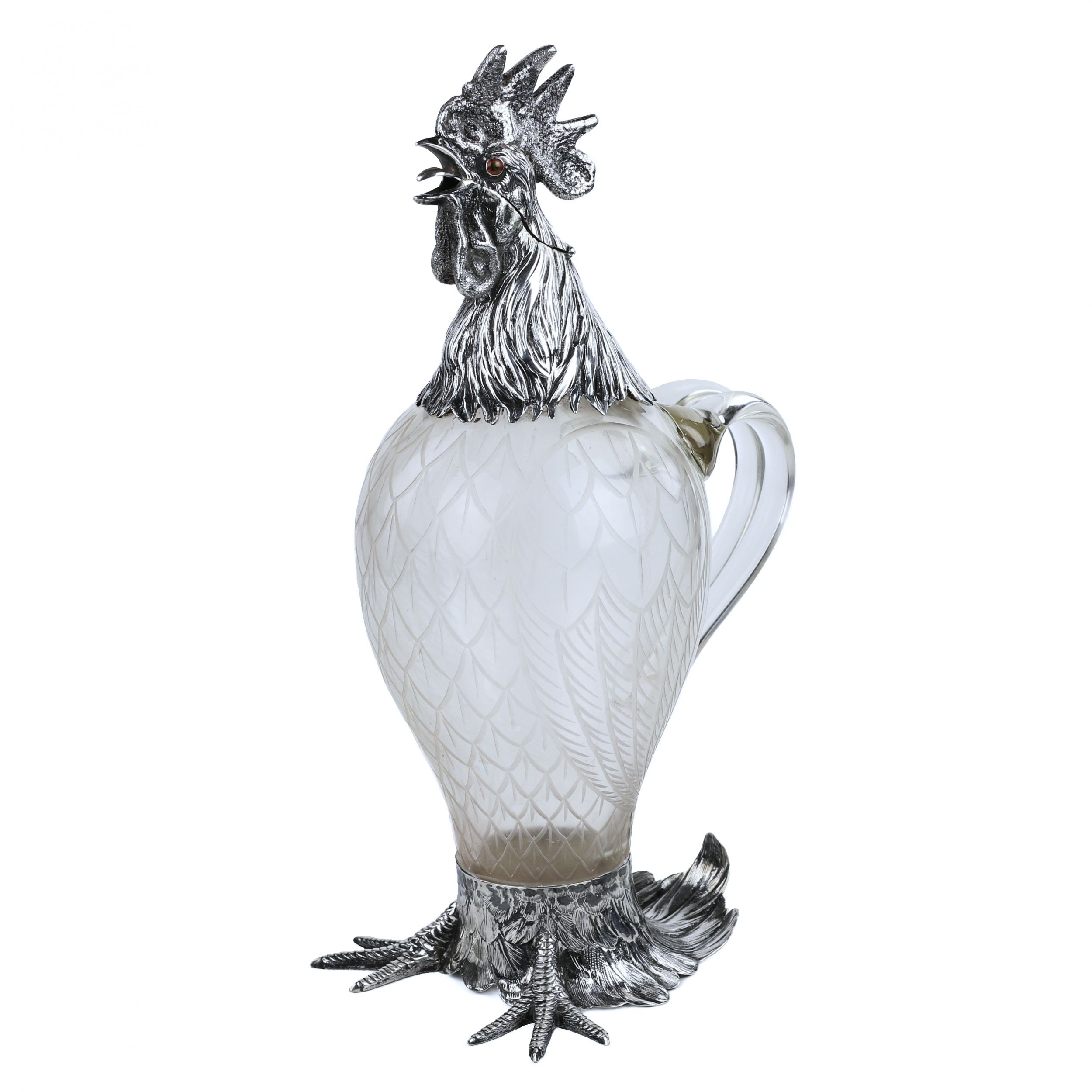
AIGUIÈRE EN FORME DE COQ EN VERRE ET ARGENT. HANAU, J.D. SCHLEISSNER SÖHNE. FIN DU XIXe SIÈCLE

AIGUIÈRE EN FORME DE COQ EN VERRE ET ARGENT. HANAU, J.D. SCHLEISSNER SÖHNE. FIN DU XIXe SIÈCLE

ID-ANTQ-12309
4800 EUR
Add to cart
Request more info
Guarantee of Authenticity

At Antiqon ART, we build trust and value your choice. Every purchase of art and antiques with us is an investment backed by our expertise, reputation, and a 100% authenticity guarantee.

Price History

Discover how the value of similar works has evolved over the past 10 years. Art is not only beauty — it's an investment.

Complimentary Shipping & Returns

Antiqon ART offers free packaging, insurance, and delivery for most items purchased through the company. Exceptions include large and oversized items that require specialized packing and shipping.

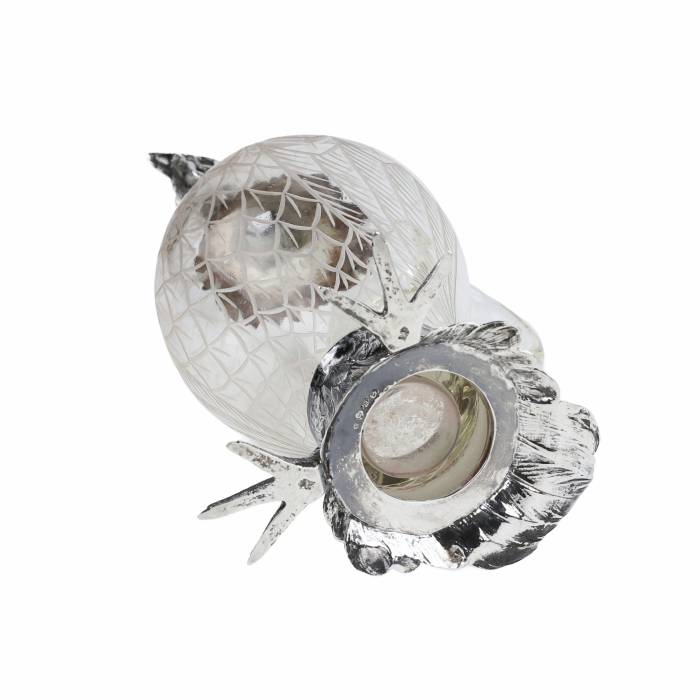
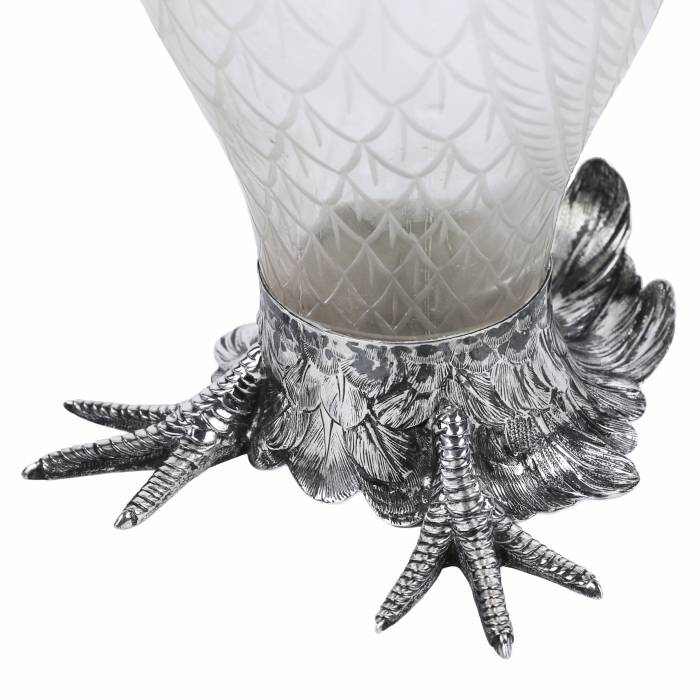
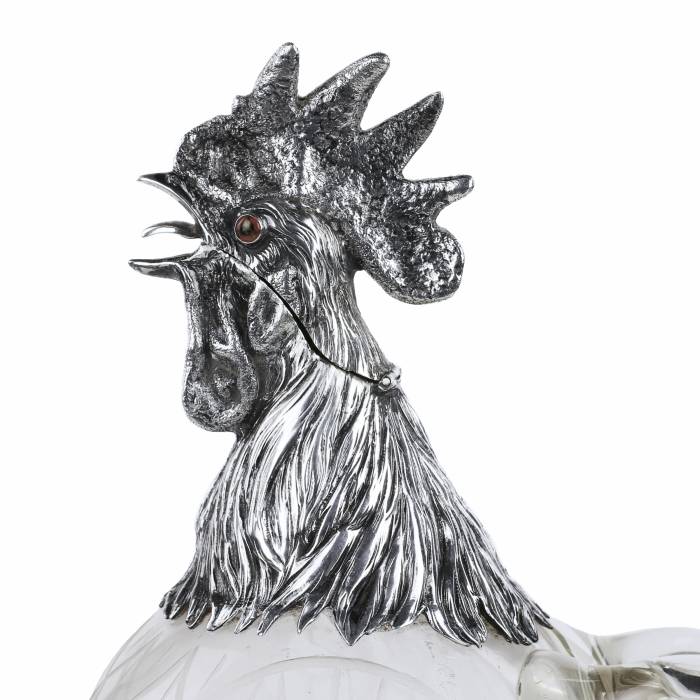
Rare et saisissante aiguière décorative en forme de coq, alliant verre gravé transparent et montures en argent finement travaillées. Le couvercle articulé figure la tête du coq avec crête, bec et yeux en verre rouge imitant le regard vif de l’animal.Le corps en verre est orné de gravures évoquant le plumage. La base représente les pattes et la queue de l’oiseau, moulées en argent avec un remarquable souci du détail. Le manche en verre courbé s’intègre harmonieusement dans la silhouette, renforçant son élégance fluide.Réalisée dans les ateliers de J.D. Schleissner Söhne à Hanau — centre renommé de l’orfèvrerie allemande historiciste — cette pièce incarne le goût de la fin du XIXe siècle pour les formes animalières symbolisant raffinement et luxe.

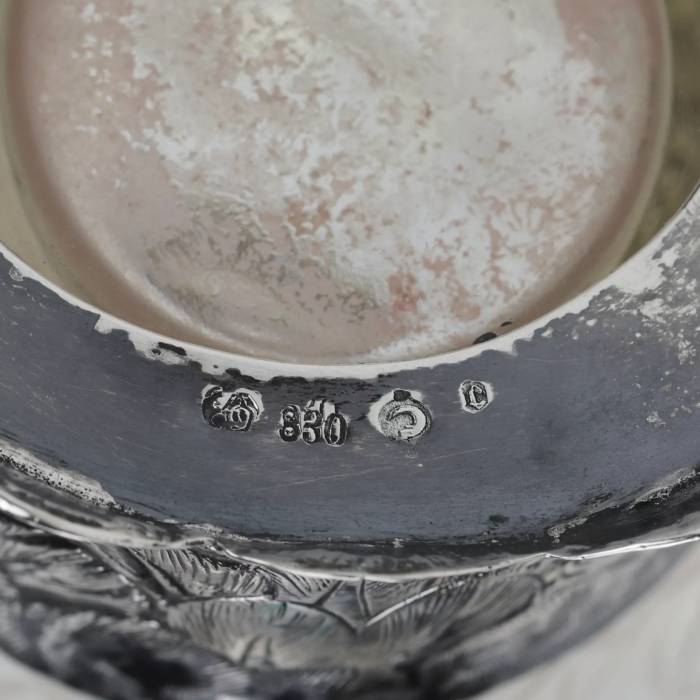
Poinçons:Poinçon de maître J.D. Schleissner Söhne, accompagné de poinçons allemands d’usage à Hanau à la fin du XIXe siècle.

Dimensions:Hauteur 31 cm, largeur 15 cm.

État: Bon état général, légères traces d’usage. Les éléments en argent ne sont pas déformés, gravure nette.

Provenance:Allemagne, Hanau, atelier J.D. Schleissner Söhne, fin du XIXe siècle

Art:
europe
Hauteur:
31 cm
Largeur:
15 cm
Épaisseur:
10.5 cm
Période:
Fin Du 19Ème Siècle
Style:
Romantisme
Pays:
Allemagne
Matière:
Argent, Verre
État:
Revive
Fair
Good
Very good
Like new
La seconde moitié du XIXe siècle est marquée en Allemagne par un regain d’intérêt pour les styles historiques. La ville de Hanau devient un haut lieu de production d’orfèvrerie inspirée du baroque et du rococo. Fondée en 1817, la maison J.D. Schleissner Söhne s’impose rapidement comme référence dans le domaine, ses œuvres étant prisées par l’élite européenne.

Les objets zoomorphes — aiguières, flacons ou coffrets en forme d’animaux — fascinent les collectionneurs de l’époque. Cette aiguière-coq reflète parfaitement cette tendance, mêlant légèreté du verre et noblesse de l’argent, dans un esprit de synthèse artistique (Gesamtkunstwerk).

Symbole de vigilance dans la culture occidentale, le coq donne à la pièce une profondeur allégorique. Des exemples similaires sont conservés dans des collections muséales majeures, notamment le Victoria and Albert Museum à Londres ou le Historisches Museum Frankfurt.

Objet en bon état. L’argent est intact, sans déformations ; le verre est limpide, sans éclats ni fissures. Gravure bien préservée.

The condition report is provided for informational purposes only.

It is not comprehensive and may not reflect all defects, restorations, alterations, or adaptations, as Antiqon does not perform professional conservation-level assessments. The information is based on a qualified, yet subjective, evaluation by our specialists.Before purchasing, we recommend consultation with an independent expert.Please also consult our Terms and conditions and Glossary A-Z, which contain important information on lot characteristics and sale conditions.

J.D. Schleissner & Söhne Factory (1817–1950)
Founded in 1817 in Hanau, Germany, the J.D. Schleissner & Söhne factory became one of the leading representatives of European silverwork in the 19th and 20th centuries. Known for its historicist style, the workshop gained fame for Renaissance- and Baroque-inspired objects, creating highly artistic pieces for courtly and diplomatic purposes. Workshop History The J.D. Schleissner & Söhne factory was established by the silversmith Johann Daniel Schleissner in the historic town of Hanau, which by that time had already earned a reputation as a center of silver production. Management of the workshop later passed to his sons, and the enterprise became known as Schleissner & Söhne. The manufactory remained in continuous operation until 1950, spanning more than a century of uninterrupted activity.The factory reached its peak in the second half of the 19th and early 20th centuries. During this period, Schleissner’s works were presented at international exhibitions and supplied to the courts of leading European monarchies. Particularly significant were commissions for the Austro-Hungarian Empire, Prussia, the Russian Empire, and the United Kingdom. Many pieces were created for official ceremonies, state gifts, and prestigious interiors.The factory’s production was distinguished by its unique stylization of historical periods. Schleissner became one of the foremost producers of so-called “archaeological silver”—objects made in the manner of late Gothic, Renaissance, Rococo, and Baroque styles. These works were characterized by exquisite casting and chasing, rich reliefs, complex forms, and compositions featuring allegorical and mythological themes.Thanks to the precision of execution and attention to historical detail, Schleissner silver was highly valued not only among the aristocracy but also by collectors and official patrons. The workshop successfully combined decorative richness with technical perfection, producing objects that rivaled museum-quality originals from previous centuries. Marking and Attribution The manufactory marked its pieces with the initials J.D.S. or J.D. Schleissner & Söhne, and used symbols typical of the Hanau school, such as stylized crowns, mythical animals, and heraldic shields. Export items often bore fineness designations such as “800,” “Sterling,” or “Germany.”The J.D. Schleissner & Söhne Factory (1817–1950) represents a unique phenomenon in the history of German decorative arts. Its creations reflect a refined synthesis of the traditions and tastes of bygone eras with the craftsmanship of 19th-century German jewelers. These are not merely artisanal products, but artistic documents of an era when silver became a language of historical memory and courtly representation.
... Read More

Stay up to date with new arrivals
Save Argent Européen and we let you know when new listings appears in this category
Sauvegarder

Related items