MIDI DE TRAVAIL. PAVEL ALEKSANDROVITCH BRYULLOV (1840–1914) RUSSIE, 1890

MIDI DE TRAVAIL. PAVEL ALEKSANDROVITCH BRYULLOV (1840–1914) RUSSIE, 1890

ID-ANTQ-8094
Request price
Request more info
Guarantee of Authenticity

At Antiqon ART, we build trust and value your choice. Every purchase of art and antiques with us is an investment backed by our expertise, reputation, and a 100% authenticity guarantee.

Price History

Discover how the value of similar works has evolved over the past 10 years. Art is not only beauty — it's an investment.

Request a Shipping Quote

Discover your personalized shipping cost — based on where you are and how you prefer to receive your piece..

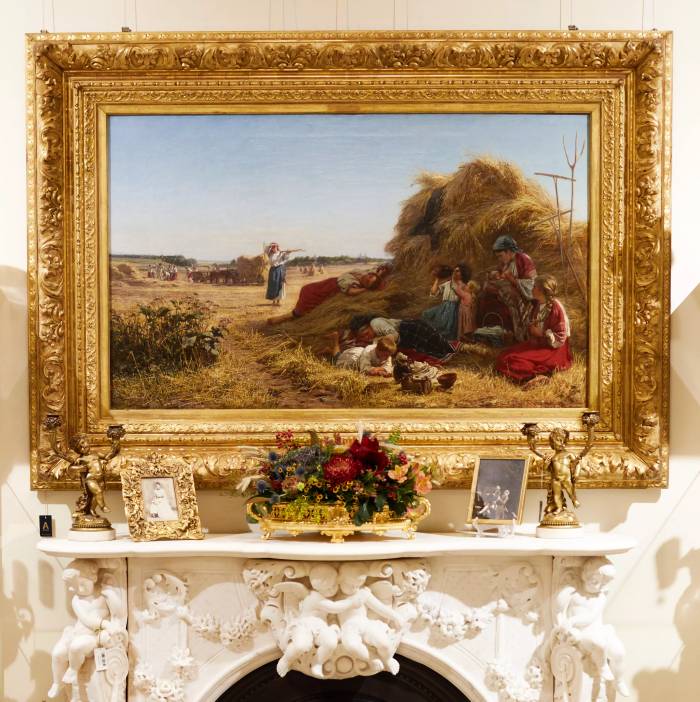
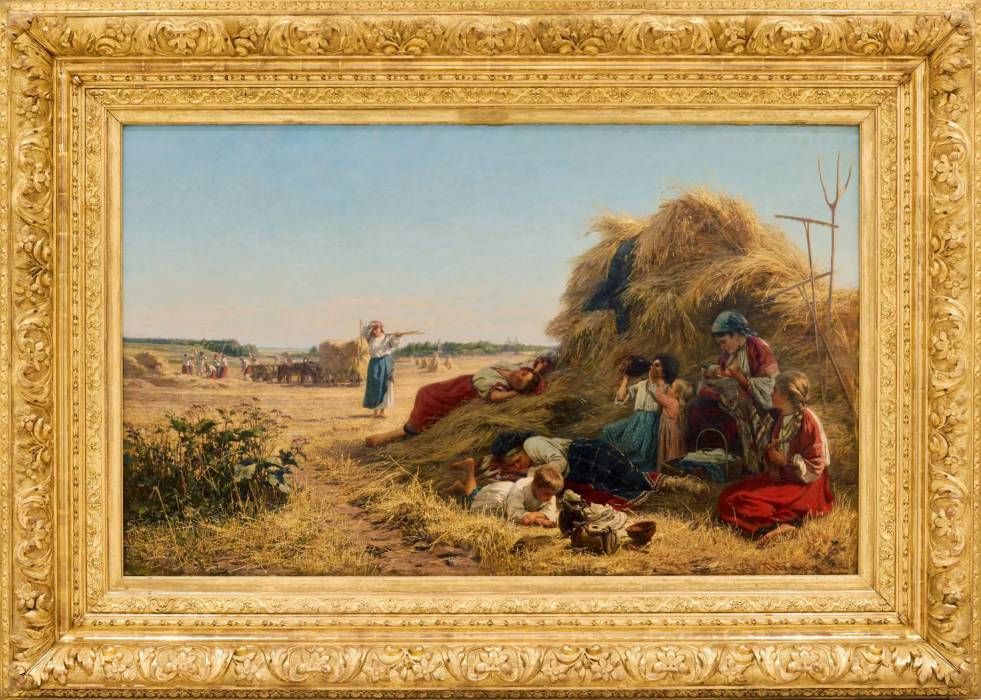
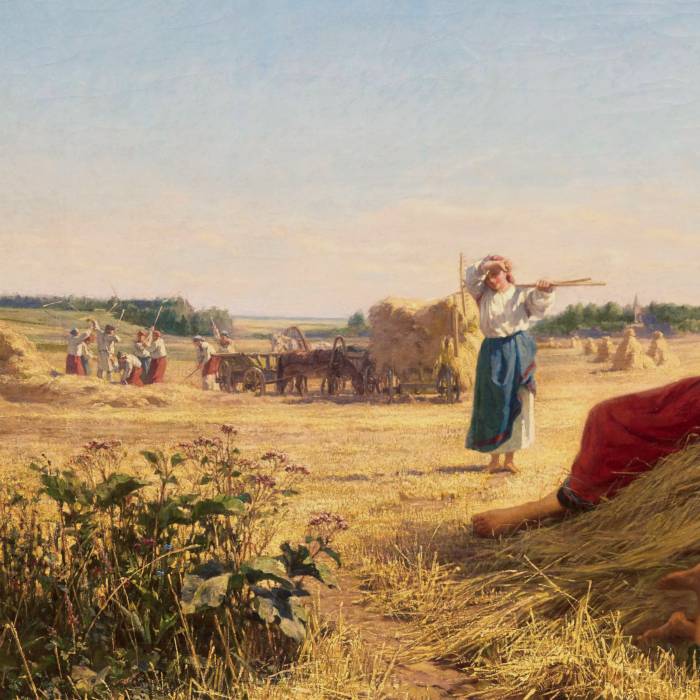
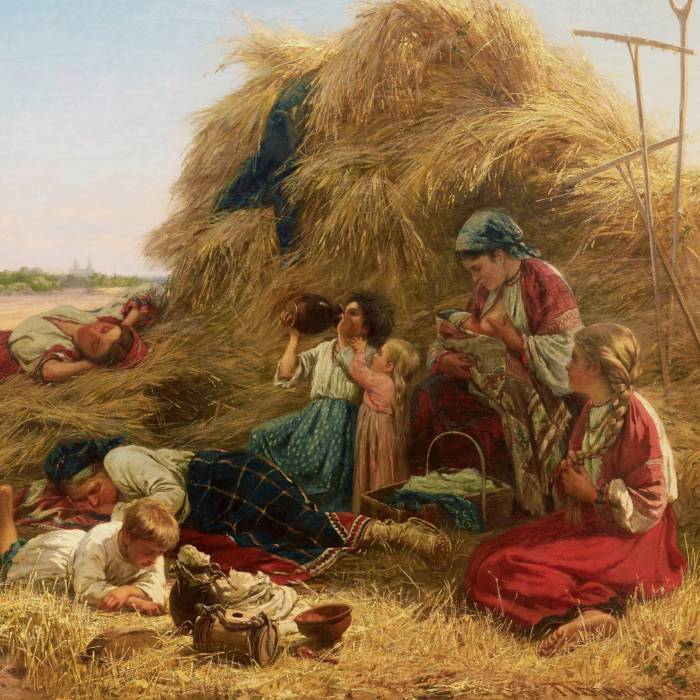
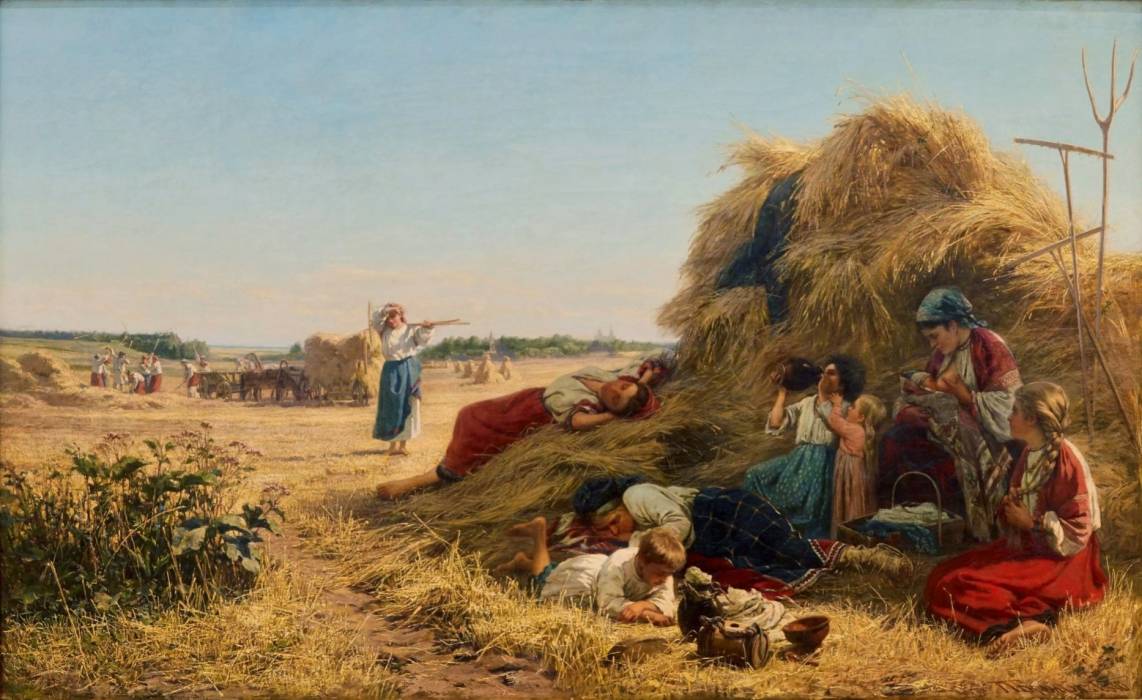
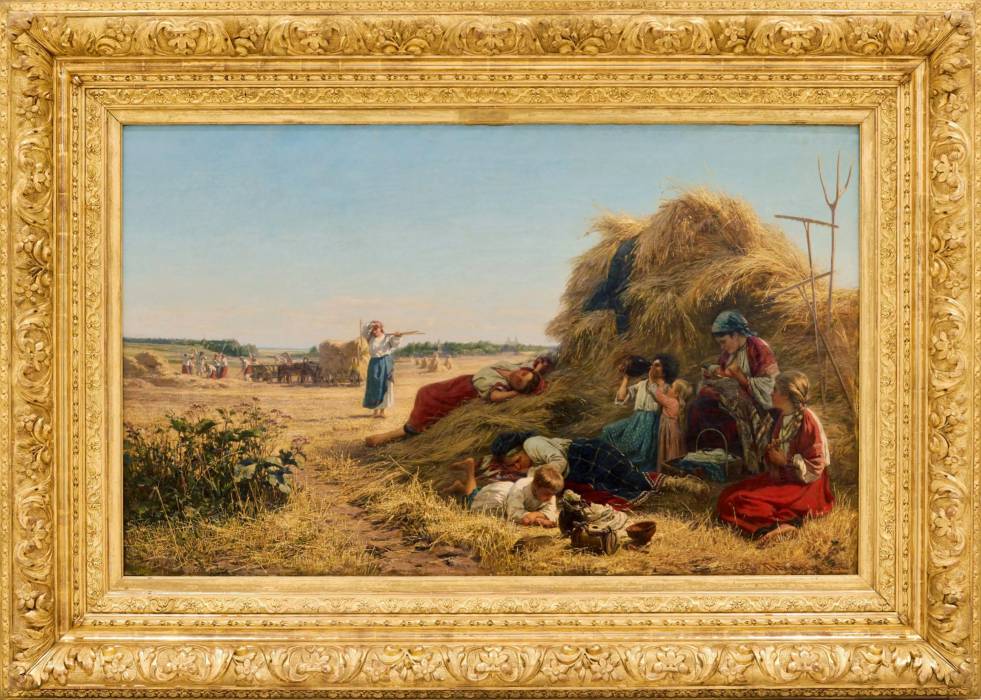
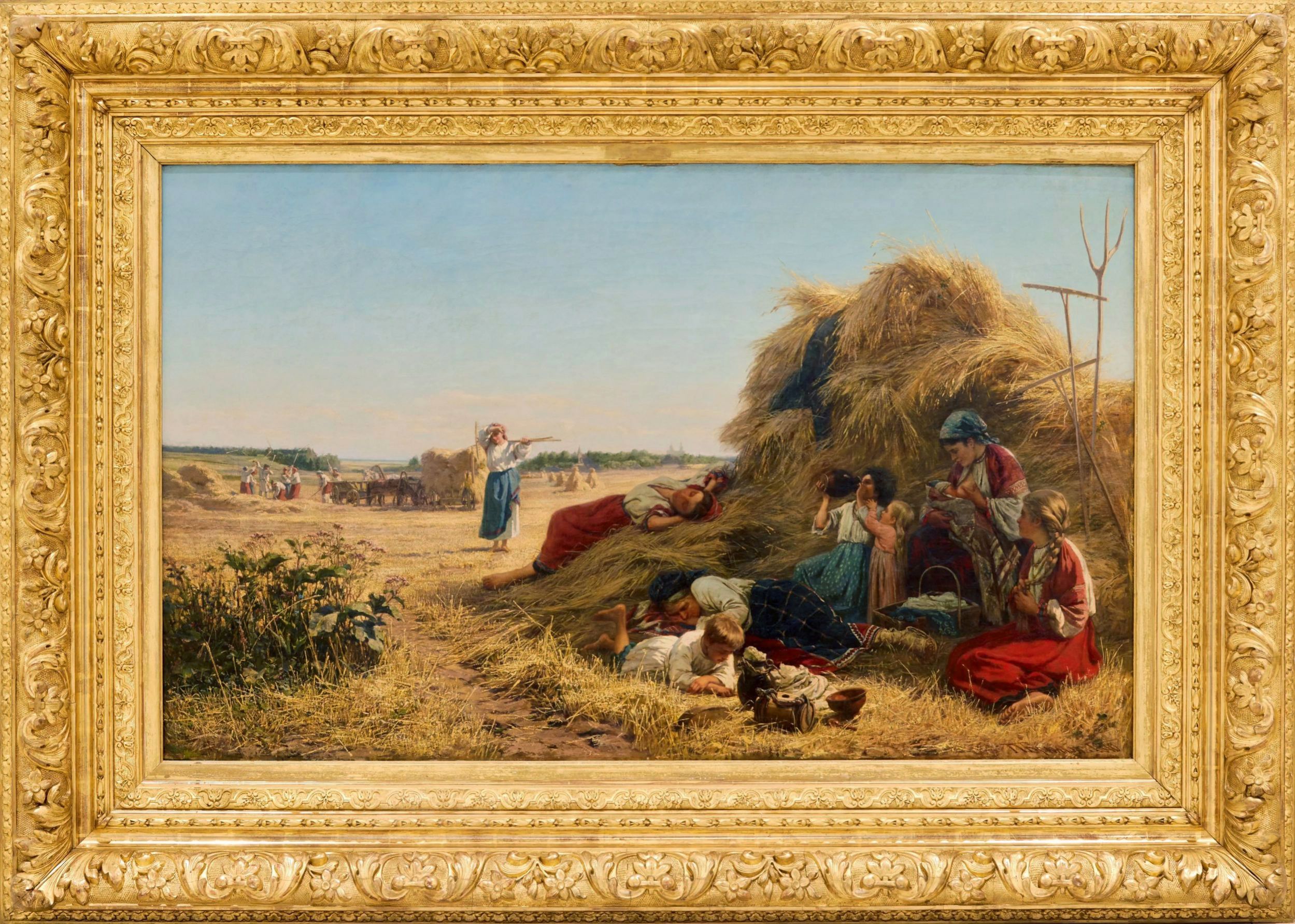
La toile de genre Midi de travail (1890) de Pavel Bryullov représente un champ de Petite-Russie, à l’ouest de l’Ukraine, au moment des moissons. L’œuvre se lit comme un livre ouvert, dévoilant le destin de ses personnages, leur passé et annonçant leur avenir. Monumentale par ses dimensions et grandiose comme la vie elle-même, elle montre un groupe de faucheuses se reposant à l’ombre d’une meule à la mi-journée. Tout le spectre de la vie paysanne et des destins féminins se déploie sous les yeux du spectateur. L’œuvre embrasse un cycle complet : de jeunes filles aidant déjà aux champs aux vieilles femmes qui y ont passé toute leur vie. Enfance, jeunesse, maturité, naissance, vieillesse et soin des petits-enfants y sont présents.

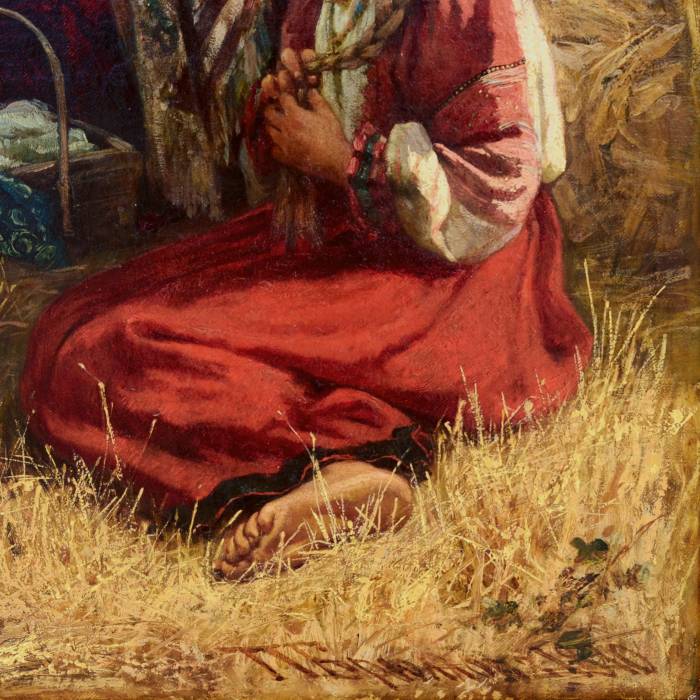
Les figures contrastées et orientées différemment au premier plan symbolisent le cercle éternel de la vie. On voit un garçon blondi par le soleil jouant dans la paille ; à côté, une vieille femme en jupe à carreaux dort. Derrière, une fillette tend la main vers la cruche de sa sœur, une mère allaite son nourrisson, tandis qu’une autre jeune femme se repose. À droite, une jeune paysanne tresse ses cheveux, fixant une femme au râteau revenant des champs. Leurs regards se croisent sur une diagonale où les taches rouges et bleues des jupes mènent à une scène de battage, sous la surveillance d’une aînée.

Le cycle du temps se referme, symbolisant le rythme éternel et immuable de la vie. Bryullov idéalise et romantise les gens pour qui la moisson est à la fois une fête et la raison d’être. Au loin, sous la protection de Dieu — les clochers visibles à l’horizon — les villageois ramassent le grain. La palette riche en ocres, rouges et bleus azur confère à l’œuvre lumière et vitalité. Signature et date en bas à droite : « P Bryullov 1890 » (exécutée a secco selon la tradition académique).

Dimensions : Toile 89 × 144 cm, avec cadre 138 × 194 cm
Technique : Huile sur toile
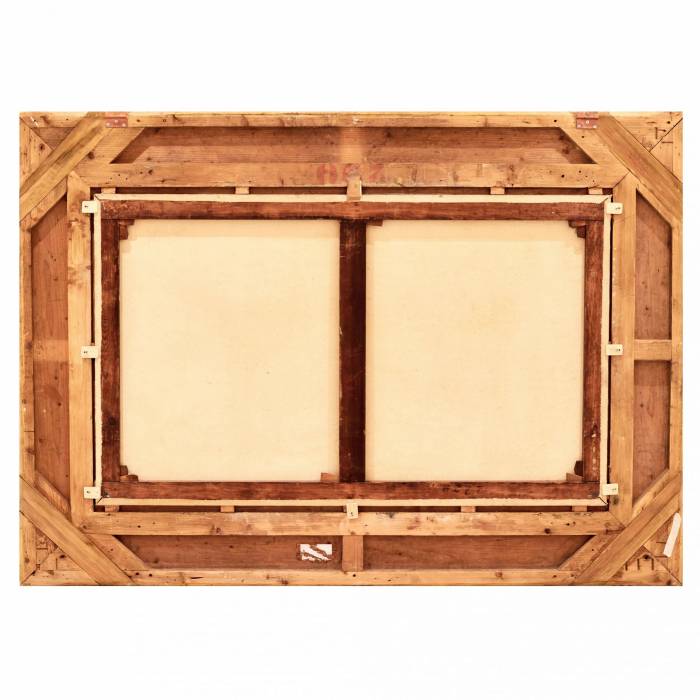
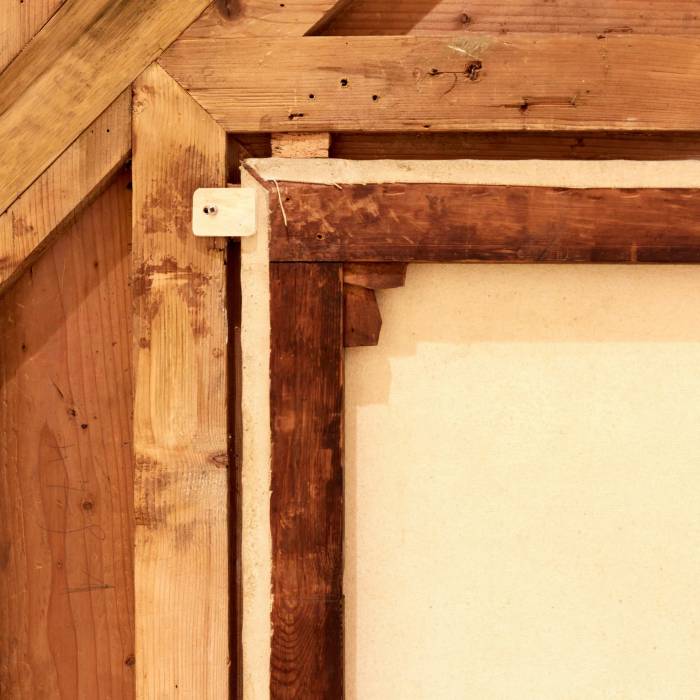
État : Exceptionnelle conservation de niveau muséal ; œuvre doublée et renforcée, surface intacte avec noble patine du temps.
Provenance : Collection privée
Rapport d’expertise : Authentifiée par Olga Sugrobova-Roth, docteur en histoire de l’art. 1 décembre 2024.

Art:
russia
Hauteur:
138 cm
Largeur:
194 cm
Épaisseur:
25 cm
Période:
19Ème Siècle
Style:
Réalisme
Pays:
Russie
Matière:
Huile Sur Toile
État:
Revive
Fair
Good
Very good
Like new

Pavel Aleksandrovitch Bryullov, neveu de Karl Bryullov et fils de l’architecte Alexandre Bryullov, reçut une brillante formation à l’Académie impériale des beaux-arts, ainsi qu’en France, en Italie et en Angleterre. Membre actif du mouvement des Ambulants (Peredvizhniki), il apporta une contribution importante à la peinture de genre russe de la fin du XIXe siècle.

Midi de travail appartient à la période de maturité de l’artiste et s’inscrit dans un cycle d’œuvres rurales comprenant Enfants du village, Voisines et Fenaison collective. Contrairement à de nombreux peintres de genre de son époque, Bryullov évite l’anecdote superficielle, conférant à ses scènes une réflexion philosophique sur le travail paysan comme partie intégrante du rythme naturel. En réunissant plusieurs générations dans un même cadre, il exprime l’idée de continuité et du cercle éternel de la vie.

Son style allie précision académique, finesse psychologique et palette riche. Chaque figure est unique, ses traits et sa posture reflétant une histoire personnelle, tandis que la composition conserve une harmonie parfaite. Le rythme et l’équilibre de l’œuvre rappellent l’amour de l’artiste pour la musique de Mikhail Glinka, qu’il admirait pour sa capacité à exprimer l’âme du peuple.

Aujourd’hui, Midi de travail est considéré comme un monument majeur de la peinture russe du XIXe siècle et un exemple raffiné d’art de genre de haut niveau, recherché par les musées et les collectionneurs privés.

État muséal exceptionnel ; doublée et renforcée, couche picturale stable, couleurs vives, sans pertes ni restaurations. Signature et date nettes, surface avec noble patine du temps.

The condition report is provided for informational purposes only.

It is not comprehensive and may not reflect all defects, restorations, alterations, or adaptations, as Antiqon does not perform professional conservation-level assessments. The information is based on a qualified, yet subjective, evaluation by our specialists.Before purchasing, we recommend consultation with an independent expert.Please also consult our Terms and conditions and Glossary A-Z, which contain important information on lot characteristics and sale conditions.
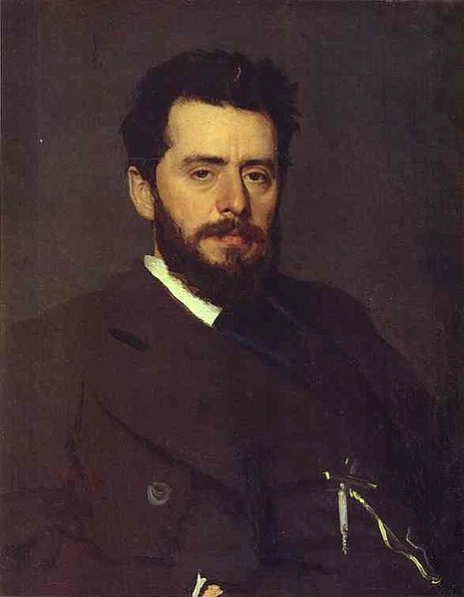
Bryullov Pavel Alexandrovich
Pavel Alexandrovich BryullovItinerant artist Pavel Aleksandrovich Bryullov (1840-1914). Biography Academician, painter, landscape painter, and genre painter, Pavel Aleksandrovich Bryullov was born into a noble family in 1840. His father, Alexander Bryullov, was a famous professor of architecture, and his older brother, Karl Bryullov, became a legend of Russian painting. Little Pavel was surrounded by creativity and art from childhood, which laid the foundation for his passion for painting. Over time, Pavel began studying at the Imperial Academy of Arts in St. Petersburg, where he studied art with famous Russian artists and architects such as Karl Thon, Adolf Stackenschneider, Dmitry Grimm, Alexander Rozanov, and, of course, his father, Alexander Bryullov. Pavel showed exceptional ability and passion for art, which made him one of the most talented students at the Academy. In 1864, Pavel successfully completed his studies at the Academy and was appointed a pensioner, which gave him the opportunity to travel around Europe. He visited Italy, England and France, where he admired outstanding works of Western European art and improved his skills with the best masters of painting of his time. This journey was an important stage in his career and inspired him to create many outstanding works. History of Creativity Returning to Russia in 1870, Pavel Bryullov began to actively exhibit. His paintings attracted the attention of not only spectators, but also critics and colleagues. He became a full member of the Imperial Academy of Arts in 1874 and joined the Association of Traveling Art Exhibitions, where he was also recognized as a full member. Pavel Alexandrovich actively participated in exhibitions and was honored to become a member of the Council of the Imperial Academy of Arts. Pavel Bryullov′s paintings repeatedly attracted the attention of famous people of his time. He collaborated with the founder of the Tretyakov Gallery, Pavel Tretyakov, whose collections included works by the artist. Also, his talent was recognized by the Imperial family, and his works were acquired for the imperial collections. Pavel Bryullov left a real legacy in the history of Russian painting. His paintings are imbued with a unique style and talent that made him one of the outstanding artists of his time. He painted many stunning landscapes, vibrant portraits and captivating scenes from everyday life. All his works are distinguished by subtlety of colors and expressiveness, which forces the viewer to delve into every detail of the work.In the collection of the ANTIQONOne of the master’s best works is in the collection of the ANTIQON antique gallery. Pavel Bryullov′s genre painting "Working Afternoon" from 1890 represents a Little Russian field in western Ukraine at the time of the harvest season. The picture is like an open book, revealing the destinies of the heroes, revealing their past and predicting the future. This is a canvas, majestic in its size, grandiose, like life itself. A picturesque group of reapers rest in the shade of a haystack during half a working day. The entire spectrum of peasant life, women′s destinies and shares, are open to the viewer. The picture covers the whole cycle of life: from girls already helping in the field to old women who have spent their whole lives in this field. It shows childhood, adolescence, youth, the birth of children, meeting old age and caring for grandchildren. Contrasting and multidirectional figures in the foreground symbolize the eternal ring of life. We see a boy, bleached by the sun, playing, next to him is a tired old woman in a plaid skirt who is sleeping. Behind them, the girl reaches for her sister′s jug. Nearby, a mother feeds her baby. Another young woman stretched out in her sleep, maintaining her strength. On the right, at the edge of the canvas, a young peasant woman braids her hair and directs her gaze to the girl with a rake, who is apparently going to rest. Their gazes intersect on a compositional diagonal, which, alternating red and blue spots on the skirts, leads to the threshing scene. Where the girls, under the leadership of the headman, probably whose comma zipun was thrown on the front haystack, had already begun threshing. The circle of time closes, personifying the eternal and unchanging cyclical nature of life, in which the artist glorifies and romanticizes people for whom harvesting is a true holiday and the meaning of life. Where, under the auspices of God, whose churches are visible in the depths of the picture, the villagers collect bread. MeaningIn conclusion, Pavel Aleksandrovich Bryullov is a wonderful artist and a bright personality in the history of art. His biography and work remain an inspiration for many artists and art lovers to this day. His works continue to delight and inspire people, and his name will forever remain in the golden pages of the history of Russian painting.
... Read More

Stay up to date with new arrivals
Save Peinture and we let you know when new listings appears in this category
Sauvegarder

Related items