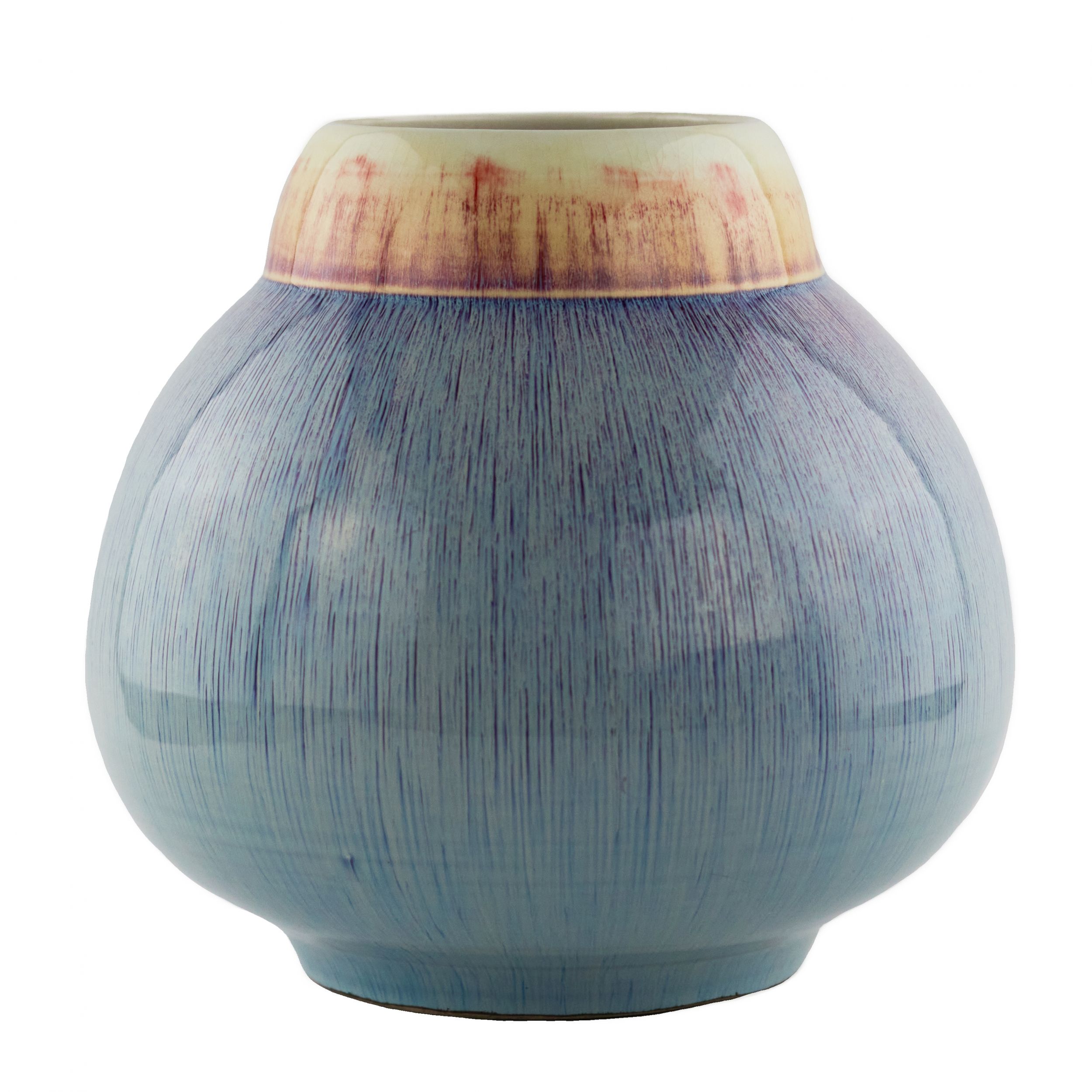
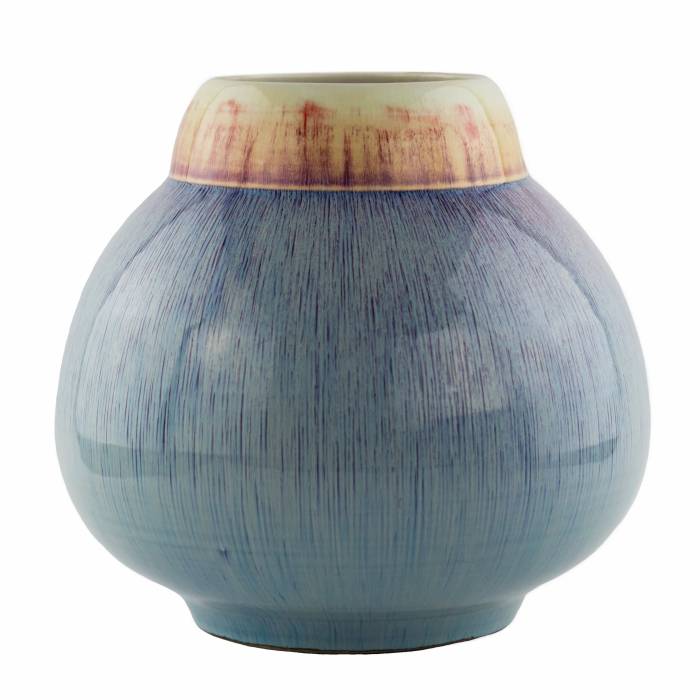
VASE IN THE ART NOUVEAU STYLE. IMPERIAL PORCELAIN FACTORY RUSSIA, SAINT PETERSBURG, 1910
AntiqonART consultant will contact you within one business day after receiving your request.

Discover how the value of similar works has evolved over the past 10 years. Art is not only beauty — it's an investment.
Discover how the value of similar works has evolved over the past 10 years. Art is not only beauty — it's an investment.
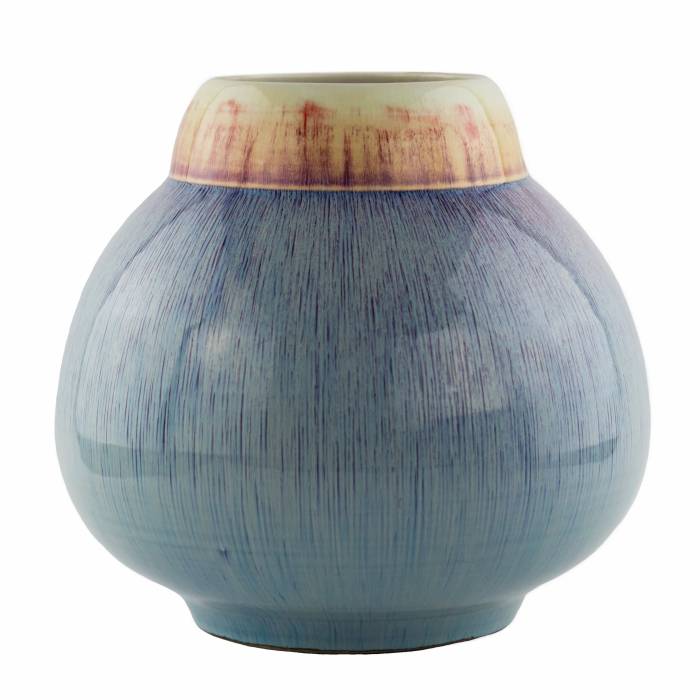
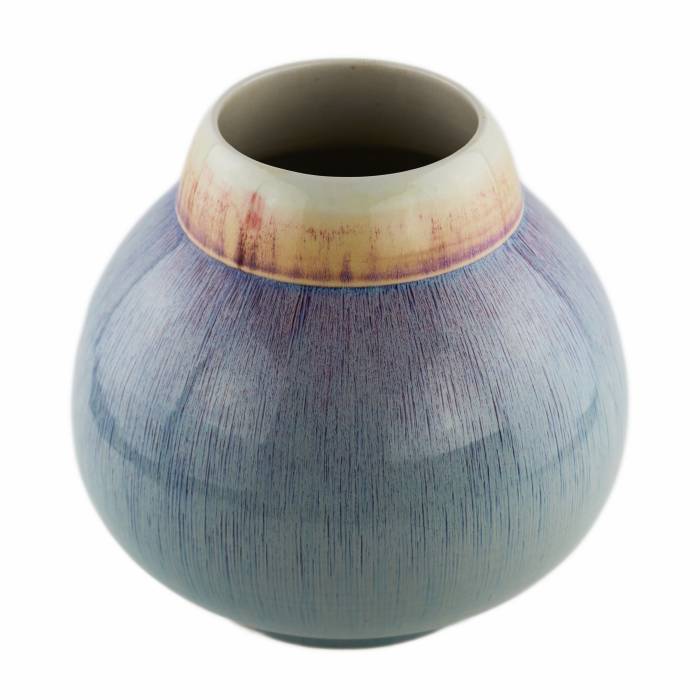
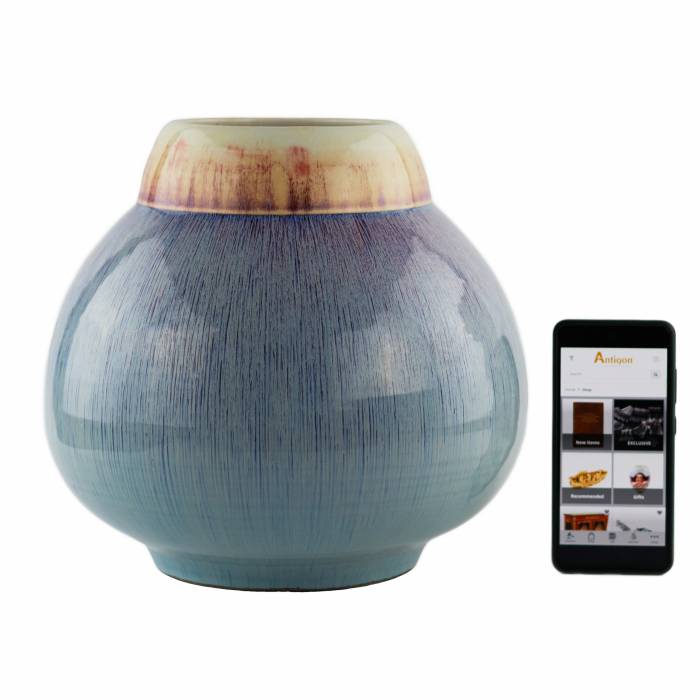
A rare Russian spherical porcelain vase executed in the Art Nouveau style and decorated with a complex palette of flowing glazes. The surface is covered with vertical translucent streams of cobalt, purple, red and cream tones, creating a dynamic painterly effect and deep color layering. The wide mouth is accentuated by a contrasting cream glaze band with subtle crimson drips. The glaze pattern is executed with remarkable skill characteristic of the experimental series of the Imperial Porcelain Factory of the early twentieth century.
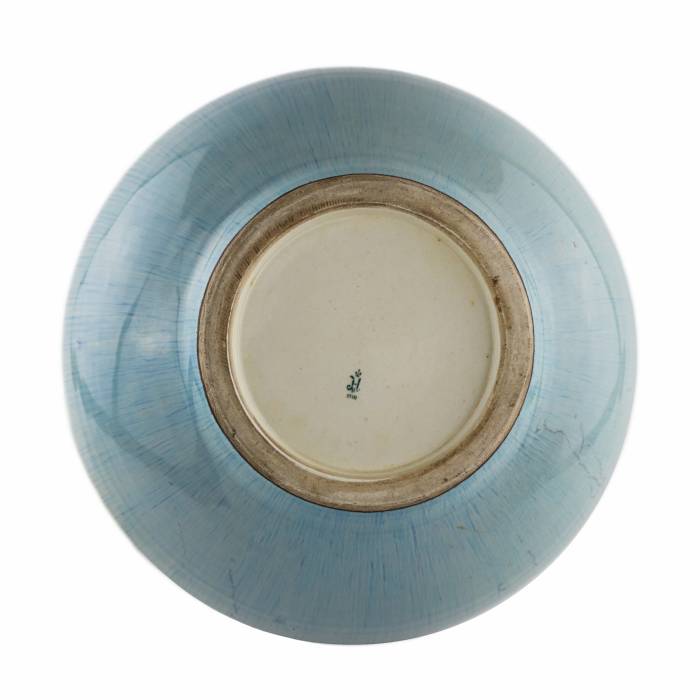
Marks: Green underglaze Imperial Porcelain Factory mark with the monogram of Nicholas II and the date “1910”.
Dimensions: Height 30 cm. Diameter 30 cm.
Condition: Good condition. Minor technological glaze crazing typical for large decorative vessels of this period.
Provenance: Private European collection.
Flowing glazes of the early twentieth century occupy a special place in the artistic development of the Imperial Porcelain Factory. Influenced by European Art Nouveau and Japanese decorative aesthetics, IPF artists sought to create painterly surfaces based on fluidity, multilayered color and organic transitions. These works combined traditional vessel forms with innovative technological research, reflecting the broader artistic interest in natural patterns and organic structures.
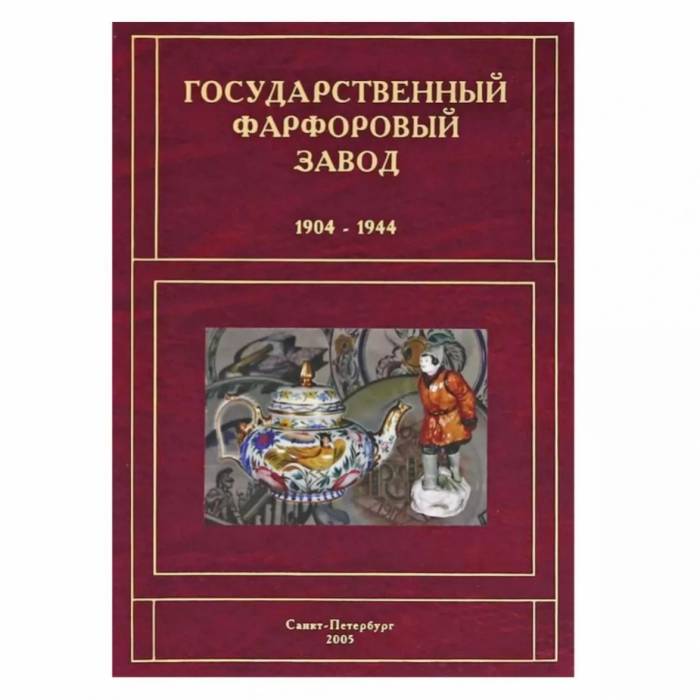
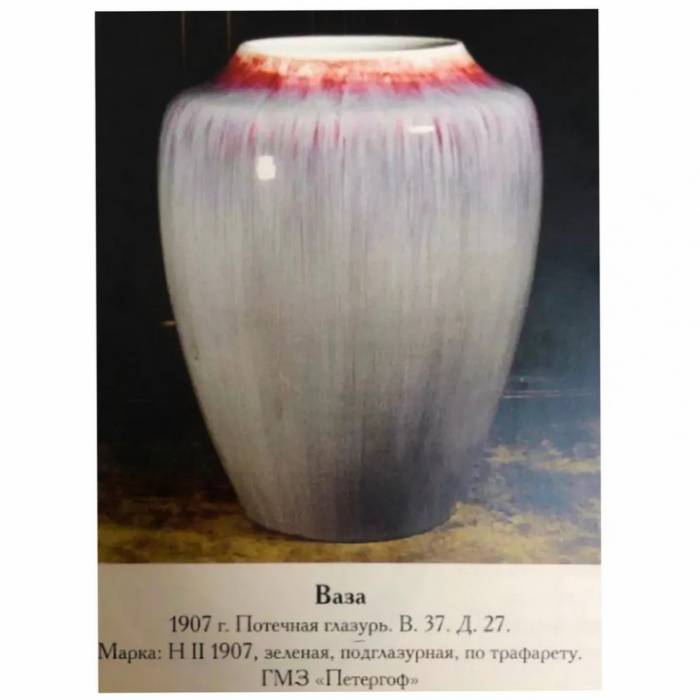
Under the reign of Nicholas II the factory modernized its production, developing new pigment laboratories and experimenting with rare metal oxides that produced unpredictable dripping effects during high firing. Pieces marked with the imperial monogram could be destined for the royal residences, including Peterhof and Tsarskoye Selo, or for high-level personal commissions. The present vase is closely related to examples published by T. Nosovich and Yu. Popova in their seminal study “The State Porcelain Factory 1904–1944”, Saint Petersburg, 2005. Page 92 illustrates a comparable large dripping-glaze vase of 1907 made for the Peterhof Palace. This association confirms the importance of such vases as elite examples of Russian Art Nouveau porcelain at the height of technological innovation at IPF. Their unique glaze structures, created by hand in each firing, make every vase a one-of-a-kind object sought after by collectors and museums.
Good overall condition. Localized glaze crazing consistent with age and technique. No chips, restorations or structural issues observed.
The condition report is provided for informational purposes only.
It is not comprehensive and may not reflect all defects, restorations, alterations, or adaptations, as Antiqon does not perform professional conservation-level assessments. The information is based on a qualified, yet subjective, evaluation by our specialists.Before purchasing, we recommend consultation with an independent expert.Please also consult our Terms and conditions and Glossary A-Z, which contain important information on lot characteristics and sale conditions.