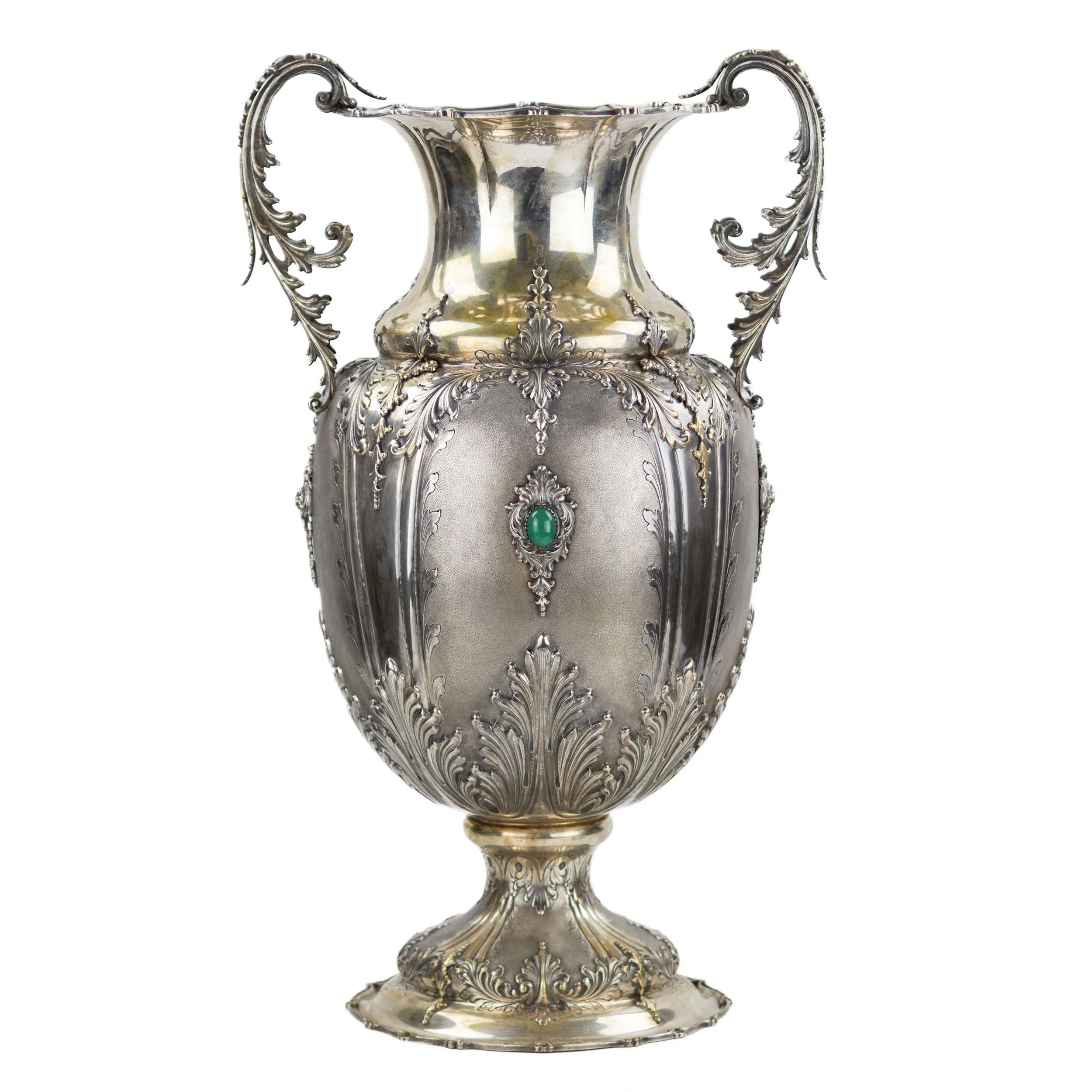
LARGE AMPHORA-SHAPED SILVER VASE ITALY, MILAN, 20TH CENTURY
AntiqonART consultant will contact you within one business day after receiving your request.
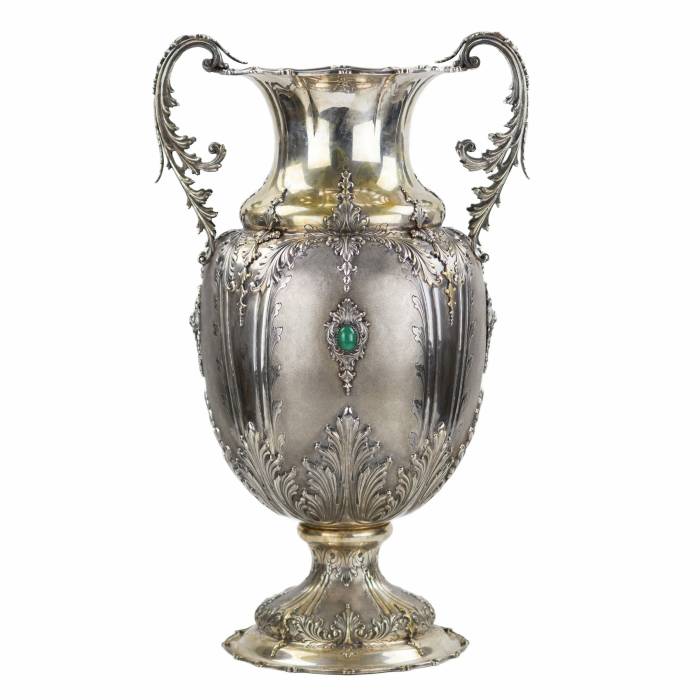
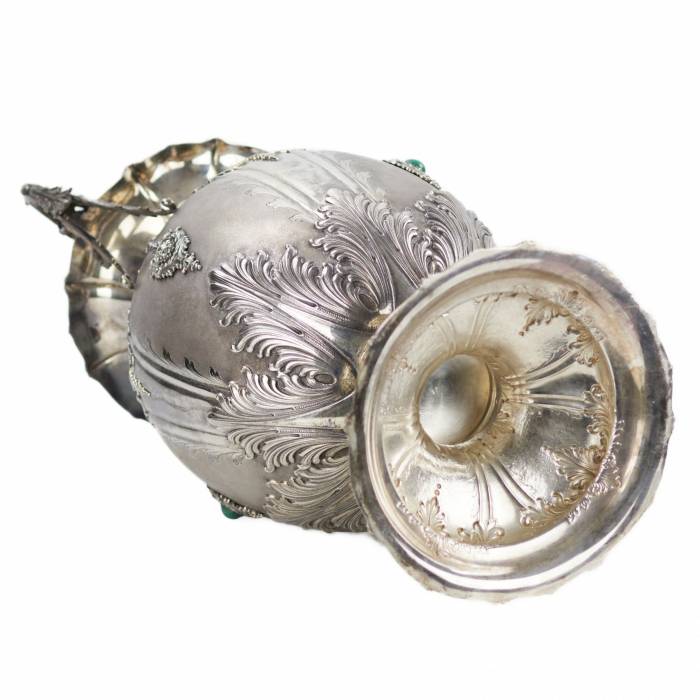
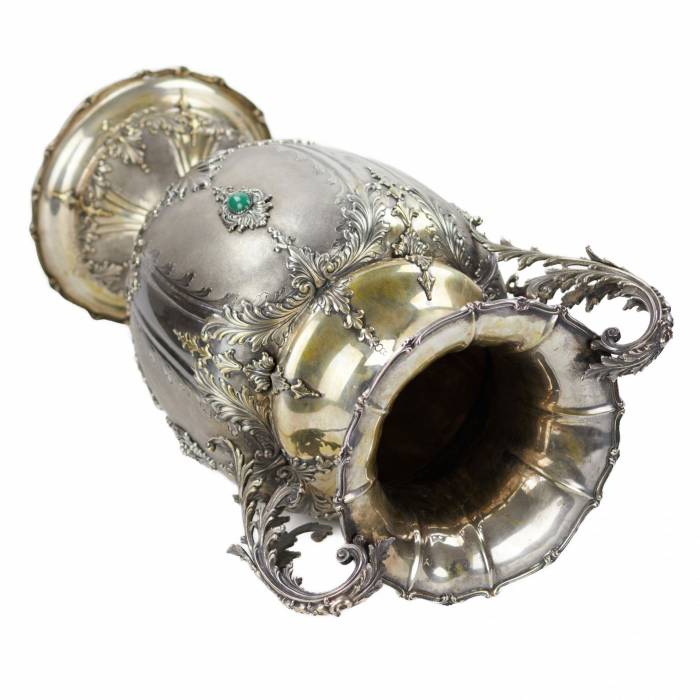
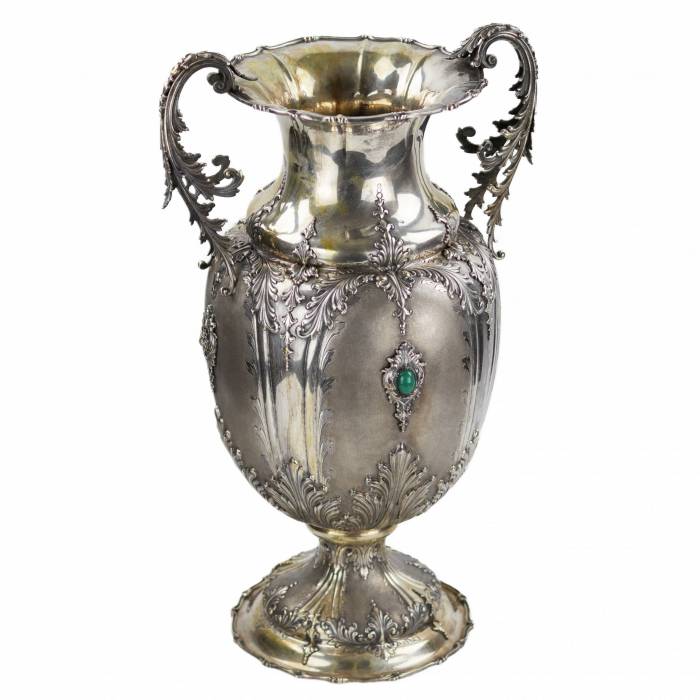
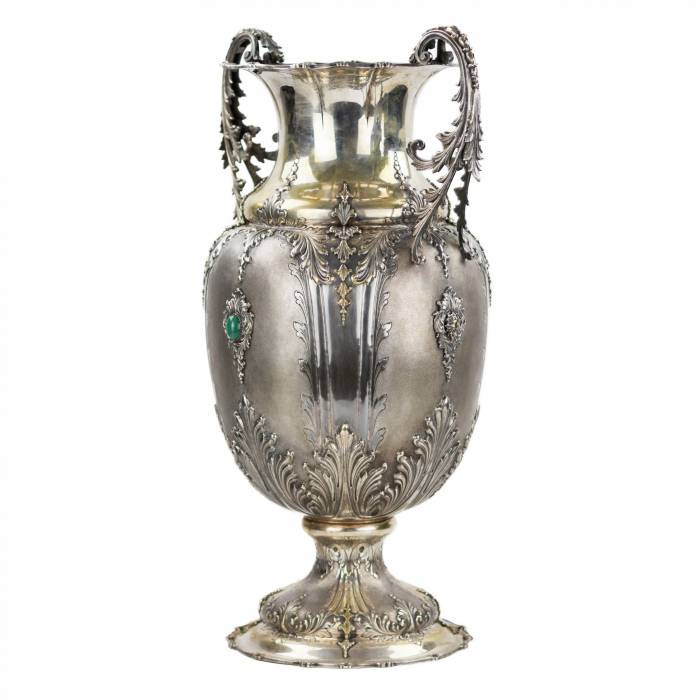
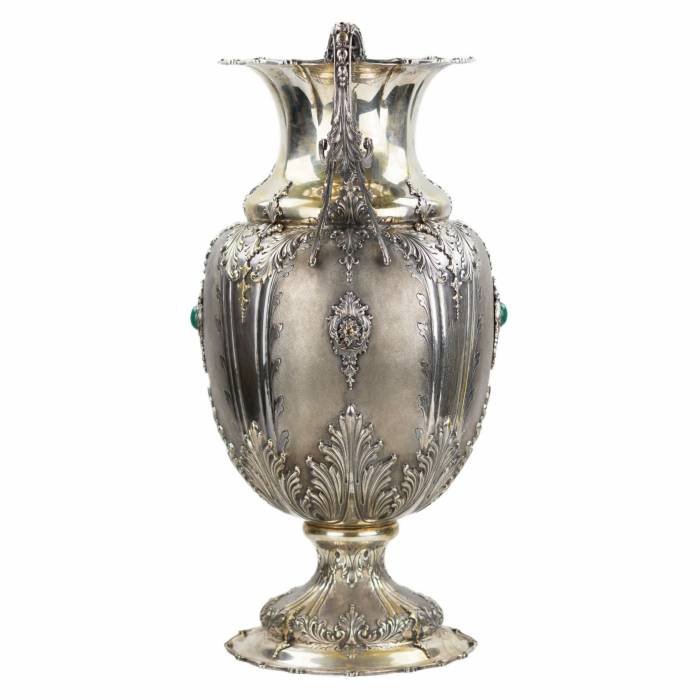
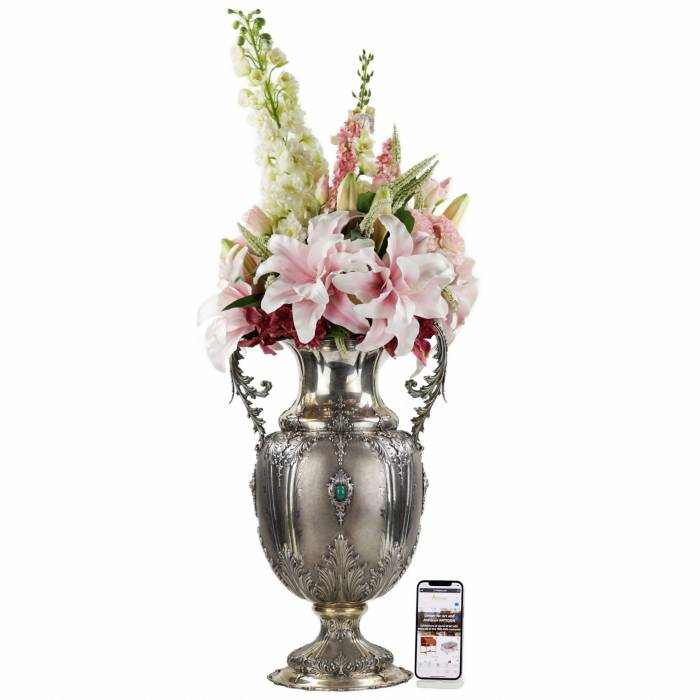
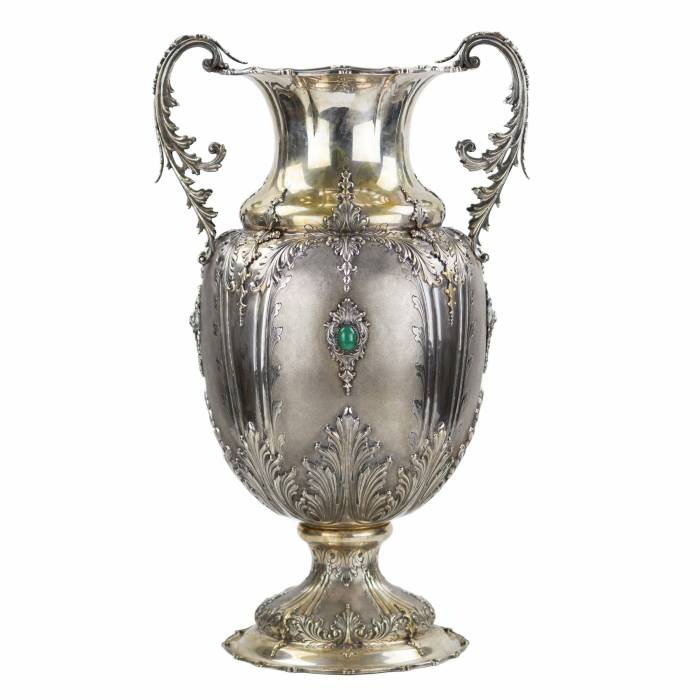
An impressive large-scale silver vase of amphora form, executed in the tradition of Italian artistic silver of the 20th century. The vessel is distinguished by harmonious proportions and a monumental silhouette, accentuated by a pronounced neck and a stable, profiled foot. The surface is richly adorned with high-relief vegetal ornament, dominated by acanthus leaves, floral rosettes and elegant garlands that unite the decorative program into a coherent sculptural composition.
The artistic concept refers to the symbolism of the cornucopia as an emblem of abundance, fertility and prosperity, expressed through the profusion of vegetal motifs, flowing lines and dense ornamental rhythm. The vase is further enhanced by large Rocaille-style handles, conceived as luxuriant vegetal scrolls with pronounced movement and sculptural vitality. The body is additionally embellished with inserts of natural semi-precious green stone, set within ornamental cartouches and reinforcing the ceremonial and luxurious character of the object.
Executed in 800-grade silver using sophisticated techniques of casting and hand-chasing characteristic of Milanese workshops, the vase demonstrates a high level of craftsmanship. The interior retains traces of gilding, a feature typical of ceremonial decorative vessels intended for both display and interior use. This piece represents a striking example of Italian decorative arts of the 20th century, combining historical stylistic references with refined technical execution.
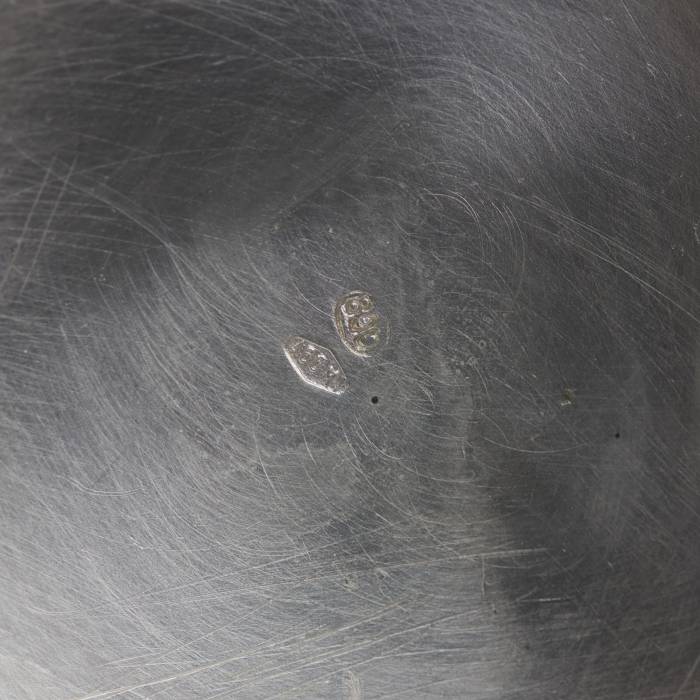
Marks: Italian silver hallmark “800”; workshop and registration marks consistent with Milanese artistic silver of the 20th century.
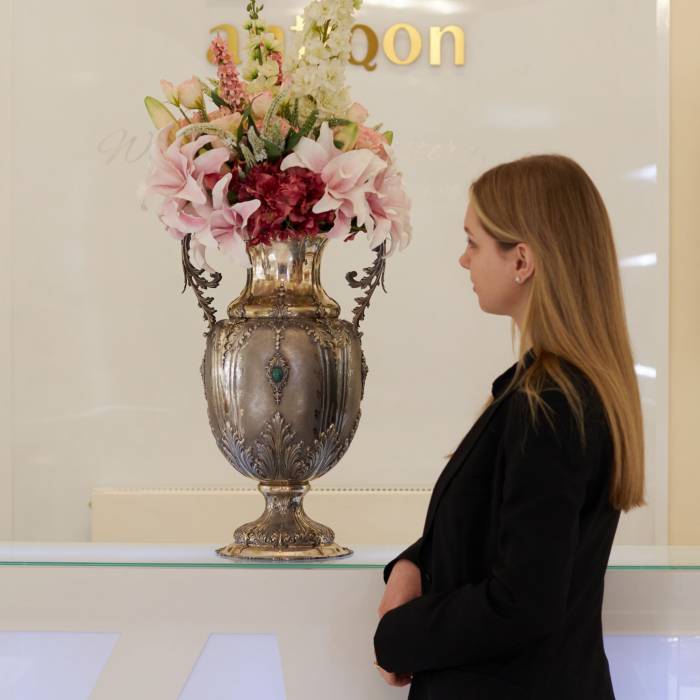
Dimensions: Height: 57 cm; Width: 34 cm; Depth: 28 cm.
Weight: 3,940 g.
Condition: Good. The silver shows a noble patina consistent with age. Minor signs of use and light surface wear, not affecting the overall aesthetic impression. Stone inserts intact.
Provenance: Private collection.
Italian artistic silver of the 20th century, particularly that produced by Milanese workshops, occupies a significant position within the history of European decorative arts. Milan had long been one of the principal centers of silversmithing and jewelry production, where Renaissance, Baroque and Rococo traditions were preserved and reinterpreted in accordance with contemporary taste.
During the first half and mid-20th century, Italian silversmiths increasingly turned to historic forms, creating objects in which classical silhouettes and ornamental vocabularies were combined with modern standards of craftsmanship and material quality. Amphora-shaped vases held a special place in Italian interior culture, functioning not only as decorative elements but also as symbolic references to antiquity and the continuity of classical ideals. The amphora form evoked harmony of proportion, permanence of tradition and elevated aesthetic values.
The motif of the cornucopia, embodied in the abundant vegetal ornament of this vase, was widely employed in 20th-century decorative arts as an allegory of prosperity and vital energy. Acanthus leaves, garlands and Rocaille scrolls refer to Baroque and Rococo traditions, which in Italy continued to signify refinement, status and artistic lineage.
Milanese silver of 800 standard was prized for both the quality of the alloy and the complexity of its execution. Casting, hand-chasing and meticulous surface finishing required exceptional skill and time, rendering such objects prestigious and costly. The incorporation of semi-precious stones further enhanced the decorative character of silver objects, bridging the disciplines of silversmithing and jewelry art.
Such vases were typically created for the adornment of grand private residences, reception halls and salons, and often served as prestigious gifts. Today, they are regarded as important testimonies to Italian artistic taste of the 20th century and are highly valued by collectors for their sculptural richness, symbolic content and superior craftsmanship.
The silver is in good condition with an even patina. Minor signs of age and careful use. Decorative elements and stone inserts well preserved, with no visible deformations.
The condition report is provided for informational purposes only.
It is not comprehensive and may not reflect all defects, restorations, alterations, or adaptations, as Antiqon does not perform professional conservation-level assessments. The information is based on a qualified, yet subjective, evaluation by our specialists.Before purchasing, we recommend consultation with an independent expert.Please also consult our Terms and conditions and Glossary A-Z, which contain important information on lot characteristics and sale conditions.