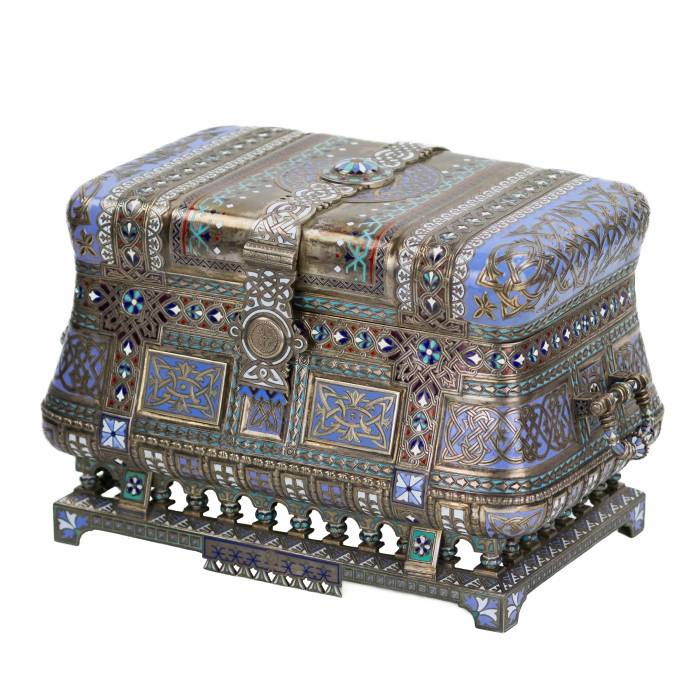
RUSSIAN SILVER CASKET WITH CHAMPLEVÉ ENAMEL FIRM OF PAVEL OVCHINNIKOV. MOSCOW, 1882
AntiqonART consultant will contact you within one business day after receiving your request.
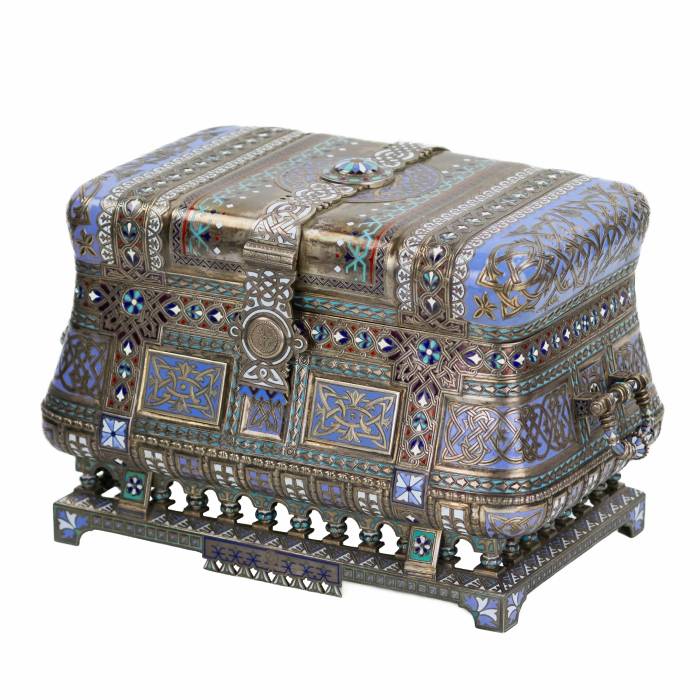
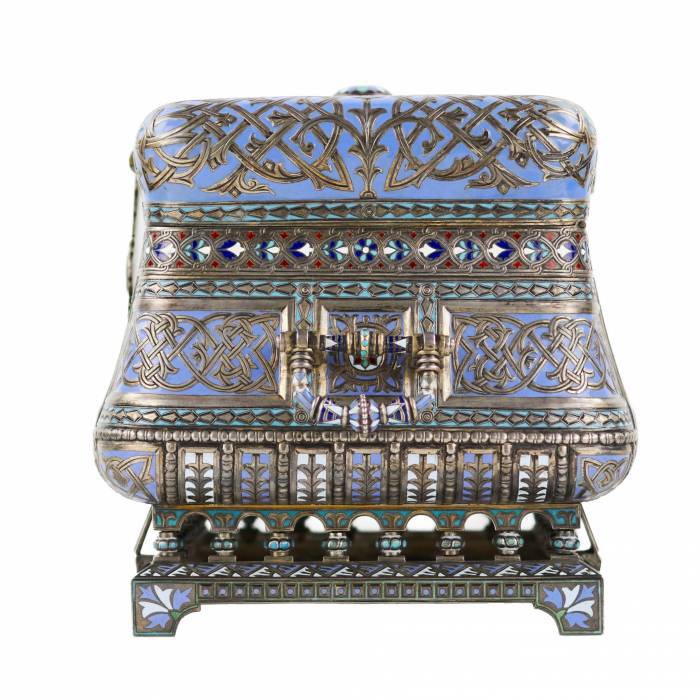
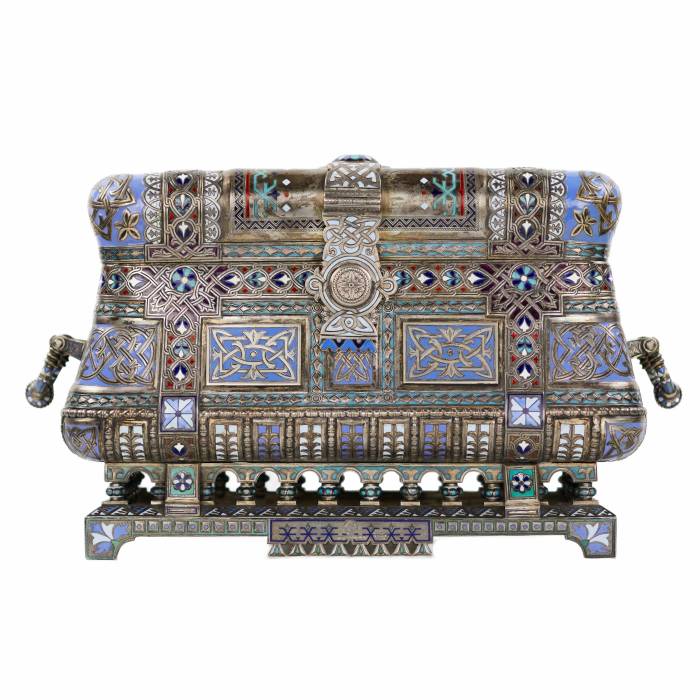
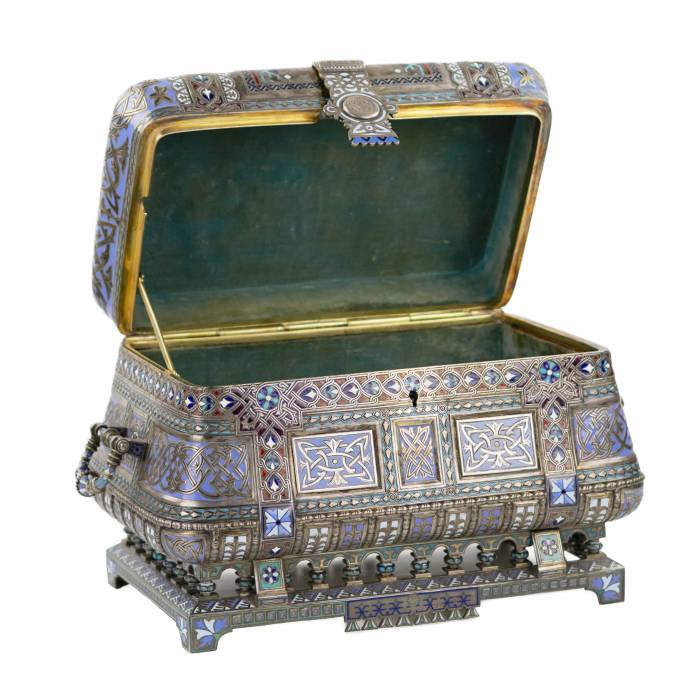

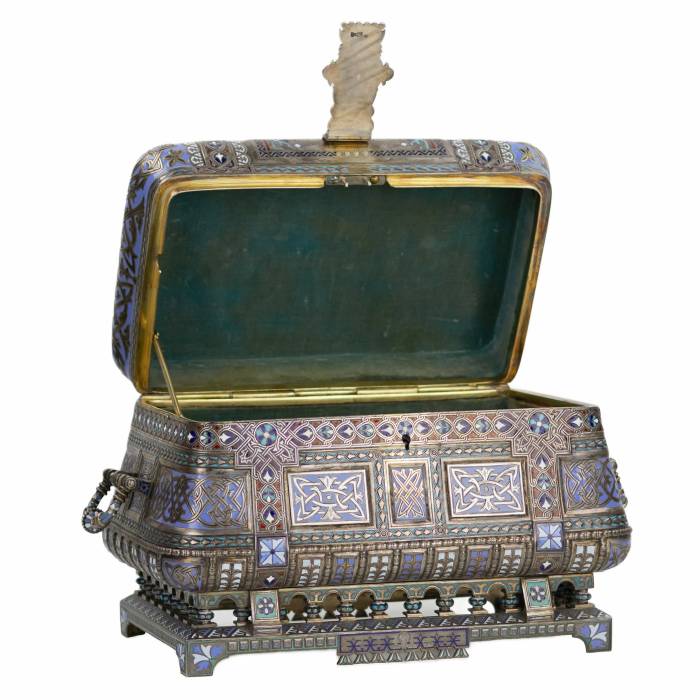
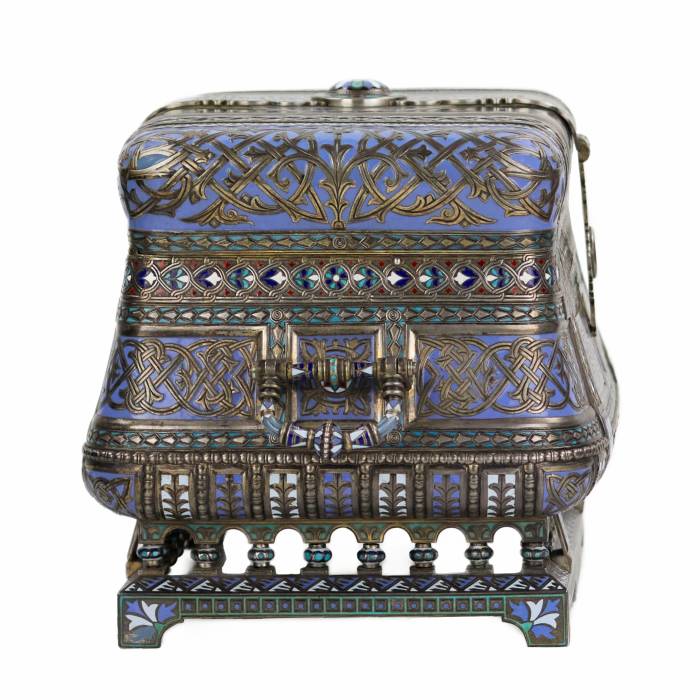
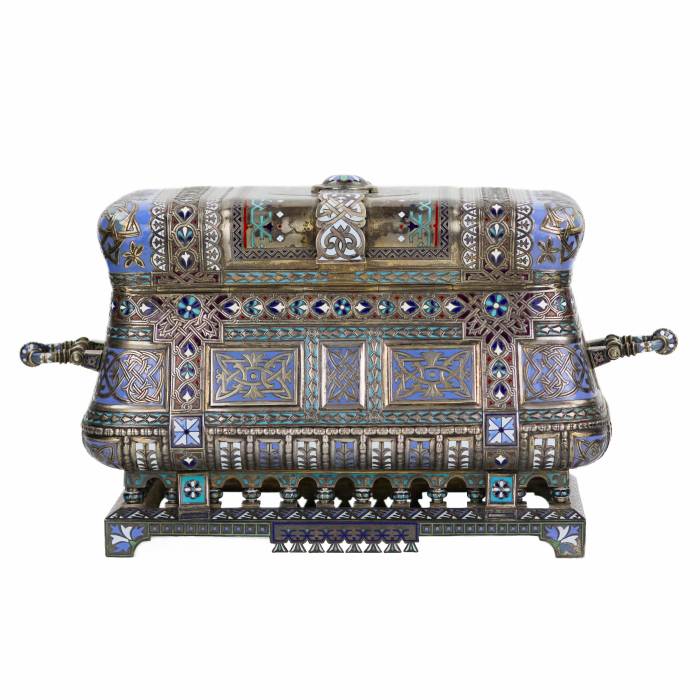
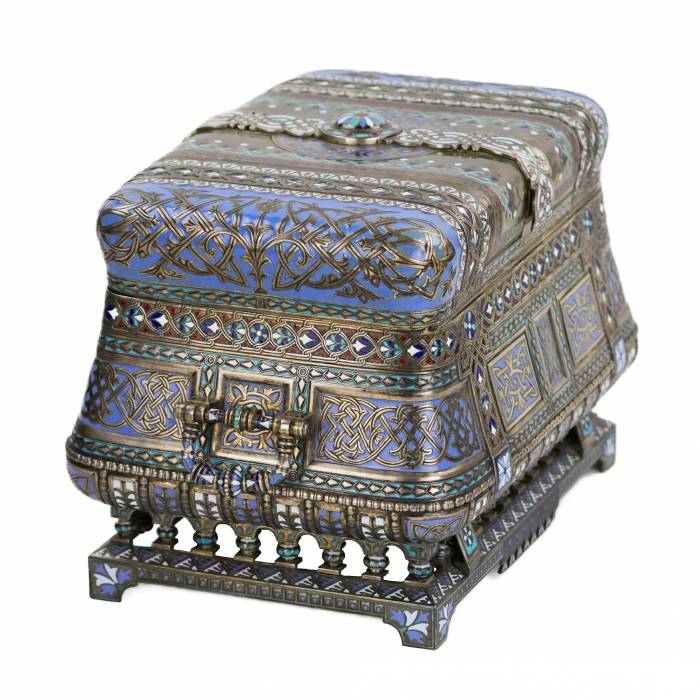
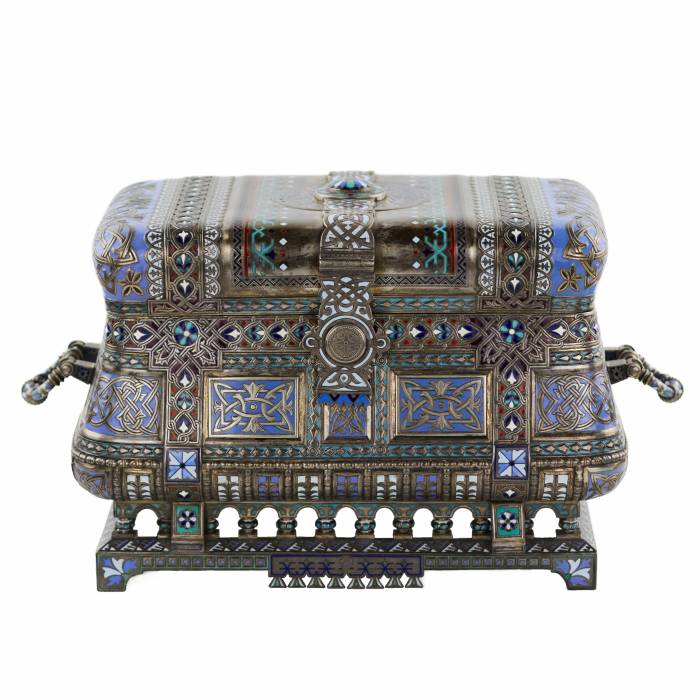
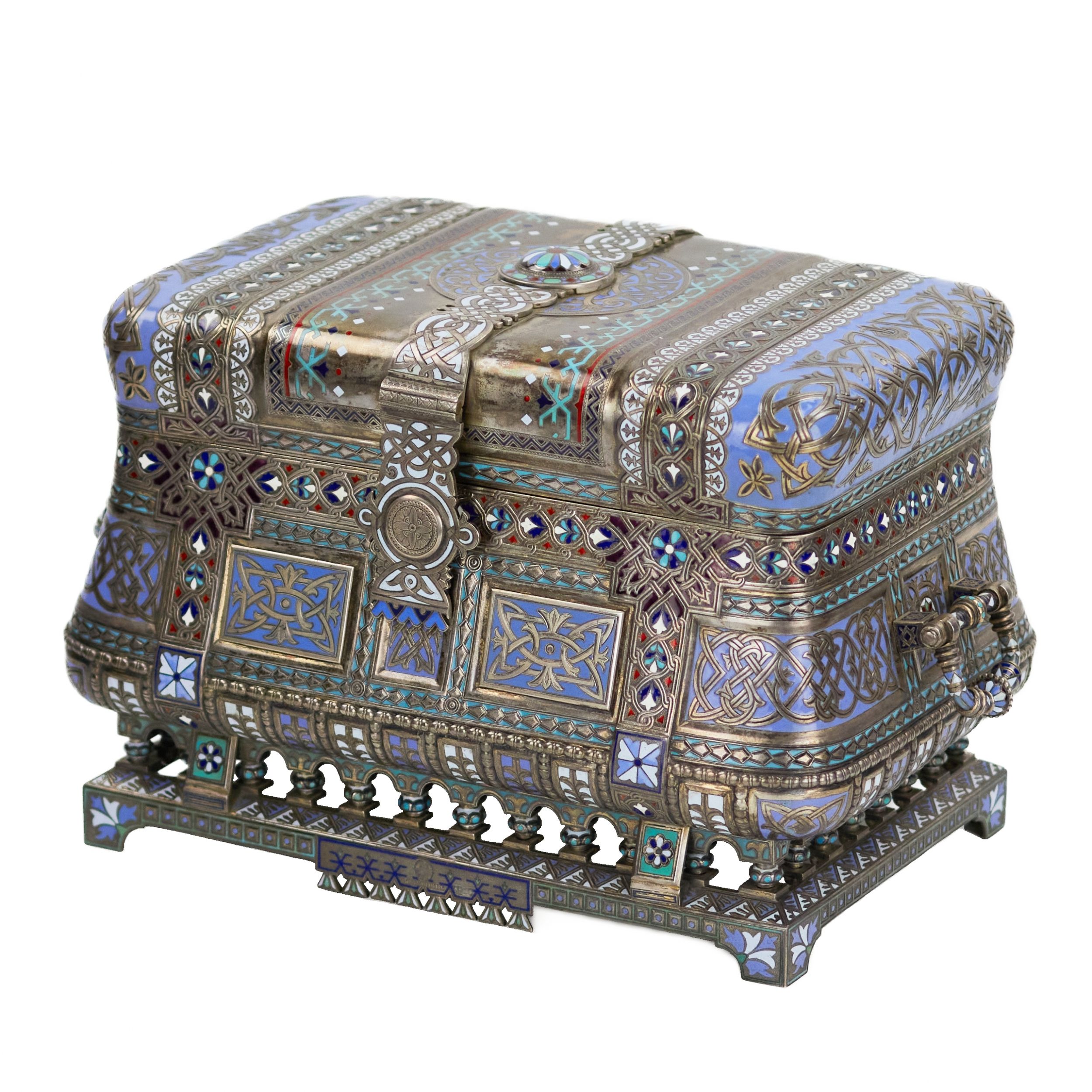
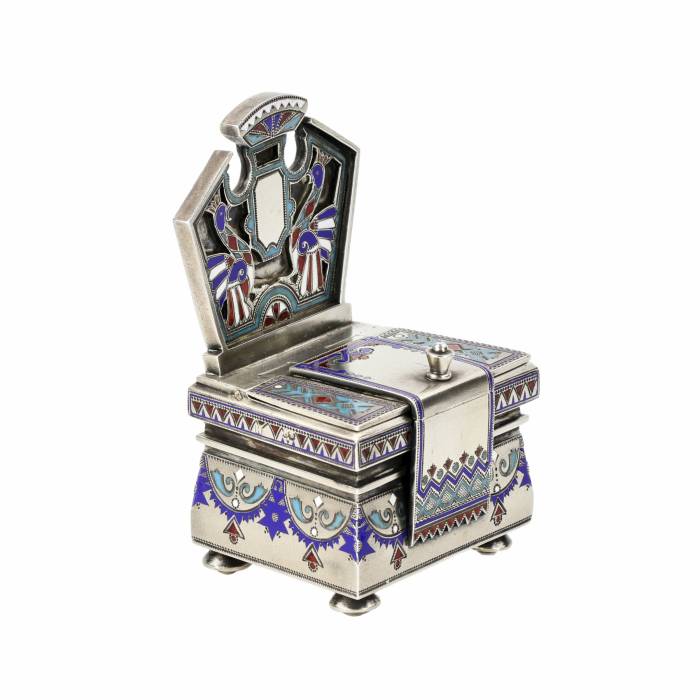
A grand silver casket with enamel, created in 1882 by the celebrated firm of Pavel Ovchinnikov, Purveyor to the Imperial Court, conceived in the image and likeness of the legendary treasure chests of Sadko and Vasily Buslaev. This outstanding work recreates the configuration of ancient metal-clad trunks with leather straps, lock clasp, overlays and chain belts, serving as a metaphor for the fullness of success, home, wealth and the wise safeguarding of life’s measure.
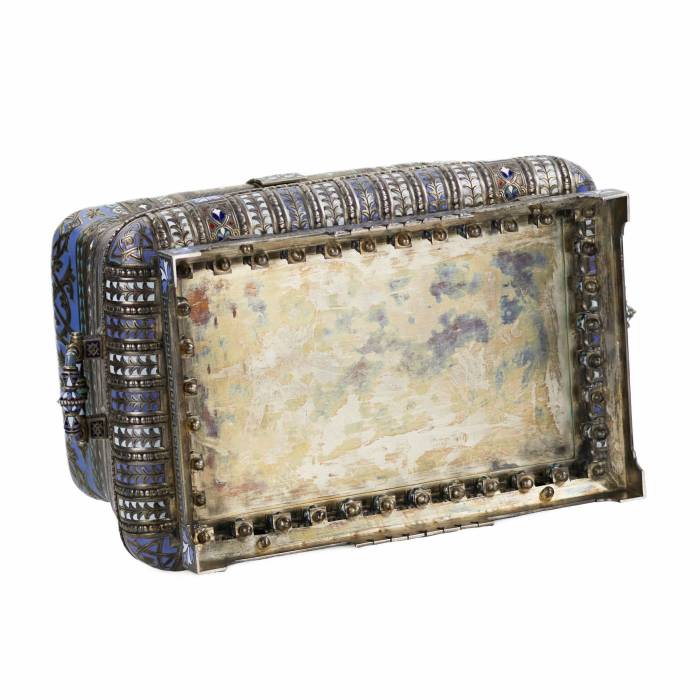
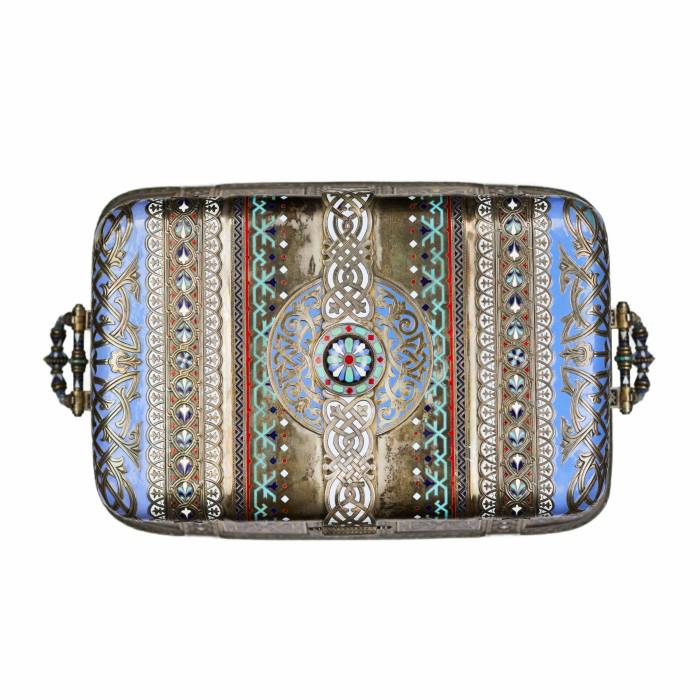
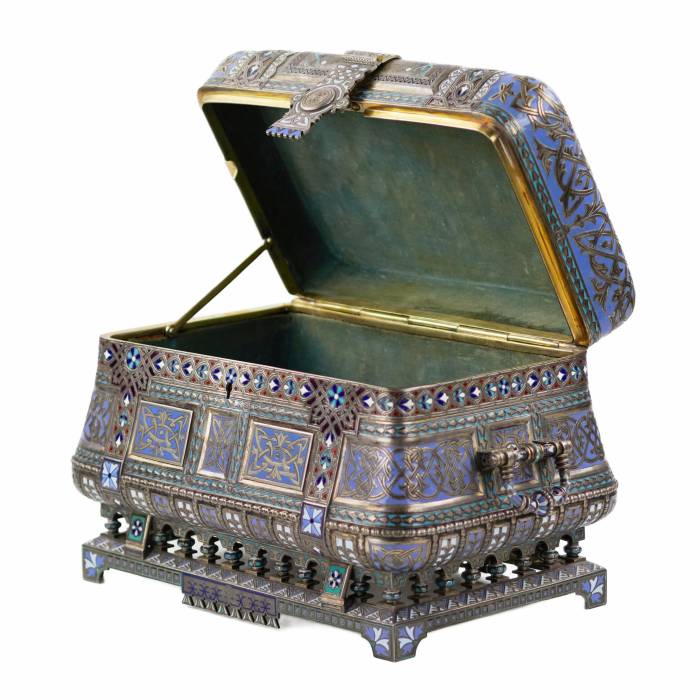
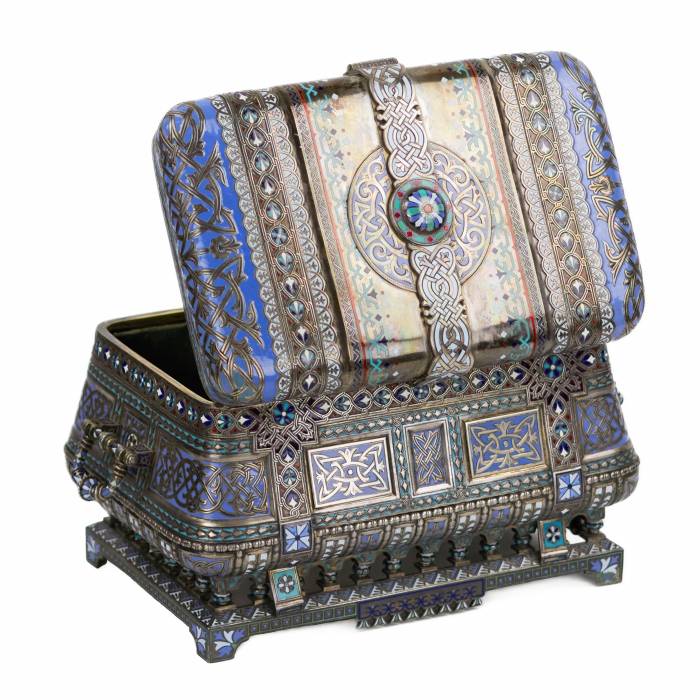
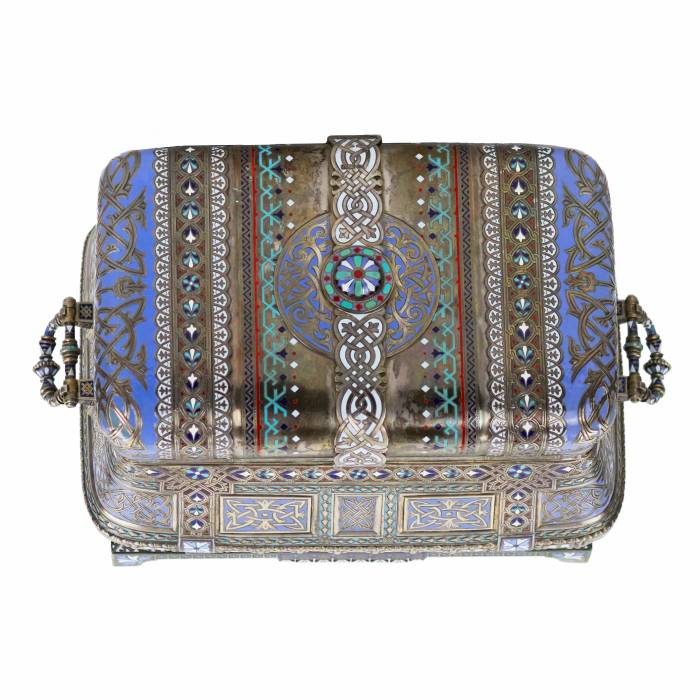
The casket of trapezoidal form with a rounded, domed lid is solemnly raised on baluster supports. The hinged cover, provided with a stop, as well as the body with suspended handles, are richly decorated with an ensemble of champlevé enamel in the Neo-Russian style, where panels of Slavic-Scandinavian interlace on a blue ground dominate. The compositional basis of the ornament is formed by colourful bands with woven drop-shaped centres, creating a decorative framework. The small chain belts on a deep azure ground reinforce the impression of strength and completeness. The bottom of the body is strengthened with curved palm-like struts.
Particular attention is given to the lid: carpet-like ornament unites symmetrically arranged triple bands with white lace and blue enamels along the slopes, while a flat geometric pattern prepares the centre of symmetry and composition — a voluminous white twisted band of the lock hinge with a vivid “navel” of a heroic shield, symbolising historicity and protection. The interior retains its original velvet lining, imparting further luxury and underlining the casket’s status.
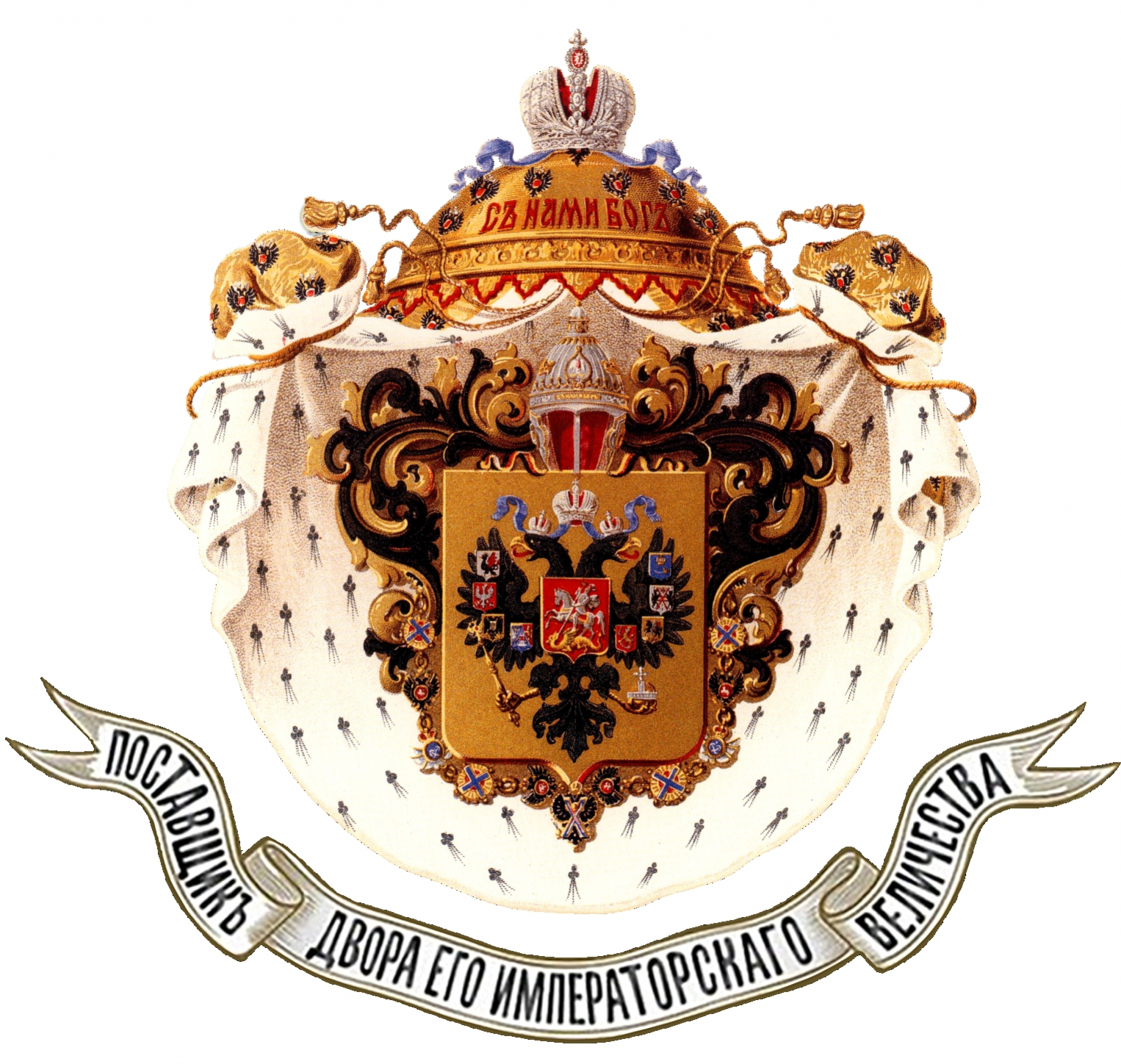
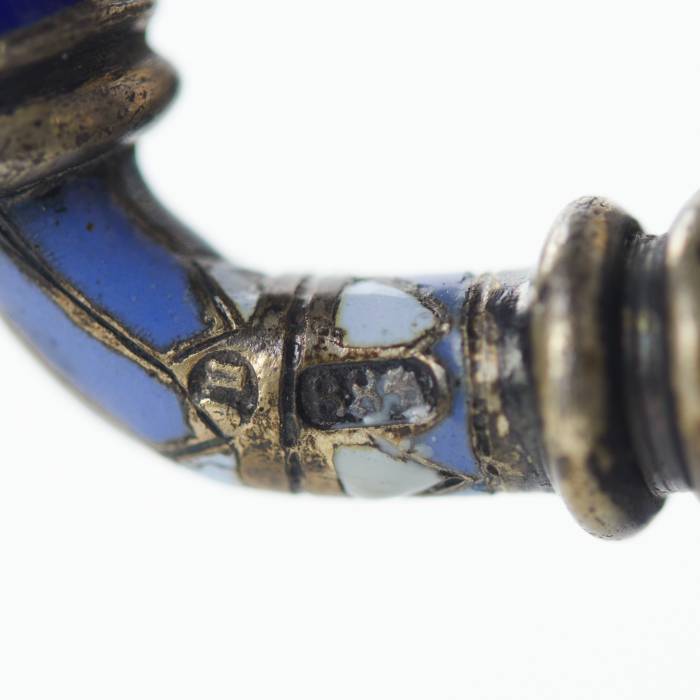
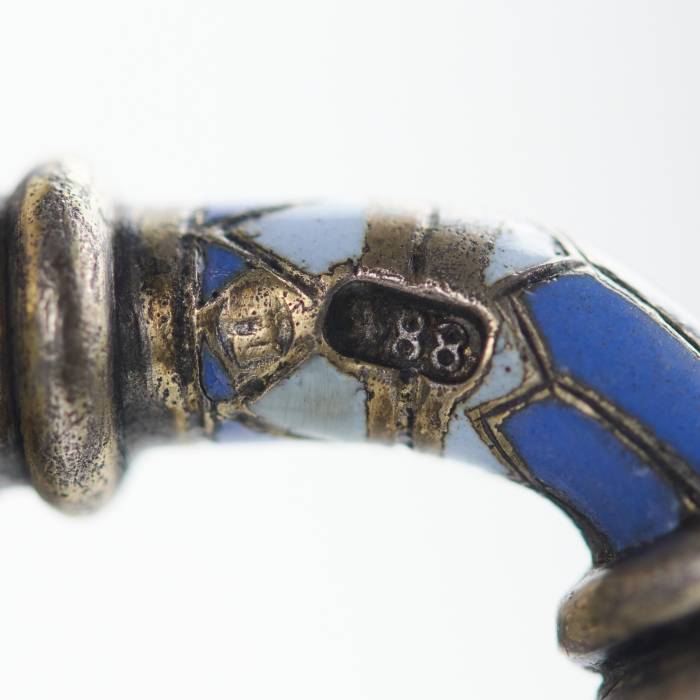
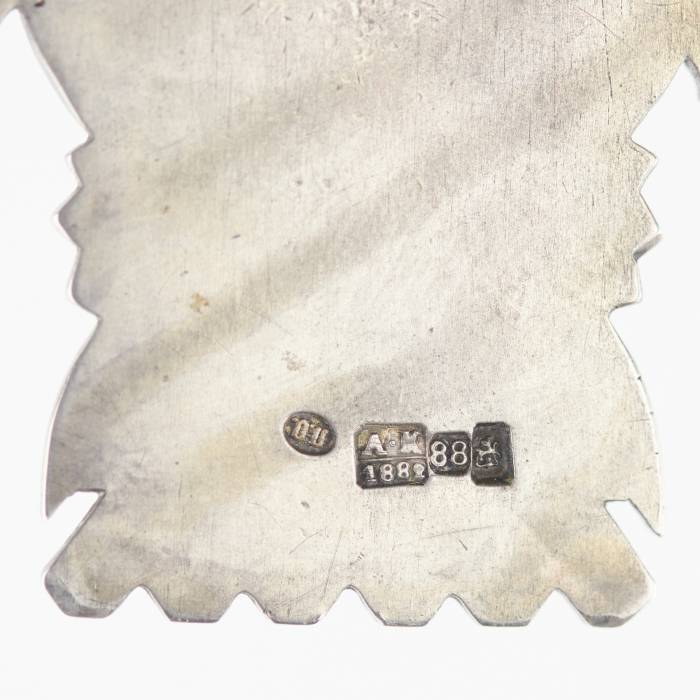
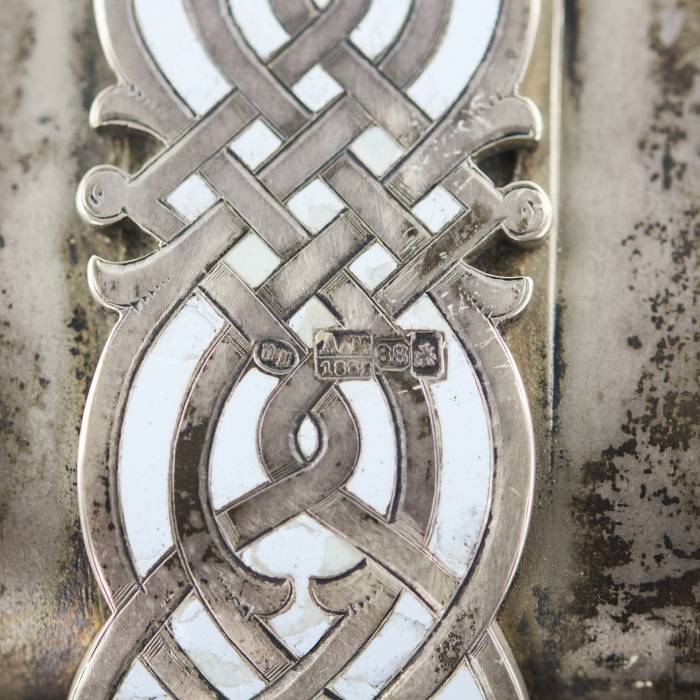
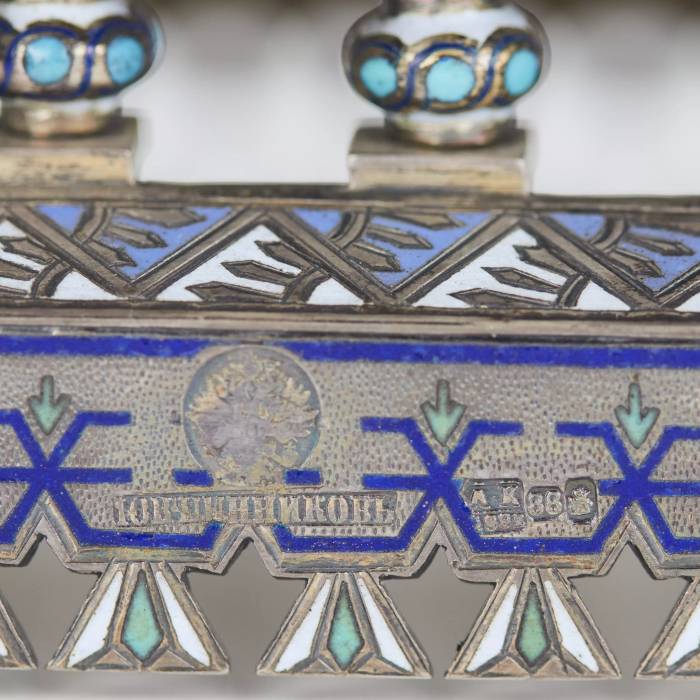
Marks: Full hallmark “P. Ovchinnikov” beneath the double-headed Imperial eagle, confirming the firm’s status as Purveyor to the Imperial Court, on the base; small oval “P.O.” mark; Moscow assay office mark with initials “A.K.” and date “1882”; silver standard “88” in a rectangular shield; Moscow city mark with St. George slaying the dragon; small Moscow assay marks struck on separate elements, including the handles.
Dimensions: Width 32.5 cm; depth 21.5 cm; height 22.5 cm.
Weight: 8 kg.
Condition: Superb museum condition, without evident enamel losses, with a noble patina of age.
Provenance: Private collection.
An apotheosis of decorative art and a manifesto of the Neo-Russian style — the monumental silver casket by Pavel Ovchinnikov, created in 1882 after the epic treasure chests of Sadko and Vasily Buslaev, represents an exceptional masterpiece of princely and imperial rank. It astonishes with its scale, boldness and grandeur, embodying the late 19th century’s striving for a pure national artistic language.
Between the 1860s and 1890s, the Ovchinnikov workshop in Moscow was one of the largest artistic enterprises, employing up to 200 craftsmen. The factory gathered the finest enamellers of its age, and the firm’s works were repeatedly honoured at international exhibitions: Paris (1867), Vienna (1873), Moscow (1882), Chicago (1893). At the 1882 All-Russian Exhibition in Moscow, Ovchinnikov’s creations received the highest awards and drew the personal attention of the Imperial Court, firmly establishing the firm’s reputation as both innovator and guardian of national traditions.
The rise of the Neo-Russian style was inseparable from the study of ancient Russian monuments undertaken by the Archaeological Society and the Imperial Archaeological Commission. The discoveries of academician F. G. Solntsev laid the foundations for stylisations of the 17th century, where princely archaism, epic ornament and folk aesthetics merged into a national historicism.
Ovchinnikov was the first Moscow jeweller to introduce into production the most complex techniques of multicoloured cloisonné and champlevé enamel, achieving a rare intensity of palette. In his works enamel became not merely decorative but the primary bearer of artistic meaning, turning into a visual manifesto of Russian spirit and way of life.
This work possesses all the hallmarks of a unique work of art. Comparable examples are preserved today in the Moscow Kremlin Museums, the State Hermitage Museum, the Wetzlar Foundation in Switzerland, the Fabergé Museum in Baden-Baden, and in distinguished private collections across Europe and the United States. They reveal not only the aesthetic grandeur of the epoch but also the unsurpassed craftsmanship that made the name of Pavel Ovchinnikov synonymous with luxury and perfection.
The piece is in excellent condition: enamels preserved in good state consistent with its age, the silver surface covered with a noble patina, the original velvet lining intact, the hallmarks crisp.
The condition report is provided for informational purposes only.
It is not comprehensive and may not reflect all defects, restorations, alterations, or adaptations, as Antiqon does not perform professional conservation-level assessments. The information is based on a qualified, yet subjective, evaluation by our specialists.Before purchasing, we recommend consultation with an independent expert.Please also consult our Terms and conditions and Glossary A-Z, which contain important information on lot characteristics and sale conditions.