WORKING NOON. PAVEL ALEKSANDROVICH BRYULLOV (1840–1914) RUSSIA, 1890

WORKING NOON. PAVEL ALEKSANDROVICH BRYULLOV (1840–1914) RUSSIA, 1890

ID-ANTQ-8094
Request price
Request more info
Guarantee of Authenticity

At Antiqon ART, we build trust and value your choice. Every purchase of art and antiques with us is an investment backed by our expertise, reputation, and a 100% authenticity guarantee.

Price History

Discover how the value of similar works has evolved over the past 10 years. Art is not only beauty — it's an investment.

Request a Shipping Quote

Discover your personalized shipping cost — based on where you are and how you prefer to receive your piece..

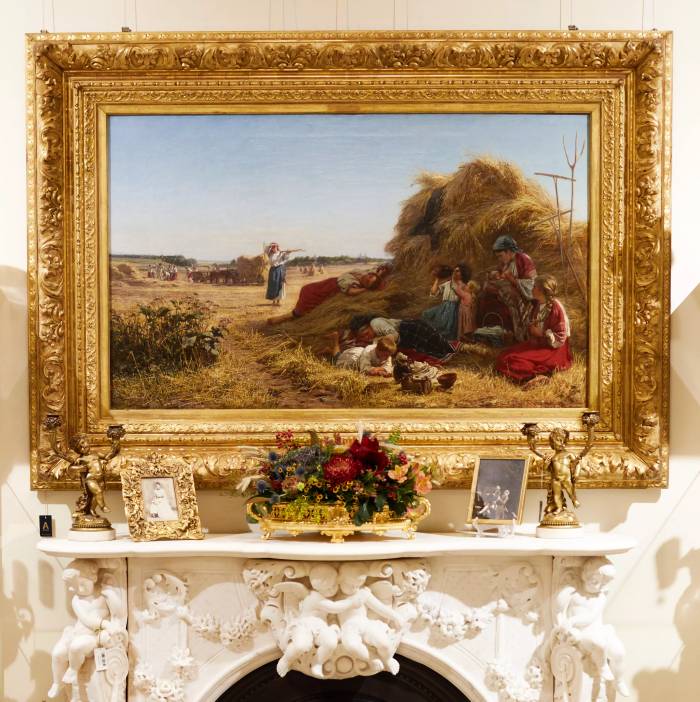
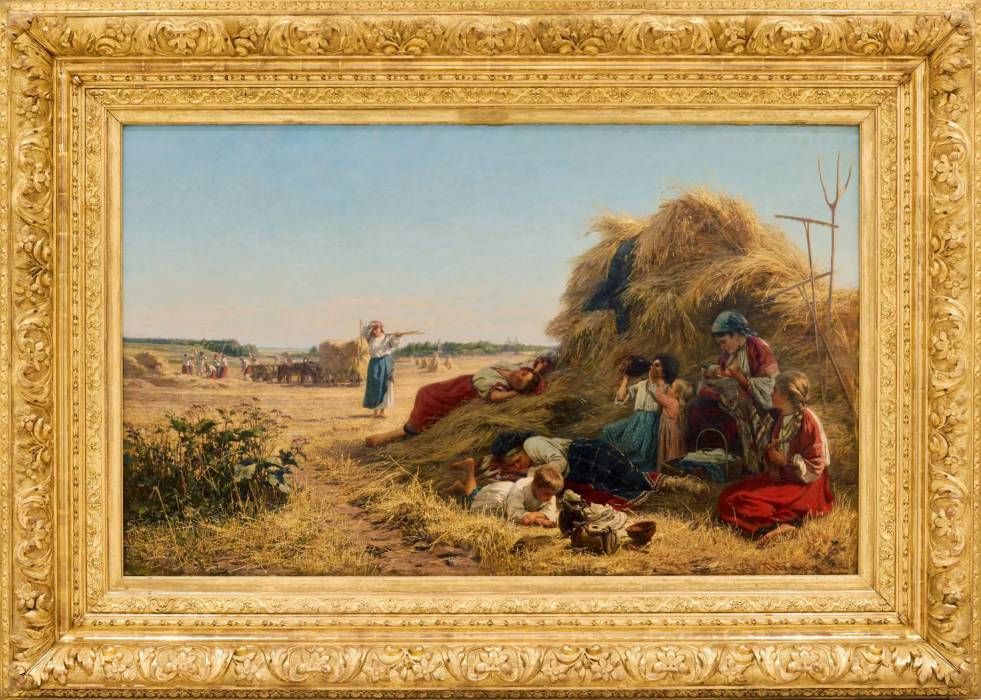
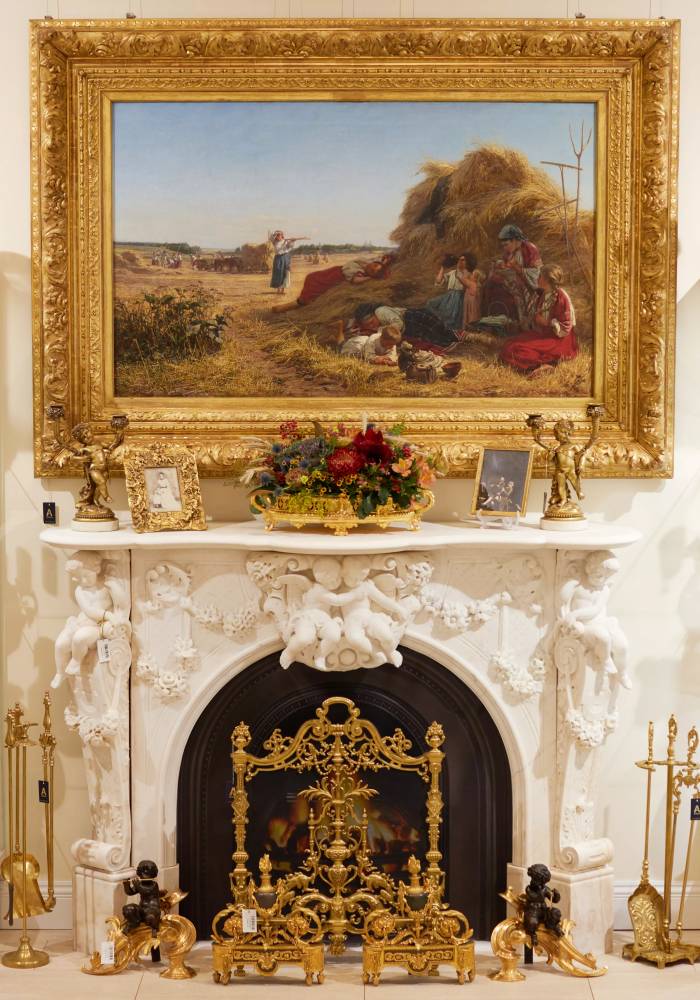
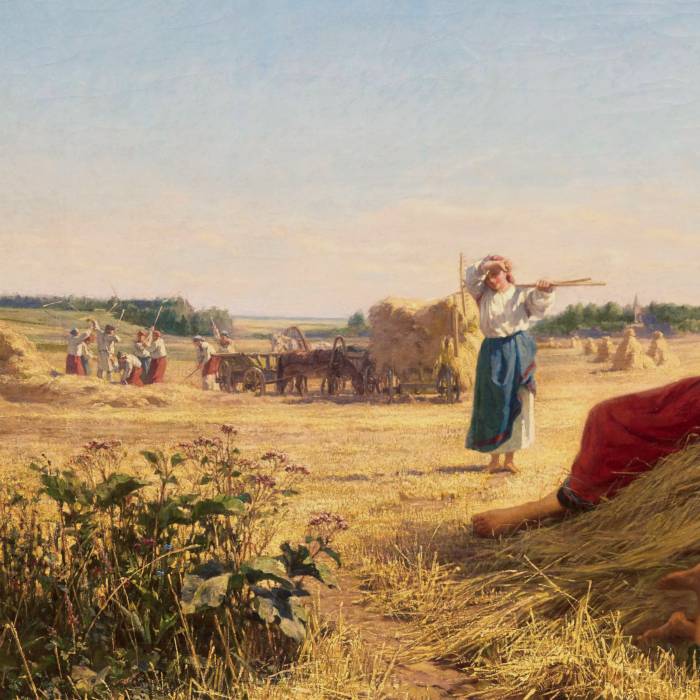
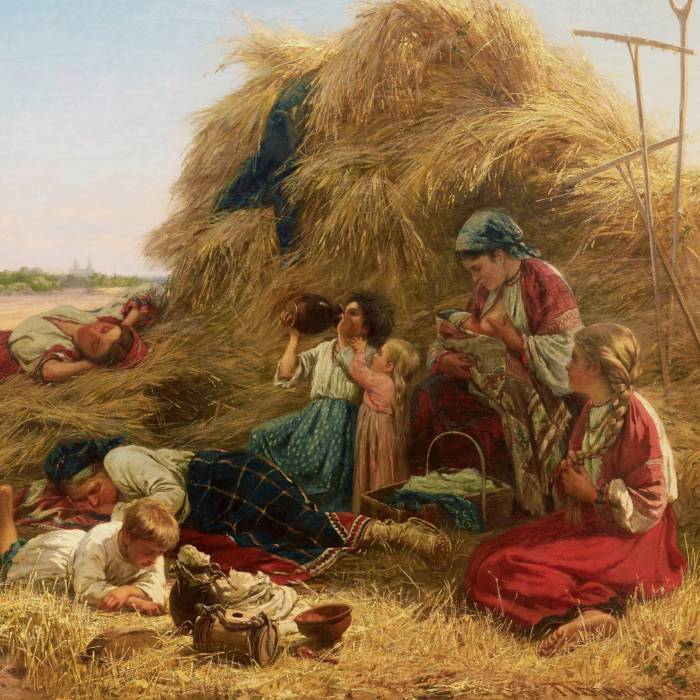
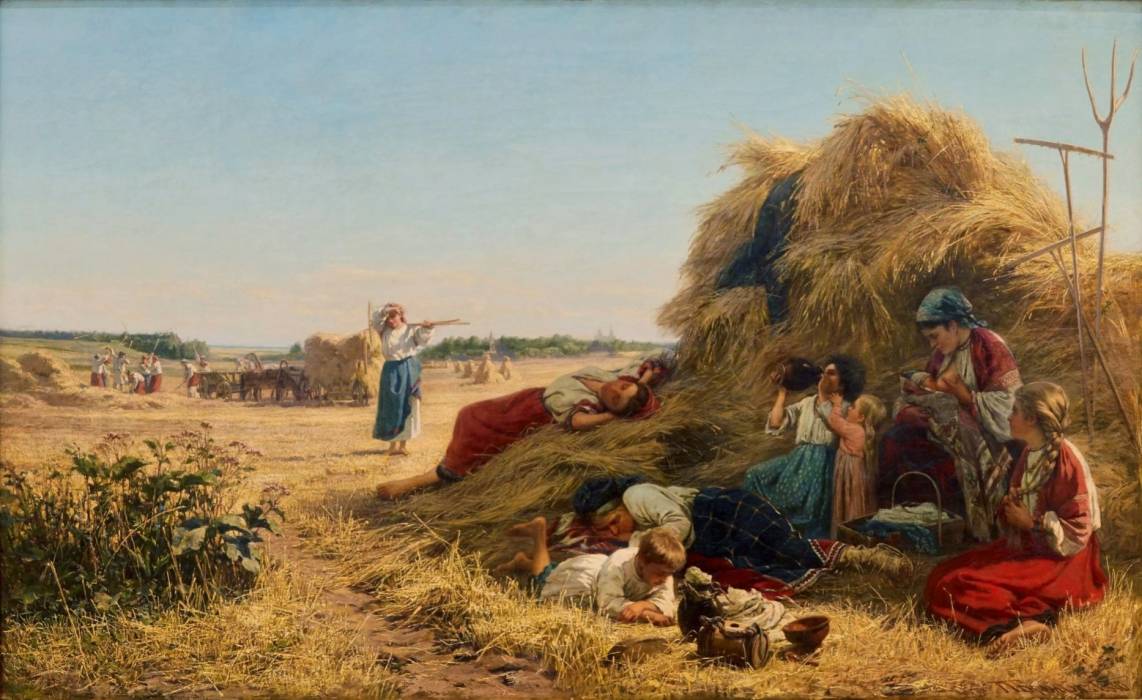
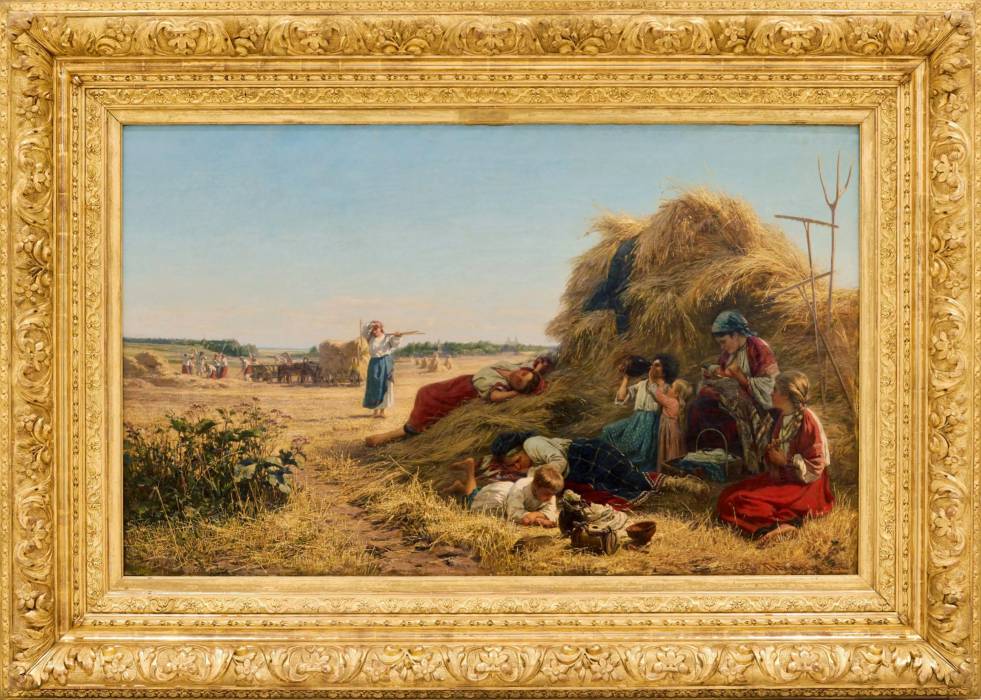
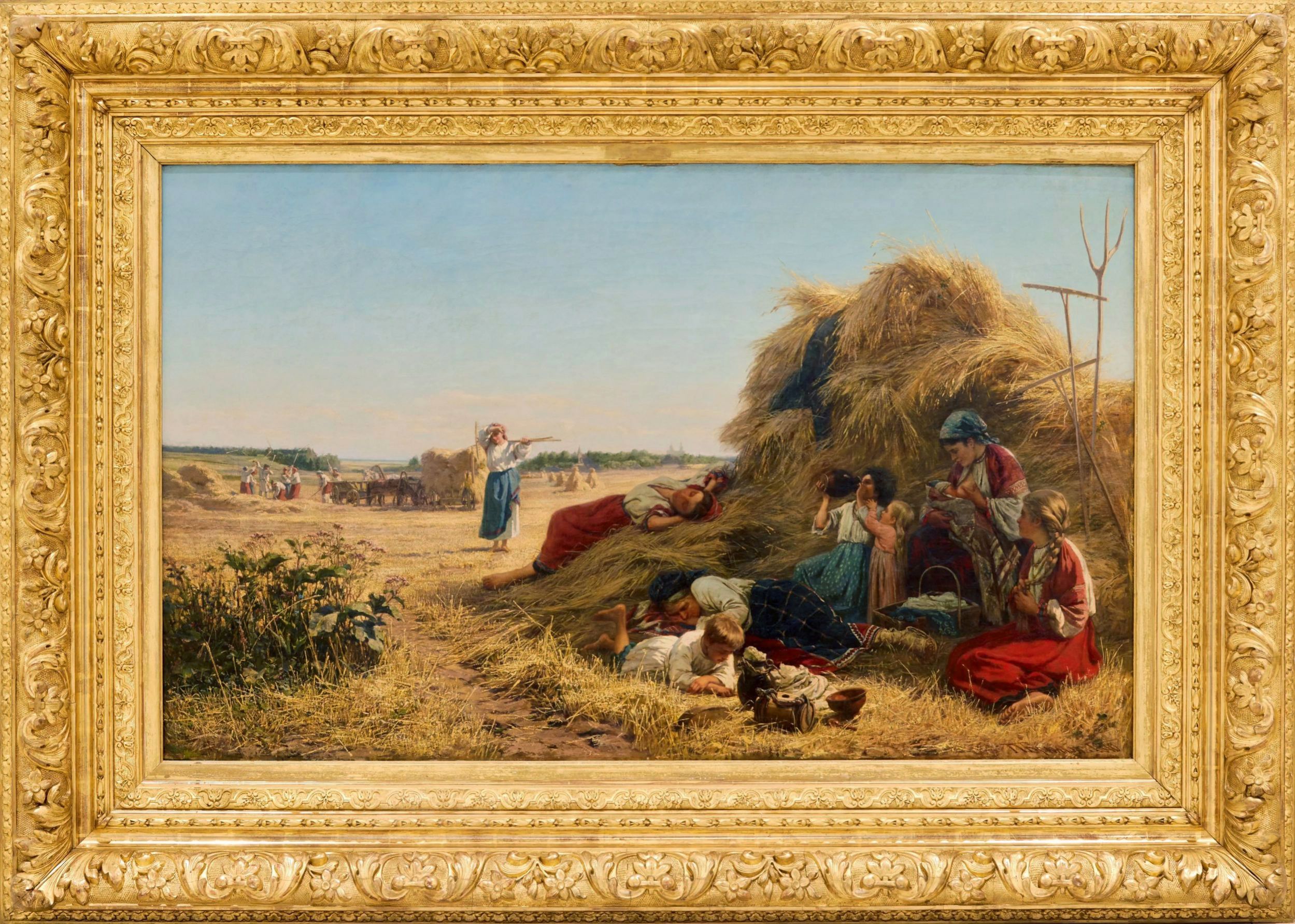
Pavel Bryullov’s genre painting Working Noon (1890) depicts a Little Russian field in western Ukraine during the harvest season. The canvas reads like an open book, revealing the destinies of its characters, their past and foretelling their future. Monumental in scale and grand as life itself, it captures a group of female reapers resting in the shade of a haystack at midday. The entire spectrum of peasant life — women’s fates and fortunes — unfolds before the viewer. The composition embraces a whole cycle of life: from young girls already helping in the fields to elderly women who have spent their entire lives here. Childhood, youth, adulthood, the birth of children, the encounter with old age and the care of grandchildren are all present.

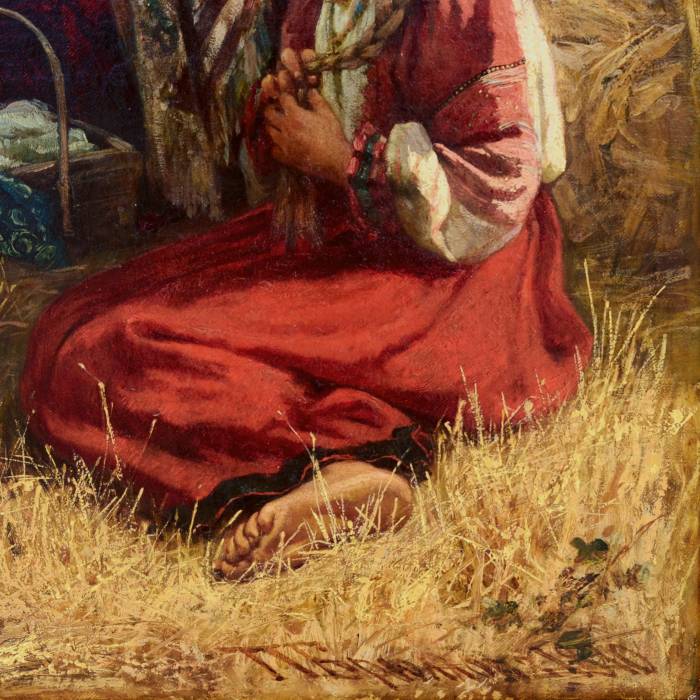
The contrasting, multidirectional figures of the foreground symbolise the eternal circle of life. We see a sun-bleached boy playing in the straw; nearby, an elderly woman in a checkered skirt sleeps. Behind them, a girl reaches for her sister’s jug, a mother nurses her infant, and another young woman lies resting, conserving her strength. On the far right, a young peasant girl braids her hair, gazing toward a rake-bearing woman returning from the fields. Their glances meet along the compositional diagonal, where alternating red and blue skirt tones lead to a threshing scene. There, under the supervision of an elder, women have begun threshing, with a jacket casually thrown on the front haystack.

The cycle of time closes, symbolising the eternal and unchanging rhythm of life. Bryullov romanticises the people for whom harvest is both a celebration and the very meaning of existence. In the distance, under God’s protection — the church spires visible on the horizon — villagers gather grain. The palette, rich in ochres, reds, and azures, imbues the work with sunlight and vitality. Signature and date lower right: “P Bryullov 1890” (executed a secco in the academic tradition of the late 19th century).

Dimensions: Canvas 89 × 144 cm, framed 138 × 194 cm
Medium: Oil on canvas
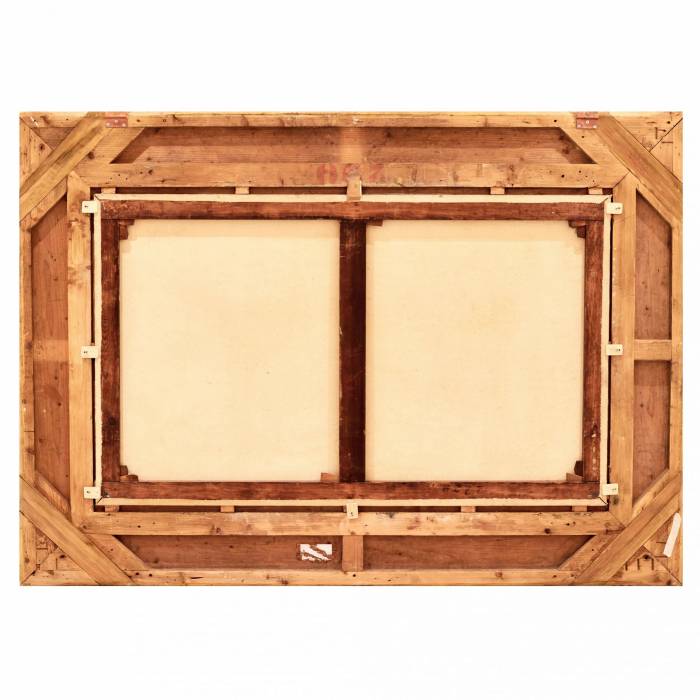
Condition: Exceptional museum-level preservation; professionally relined and reinforced, with an untouched surface and noble patina of age.
Provenance: Private collection
Expert report: Authenticated by Olga Sugrobova-Roth, PhD in Art History. 01 December 2024.

Art:
russia
Height:
138 cm
Width:
194 cm
Depth:
25 cm
Period:
19th century
Style:
Realism
Country:
Russia
Material:
Canvas, oil
Condition:
Revive
Fair
Good
Very good
Like new

Pavel Aleksandrovich Bryullov, nephew of Karl Bryullov and son of architect Alexander Bryullov, received an exceptional education at the Imperial Academy of Arts as well as in France, Italy, and England. A member and active participant in the Peredvizhniki (Wanderers) movement, he made a significant contribution to Russian genre painting of the late 19th century.

Working Noon belongs to Bryullov’s mature period and forms part of his rural cycle alongside Village Children, Neighbours, and Hay Harvest Together. Unlike many genre painters of his time, Bryullov avoids superficial anecdote, infusing his scenes with philosophical reflection on peasant labour as an integral part of nature’s eternal rhythm. By portraying several generations within one frame, he expresses the idea of continuity and the endless circle of life.

His painting style combines academic precision, refined psychological characterisation, and a rich colour palette. Each figure is unique, its features and posture reflecting an individual story, while the whole composition maintains perfect harmony. The rhythm and balance of the work may also reflect the artist’s love of Mikhail Glinka’s music, which he valued for capturing the spirit of the people.

Today, Working Noon is regarded as a major monument of Russian 19th-century painting and a fine example of high-level genre art, sought after by both museums and private collectors.

The condition report is provided for informational purposes only.

It is not comprehensive and may not reflect all defects, restorations, alterations, or adaptations, as Antiqon does not perform professional conservation-level assessments. The information is based on a qualified, yet subjective, evaluation by our specialists.Before purchasing, we recommend consultation with an independent expert.Please also consult our Terms and conditions and Glossary A-Z, which contain important information on lot characteristics and sale conditions.
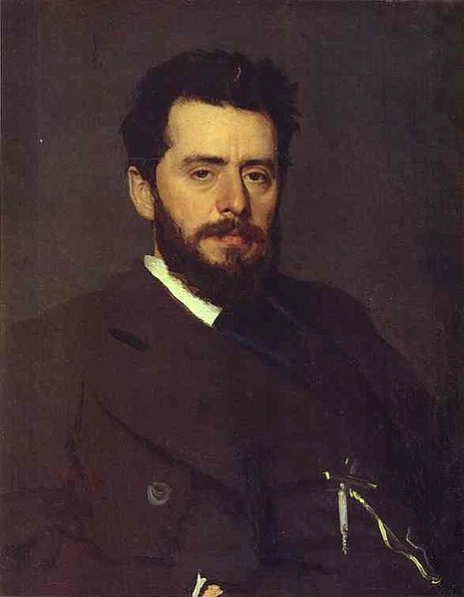
Bryullov Pavel Alexandrovich
Pavel Alexandrovich BryullovItinerant artist Pavel Aleksandrovich Bryullov (1840-1914). Biography Academician, painter, landscape painter, and genre painter, Pavel Aleksandrovich Bryullov was born into a noble family in 1840. His father, Alexander Bryullov, was a famous professor of architecture, and his older brother, Karl Bryullov, became a legend of Russian painting. Little Pavel was surrounded by creativity and art from childhood, which laid the foundation for his passion for painting. Over time, Pavel began studying at the Imperial Academy of Arts in St. Petersburg, where he studied art with famous Russian artists and architects such as Karl Thon, Adolf Stackenschneider, Dmitry Grimm, Alexander Rozanov, and, of course, his father, Alexander Bryullov. Pavel showed exceptional ability and passion for art, which made him one of the most talented students at the Academy. In 1864, Pavel successfully completed his studies at the Academy and was appointed a pensioner, which gave him the opportunity to travel around Europe. He visited Italy, England and France, where he admired outstanding works of Western European art and improved his skills with the best masters of painting of his time. This journey was an important stage in his career and inspired him to create many outstanding works. History of Creativity Returning to Russia in 1870, Pavel Bryullov began to actively exhibit. His paintings attracted the attention of not only spectators, but also critics and colleagues. He became a full member of the Imperial Academy of Arts in 1874 and joined the Association of Traveling Art Exhibitions, where he was also recognized as a full member. Pavel Alexandrovich actively participated in exhibitions and was honored to become a member of the Council of the Imperial Academy of Arts. Pavel Bryullov′s paintings repeatedly attracted the attention of famous people of his time. He collaborated with the founder of the Tretyakov Gallery, Pavel Tretyakov, whose collections included works by the artist. Also, his talent was recognized by the Imperial family, and his works were acquired for the imperial collections. Pavel Bryullov left a real legacy in the history of Russian painting. His paintings are imbued with a unique style and talent that made him one of the outstanding artists of his time. He painted many stunning landscapes, vibrant portraits and captivating scenes from everyday life. All his works are distinguished by subtlety of colors and expressiveness, which forces the viewer to delve into every detail of the work.In the collection of the ANTIQONOne of the master’s best works is in the collection of the ANTIQON antique gallery. Pavel Bryullov′s genre painting "Working Afternoon" from 1890 represents a Little Russian field in western Ukraine at the time of the harvest season. The picture is like an open book, revealing the destinies of the heroes, revealing their past and predicting the future. This is a canvas, majestic in its size, grandiose, like life itself. A picturesque group of reapers rest in the shade of a haystack during half a working day. The entire spectrum of peasant life, women′s destinies and shares, are open to the viewer. The picture covers the whole cycle of life: from girls already helping in the field to old women who have spent their whole lives in this field. It shows childhood, adolescence, youth, the birth of children, meeting old age and caring for grandchildren. Contrasting and multidirectional figures in the foreground symbolize the eternal ring of life. We see a boy, bleached by the sun, playing, next to him is a tired old woman in a plaid skirt who is sleeping. Behind them, the girl reaches for her sister′s jug. Nearby, a mother feeds her baby. Another young woman stretched out in her sleep, maintaining her strength. On the right, at the edge of the canvas, a young peasant woman braids her hair and directs her gaze to the girl with a rake, who is apparently going to rest. Their gazes intersect on a compositional diagonal, which, alternating red and blue spots on the skirts, leads to the threshing scene. Where the girls, under the leadership of the headman, probably whose comma zipun was thrown on the front haystack, had already begun threshing. The circle of time closes, personifying the eternal and unchanging cyclical nature of life, in which the artist glorifies and romanticizes people for whom harvesting is a true holiday and the meaning of life. Where, under the auspices of God, whose churches are visible in the depths of the picture, the villagers collect bread. MeaningIn conclusion, Pavel Aleksandrovich Bryullov is a wonderful artist and a bright personality in the history of art. His biography and work remain an inspiration for many artists and art lovers to this day. His works continue to delight and inspire people, and his name will forever remain in the golden pages of the history of Russian painting.
... Read More

Stay up to date with new arrivals
Save Paintings and we let you know when new listings appears in this category
Save

Related items