×
Create account and receive
15% DISCOUNT
your first acquisition
or

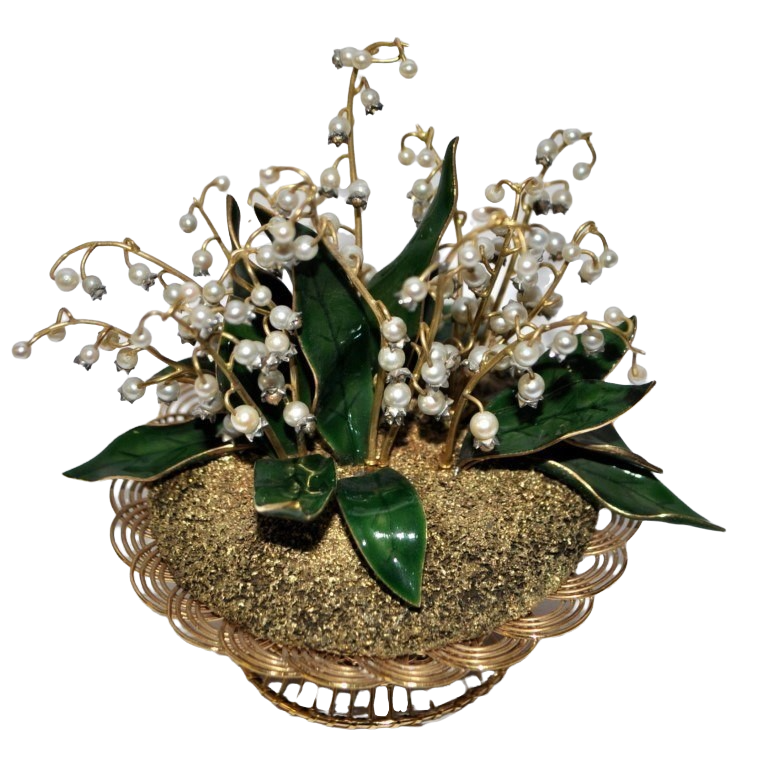


Russian hardstone carving art emerged as an independent branch of the decorative and applied arts on the basis of the Ural tradition of hardstone working and reached full maturity at the turn of the nineteenth and twentieth centuries. During this period, stone was established as the principal bearer of the artistic image, while sculptural miniatures and decorative plastic works attained museum status. A decisive role in the institutionalization and artistic consolidation of this field was played by major artistic and industrial centers, above all the hardstone carving production system of Fabergé.
We will only share latest what our month on the RUSSIAN HARDSTONE CARVING ART .
ORIGINS AND DEVELOPMENT
The origins of Russian hardstone carving art are closely associated with the Ural region, where a well-established tradition of mining and artistic processing of ornamental and decorative stones developed during the nineteenth century. Initially, carved stone was used primarily for decorative and utilitarian purposes, including interior objects, architectural elements, the bodies of jewelry items, and ceremonial works of applied art.
By the late nineteenth century, hardstone carving had moved beyond the realm of craft and acquired artistic autonomy. Stone began to be perceived not as a secondary material, but as the foundation of the sculptural image itself. This transformation was driven by the concentration of artistic expertise within professional workshops and the emergence of stable aesthetic principles governing the treatment of hardstone.
A decisive phase occurred in the early twentieth century, when a systematic hardstone carving production was established within Fabergé, oriented not toward purely decorative functions but toward a sculptural interpretation of the material. It was within this environment that stone was definitively established as an independent artistic medium, and Russian hardstone carving art gained both institutional recognition and international legitimacy.
TECHNOLOGICAL CHARACTERISTICS
The technological foundation of Russian hardstone carving art is based on the manual processing of hard and semi-precious stones, allowing full control over form and surface texture. Nephrite occupies a central position, valued for its exceptional toughness, structural uniformity, and capacity for deep polishing. Various types of nephrite were employed, differing in color, translucency, and natural pattern, each selected for a specific artistic purpose.
Alongside nephrite, craftsmen widely used rhodonite, Ural jaspers, quartz, rock crystal, agates, carnelians, lapis lazuli, serpentine, and jadeite. The production process included sawing, initial shaping, multi-stage grinding, and final polishing. Thermal treatment of stone was avoided entirely. Fragile materials were assembled exclusively through mechanical means, ensuring the preservation of their natural structure.
ARTISTIC CHARACTER AND AESTHETICS
The aesthetic principles of Russian hardstone carving are rooted in a respectful and attentive approach to the natural structure of the material. Color transitions, veining, inclusions, and internal variations were not concealed but deliberately incorporated as expressive elements of the artistic image. Stone itself determined the character of the form, the scale of the work, and the degree of detail.
The works are distinguished by a synthesis of realistic modeling and decorative generalization. A characteristic feature is the contrast between matte and polished surfaces, which enhances light effects and emphasizes the material presence of the object. As a result, hardstone miniatures closely approach small-scale sculpture and acquire an independent artistic status.
HISTORICAL EXAMPLES AND USE
Russian hardstone carving encompasses a wide range of forms, including animal sculptures, genre miniatures, figures representing folk types, decorative vases, desk sets, clocks, and interior objects. Sculptural miniature emerged as a particularly important genre, in which stone functions as the primary expressive medium.
The most significant works were created in the late nineteenth and early twentieth centuries, especially in Ural workshops and in the hardstone carving divisions associated with the Fabergé system. During this period, stable artistic types and canons of hardstone treatment were established, defining the subsequent development of the tradition.
SIGNATURE WORKS AND ARTISTIC BENCHMARKS
A comprehensive understanding of the artistic level of Russian hardstone carving is shaped by animal sculptures and genre miniatures carved from nephrite and other Ural stones, notable for their precise modeling and refined treatment of natural textures.
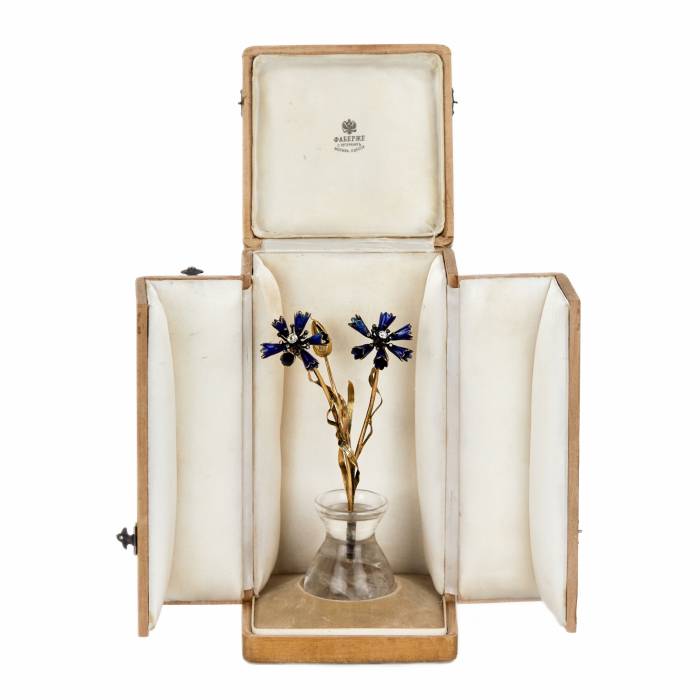
Equally important are decorative compositions and interior objects in which stone determines the architectural structure of the object and governs the role of metal and constructive elements. Exhibition works by Ural masters and hardstone carvings produced within the Fabergé system played a decisive role in forming the visual canon of Russian hardstone art and securing its status within museum and private collections.
APPLICATION AND MASTERS
The development of Russian hardstone carving art is inseparable from the activity of masters of the Ural school and major artistic-industrial centers that transformed a craft tradition into a field of high art.
A pivotal figure is Alexey Kuzmich Denisov-Uralsky, whose work contributed significantly to shaping the artistic image of the Urals as a center of gemstone processing and to establishing stone as an independent artistic medium.
A key role in the institutionalization of hardstone carving in the early twentieth century was played by Pyotr Mikhailovich Kremlyov, who headed a major hardstone carving production in Petrograd. Under his direction, a workshop system was established that united Ural traditions with high artistic standards, resulting in works of museum quality.
A substantial contribution to the professional culture of stone processing was made by Karl Verfel, whose factory became one of the most important centers for the concentration of technological expertise and the transmission of Ural traditions into the metropolitan artistic environment.
MARKET ANALYSIS
Russian hardstone carving art occupies a secure position in museum collections and on the international art market.
Exceptional examples: Museum-quality sculptures, including works associated with the Fabergé hardstone carving tradition. Price range: €300,000–3,000,000.
Rare examples: High-quality decorative and sculptural objects. Price range: €80,000–300,000.
Typical examples: Hardstone miniatures and small-scale objects. Price range: €15,000–80,000.