Price:
2800 €
Add to cart
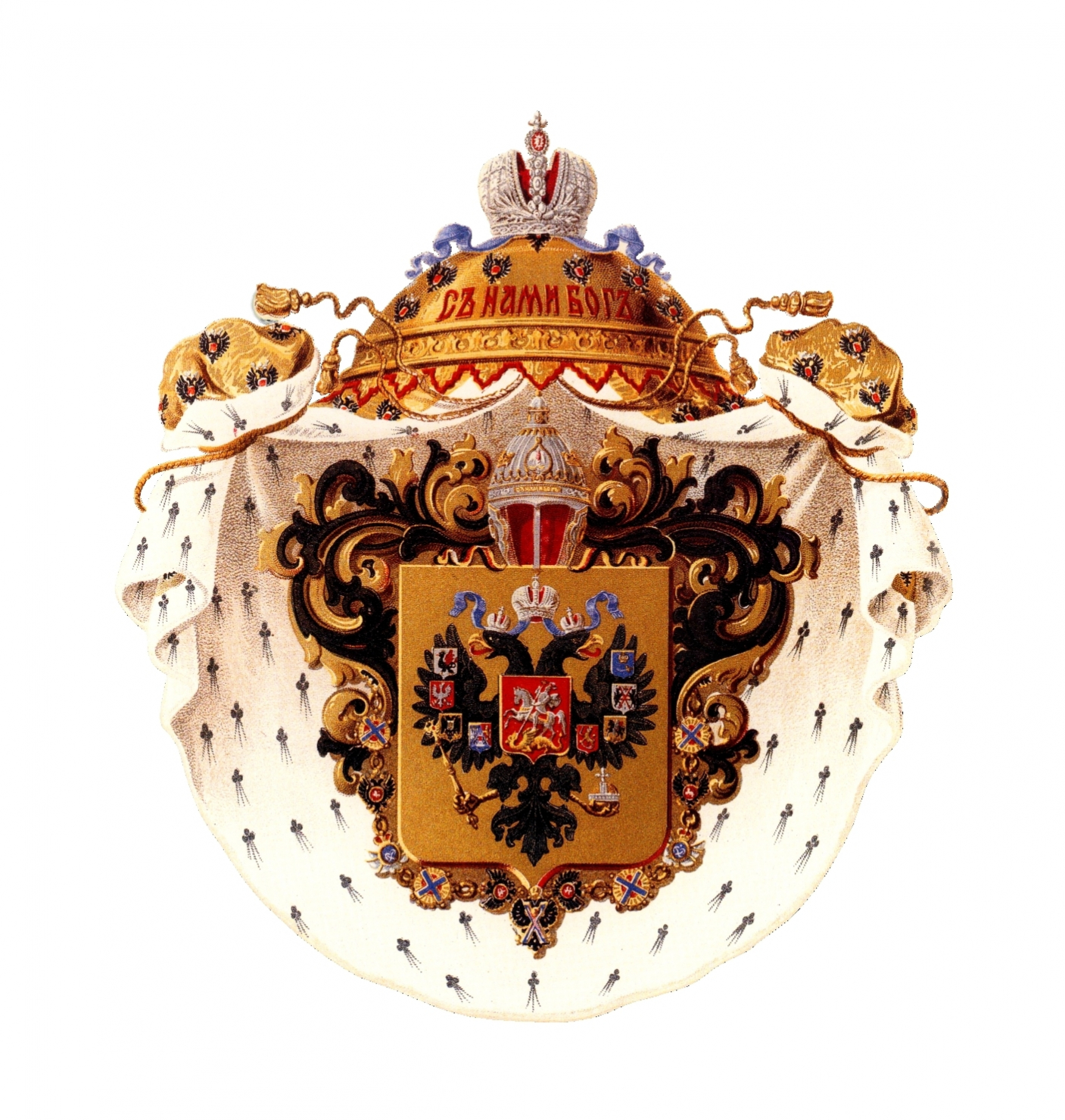
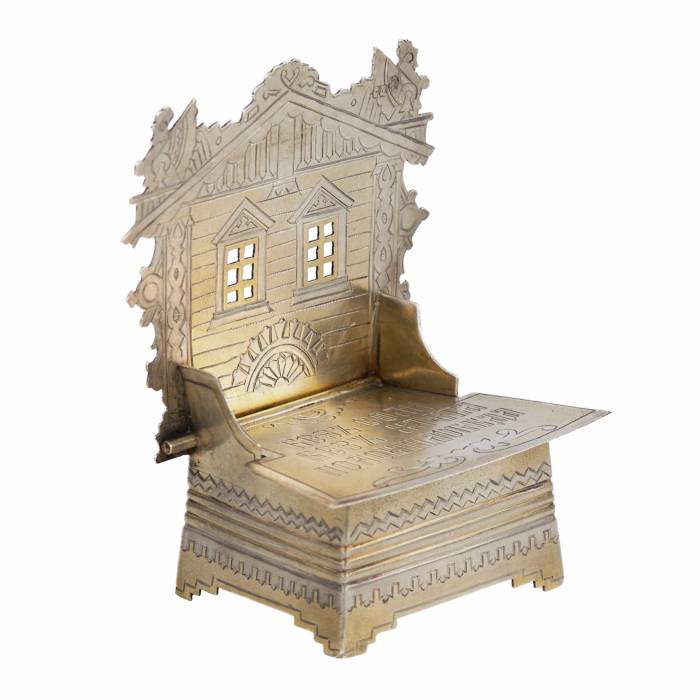
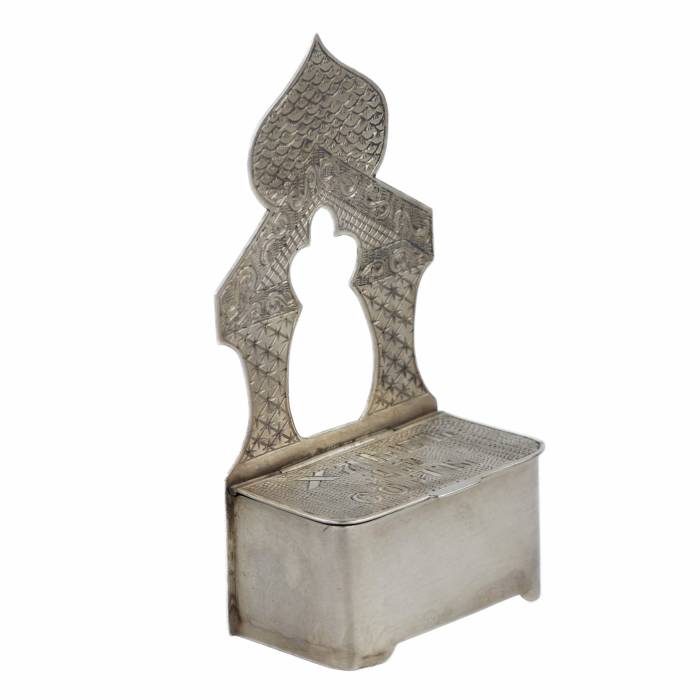
Russian silver is one of the foundational materials of Russia’s decorative and applied arts, forming a distinctive artistic tradition from the pre-Petrine era through the early twentieth century. A highly developed craft culture, a rigorous hallmarking system, and a wide range of metalworking techniques enabled the creation of a unique body of silverwork that achieved international recognition.
We will only share latest what our month on the RUSSIAN SILVER.
ORIGIN AND DEVELOPMENT
The history of Russian silver is closely connected with the development of statehood, Orthodox ecclesiastical culture, and courtly life. From the sixteenth century, silver was widely used for church vessels, icon settings, and objects of princely and noble use. In the seventeenth century, stable centres of silversmithing emerged in Moscow, Yaroslavl, and the Russian North. Eighteenth-century reforms and increasing European influence led to new forms and stylistic solutions, while preserving a strong national identity. In the second half of the nineteenth century, Russian silver reached its artistic and technical peak, combining historicism, the Russian Revival style, and Art Nouveau. The early twentieth century marked the culmination of this tradition.
TECHNICAL CHARACTERISTICS AND HALLMARKING SYSTEM
A defining feature of Russian silver was the zolotnik hallmarking system, in use throughout the Russian Empire until 1927. Based on a division of a silver pound into 96 zolotniki, it indicated the proportion of pure silver in the alloy. State assay offices ensured strict quality control and mandatory hallmarking.
The principal Russian silver standards were:
84 zolotniki (875 standard) – the most common fineness of the nineteenth and early twentieth centuries, used for tableware, ceremonial objects, and ecclesiastical silver.
72 zolotniki (750 standard) – used mainly in the eighteenth and early nineteenth centuries, particularly for utilitarian and cast objects.
91 zolotniki (947 standard) – a rare high-grade silver employed for prestigious commissions and presentation pieces.
TECHNIQUES OF RUSSIAN SILVERWORK
Russian silversmiths employed a wide range of techniques, often combining several within a single object.
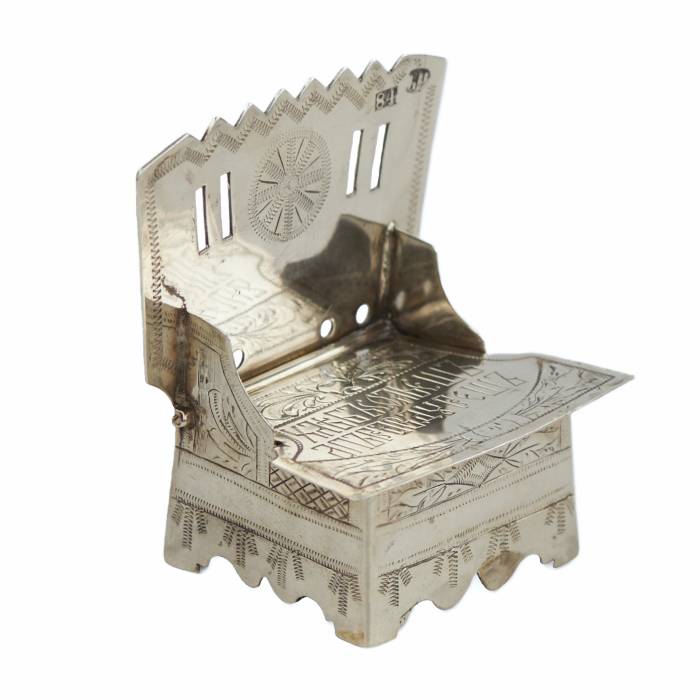
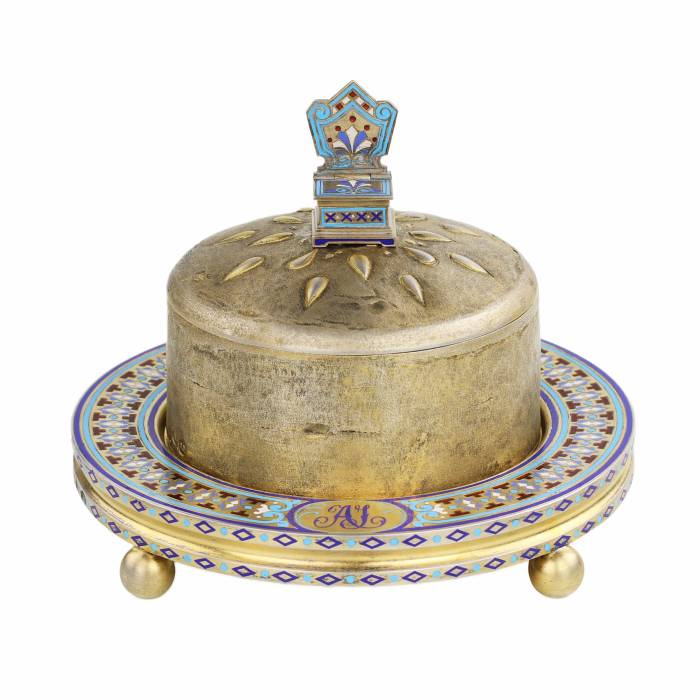
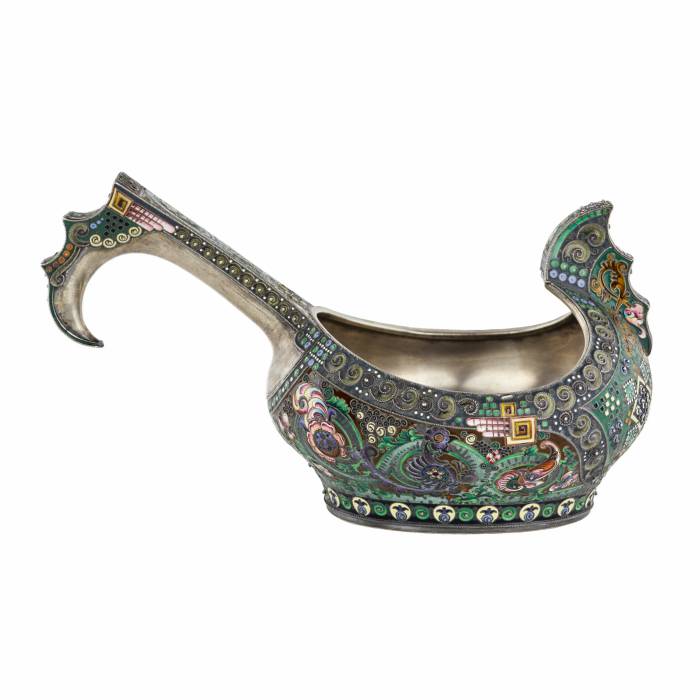
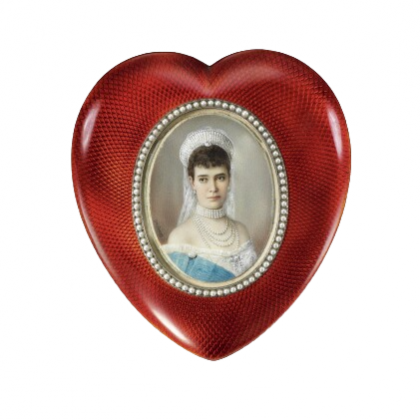
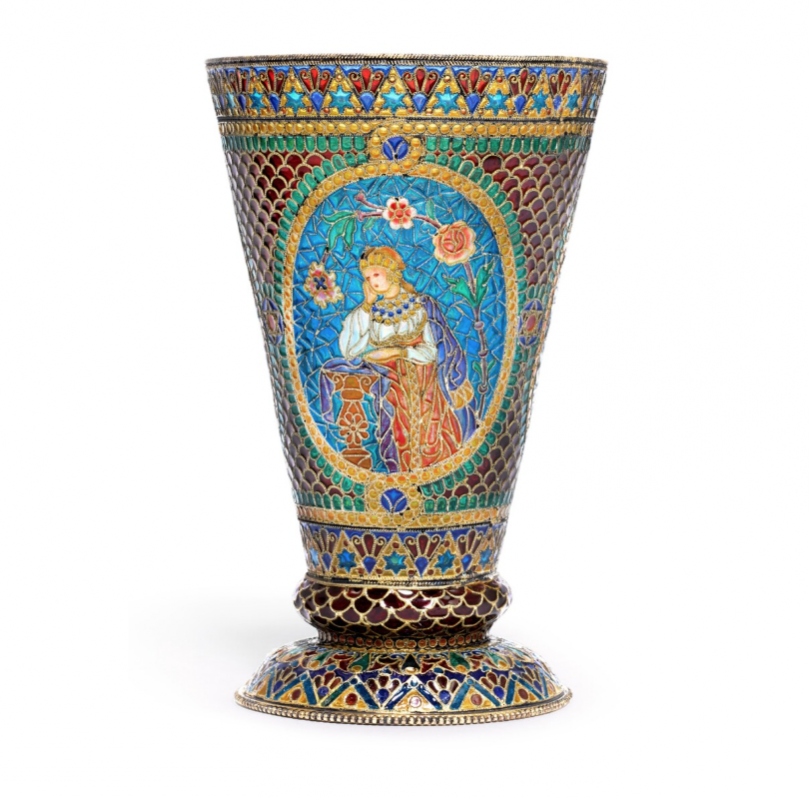
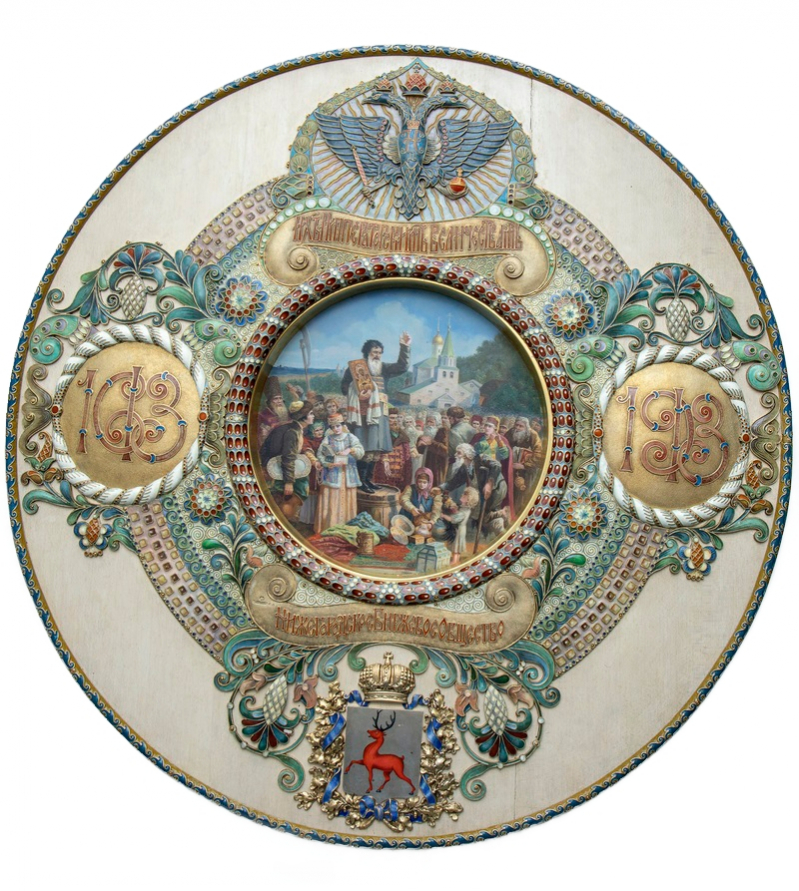
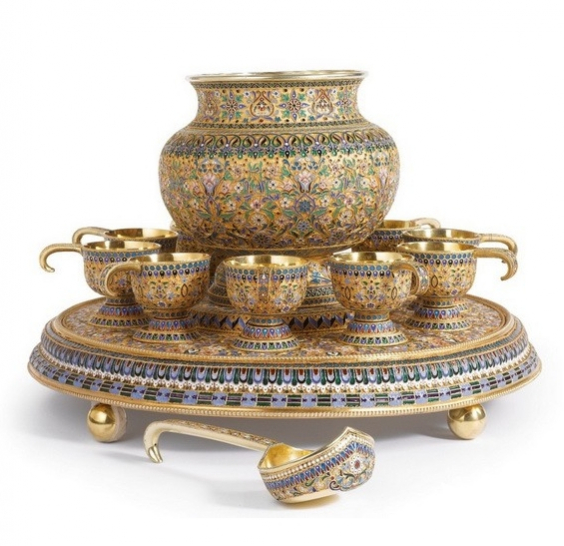
Casting was used to create bodies, sculptural elements, handles, and feet. Chasing was a fundamental technique, shaping relief and volume without reducing the metal’s mass. Engraving was employed for ornament, inscriptions, and heraldic motifs, frequently combined with niello. Niello on silver became one of the most characteristic Russian decorative techniques, producing strong graphic contrast. Gilding was applied for both functional and decorative purposes, enhancing visual depth and protecting surfaces. Enamelling techniques were widely used, including cloisonné, champlevé, guilloché, and painted enamel. Filigree and openwork, as well as combinations with stone, glass, bone, and wood, further enriched the artistic vocabulary.
AESTHETIC AND ARTISTIC FEATURES
Russian silver is distinguished by expressive modelling, careful attention to silhouette, and a rich decorative language. Monumentality is often balanced with refined detailing. National motifs, stylisation inspired by Old Russian art, and later elements of historicism, Art Nouveau, and Neoclassicism form a recognisable and coherent visual identity.
HISTORICAL EXAMPLES AND MASTERS
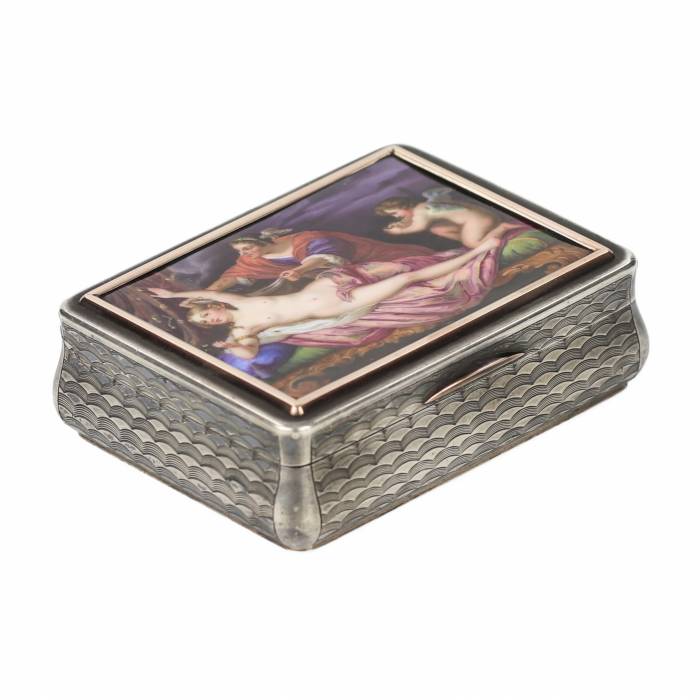
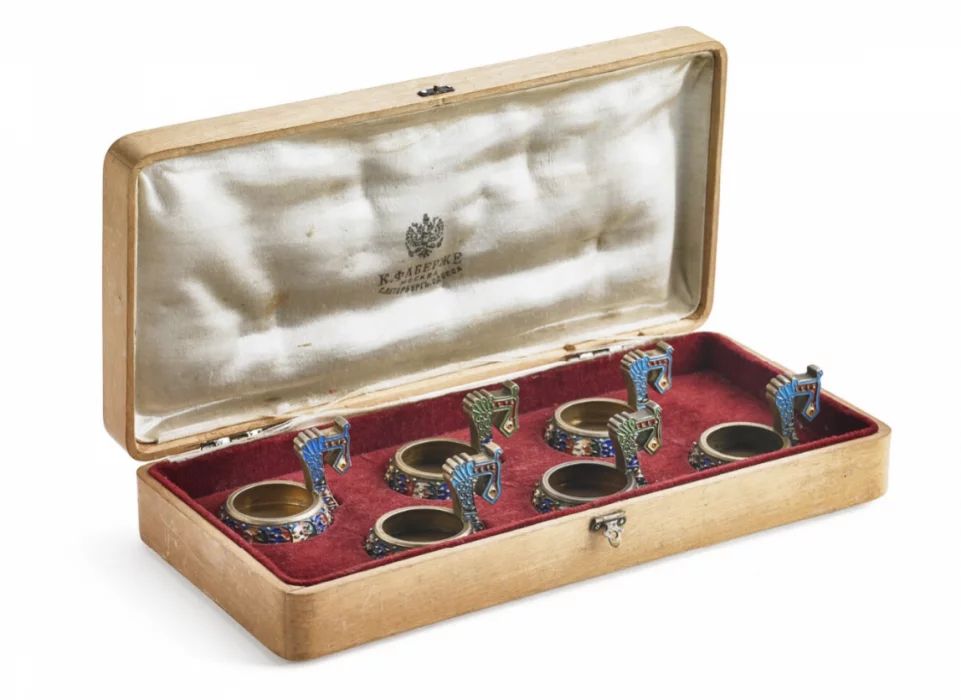
Silver was used for tableware, ecclesiastical objects, presentation sets, snuffboxes, cigarette cases, and interior furnishings. The highest level of Russian silverwork was achieved by leading firms and masters, including Fabergé, Pavel Ovchinnikov Factory, Ivan Khlebnikov Factory, Brothers Grachev, as well as the workshops of Sazikov Factory and Nemirov-Kolodkin Factory. A special place is held by Fyodor Ruckert, whose enamels on silver became benchmarks of late nineteenth-century craftsmanship. Their works are represented in major museum and private collections.
MARKET ANALYSIS
Russian silver remains a stable and highly sought-after segment of the international antiques market. The strongest demand is for late nineteenth and early twentieth-century works featuring enamel, niello, and complex decorative techniques.
Exceptional examples: Museum-quality ceremonial silver in 84 and 91 standards. Price range: €150,000-900,000.
Rare examples: Authorial or limited-production works by leading firms, including early 72-standard silver. Price range: €30,000-150,000.
Typical examples: Serial tableware and utilitarian objects in 84-standard silver. Price range: €2,000-25,000.